Montana Hunting Guide: Elk, Deer, Pronghorn, Sheep, and the Random Draw Advantage
How Montana's random draw lottery, April elk license sale, and block management program work for nonresidents — elk, mule deer, pronghorn, bighorn sheep, and moose covered in full.
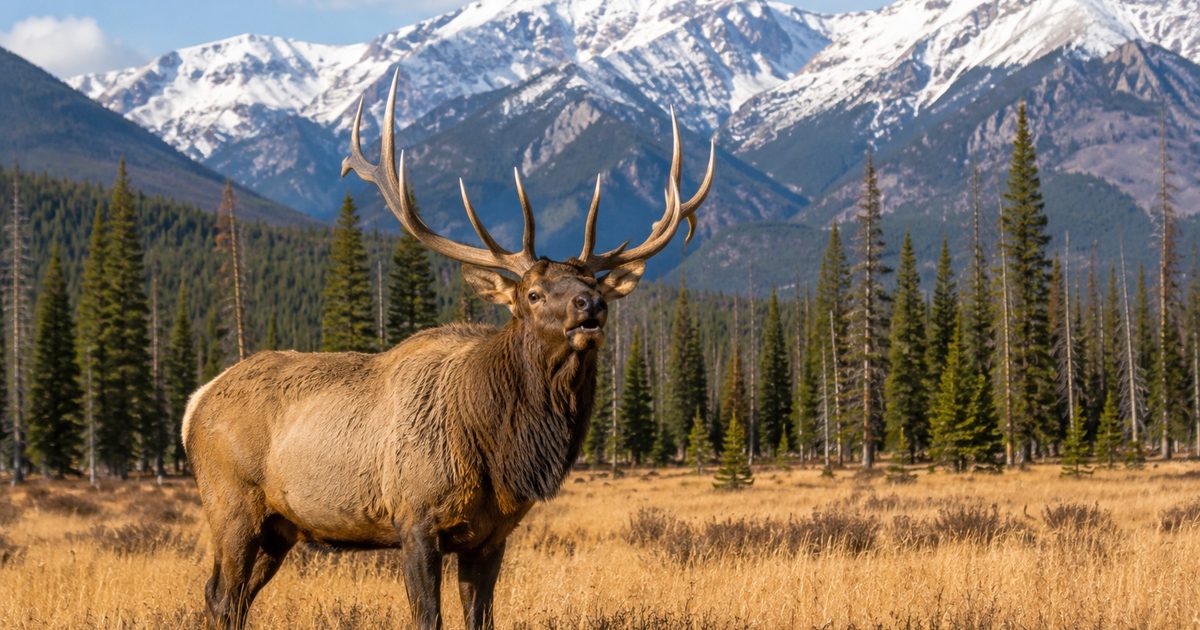
Disclaimer: Season dates, tag costs, and regulations change annually. Always verify current information directly with Montana Fish, Wildlife and Parks at fwp.mt.gov before applying.
Montana runs a different game than every other western state. That’s not a figure of speech — it’s a structural fact that changes the calculus for every nonresident building a long-term hunting strategy. Where Colorado and Wyoming hand advantages to hunters who’ve been applying for years, Montana levels the field. A first-year applicant has the same draw odds as a hunter who’s been submitting applications for 15 years.
That single design decision makes Montana one of the best near-term hunting states in the West for nonresidents who haven’t had time to accumulate points elsewhere. It’s also what makes the April 1 elk license sale one of the most competitive events on the western hunting calendar.
Understanding both systems — the random draw and the license sale — is what unlocks Montana’s full potential.
The Most Important Thing About Montana’s Draw
Montana uses a random lottery for elk, deer, pronghorn, and most other species. There are no preference points in the random draw system. No accumulated history. No weighted entries based on how many years you’ve applied. Every hunter who submits a valid application has the same statistical chance of drawing as every other hunter in the pool.
This is the most important thing to internalize before planning a Montana hunting trip. Applying year after year doesn’t improve your odds in the random draw. It doesn’t hurt them either — but you’re not building anything in the lottery system the way you would in Colorado or Wyoming. What you’re doing is buying a lottery ticket each year at whatever odds the tag quota produces.
The implications are significant. Montana is worth applying for from year one, because your odds at year one are the same as they’d be at year fifteen. There’s no rational case for waiting. Apply now, keep applying every year, and let the random draw work in your favor eventually — because the only way to increase your cumulative probability over time is to show up for every draw.
Montana's Draw Isn't a Point System — It's Pure Random
Unlike Colorado, Wyoming, or Utah, Montana’s draw for elk, deer, and pronghorn doesn’t reward accumulated applications with better odds. A hunter applying for the first time this year has the exact same chance as someone who’s applied for 15 consecutive years. Start applying immediately — waiting doesn’t improve your future odds, and years you don’t apply are simply years of lost chances.
Elk: The April License Sale and the Draw
Montana’s elk situation for nonresidents has two distinct paths. Understanding which path applies to your goal determines your entire planning approach.
The General NR Elk License Sale
The first path is the most time-sensitive event in western hunting: Montana’s nonresident general elk license sale, which goes live on April 1 each year. This is a license sale, not a draw — Montana makes a limited quota of general elk combination licenses available at a specific time, and they sell out fast.
We’re not talking days. In recent years, the most accessible license tiers have sold out within minutes of going live on April 1. Montana FWP sets a quota of nonresident combination licenses (covering elk and deer) that’s sold on a first-come, first-served basis starting at a specific time. The hunters who get these licenses are the ones who have their payment information ready, their FWP account pre-loaded, and their fingers on the purchase button at exactly the right moment.
The combination license runs approximately $1,000 for nonresidents. It covers deer and elk simultaneously, which changes the math considerably if you’re planning a full western trip — one fee covers two species on the same ground.
How to be ready for April 1:
- Create your Montana FWP account at fwp.mt.gov well before April — don’t wait until March 31
- Confirm your payment method is saved and verified in your account
- Know the exact sale start time for the current year (check fwp.mt.gov in February — times have varied)
- Have a browser or app ready to load the license page at that exact moment
- Don’t browse or hesitate — know what you’re buying before the sale opens
Hunters who treat April 1 like a casual shopping experience miss the window. Hunters who prepare like it’s a competitive event get licenses. The distinction is simple and entirely within your control.
April 1 NR License Sale: Be Ready or Miss It
Montana’s nonresident general combination license quota sells out in minutes, not hours. Log into your FWP account at fwp.mt.gov before April 1, verify payment is saved, and know the exact start time. Having to reset a password or enter a credit card number while the licenses are selling is enough to miss the window entirely.
The Limited-Entry Draw for Special Elk Units
Montana also runs limited-entry draws for specific elk hunting districts — the premium areas with controlled nonresident access and tag quotas. These operate as random draws. Applying puts you in the pool for that specific district; drawing or not drawing doesn’t change your future odds.
Special draw elk permits cover some of Montana’s most distinctive terrain: the upper Sun River drainage in the Bob Marshall Wilderness, specific Beartooth-Absaroka districts along the front, and select Missouri Breaks elk units. These aren’t the general hunting districts everyone hunts — they’re quota-controlled areas where access is scarce and elk populations are managed for quality.
The application window for special permits typically runs in February and March, with draw results before the general license sale. Check fwp.mt.gov for the current year’s schedule.
Where Montana Elk Live
Montana’s elk range covers an enormous amount of terrain. The major hunting regions each have their own character:
The Bob Marshall Wilderness Complex is the gold standard of roadless elk country in Montana. The Bob, the Scapegoat, and the Great Bear form the largest contiguous wilderness area in the lower 48, covering roughly 1.5 million acres of west-central Montana. Elk density is high in these drainages, hunting pressure is low relative to the elk population, and the experience is genuinely backcountry in the most demanding sense — no motors, no mechanized equipment, miles from a trailhead. Getting into the Bob requires real preparation and fitness, but it rewards that investment.
The Beartooth-Absaroka Front along the southern boundary with Wyoming holds substantial elk numbers in dramatic terrain. The transition zone where the mountains meet the prairies creates classic migration patterns — elk pour out of the high country when October snow loads the passes. Hunters who understand the migration timing and terrain funnels can be in the right place at the right moment.
The Bitterroot and Selway in western Montana near the Idaho border produce elk in thick, steep terrain that many hunters find intimidating. The Selway-Bitterroot Wilderness on the Idaho side connects with Montana’s general elk country in a way that creates large populations of elk that rarely see hunting pressure except during brief season windows.
The Missouri Breaks in north-central Montana are a different kind of elk habitat entirely — canyon country, breaks, and dense river bottom that elk use as winter cover and as escape terrain from hunting pressure. Missouri Breaks elk don’t look like mountain elk. They use the terrain differently, move differently, and respond to different tactics. But they’re there in real numbers, and hunters who learn the breaks produce elk consistently.
Mule Deer: Eastern Montana’s Trophy Country
Montana’s reputation for trophy mule deer centers on eastern Montana, and the reputation is earned. Powder River country in the southeastern corner of the state — Carter County, Powder River County, and the adjacent drainages — produces mule deer bucks that compete with the best in the West. Serious mule deer hunters make a case that this region rivals any trophy mule deer area on the continent.
The eastern Montana mule deer equation is straightforward: vast, broken badlands terrain, low hunter pressure relative to deer numbers, and access to public land through Montana’s block management program. Carter County has produced multiple B&C typicals and scores of book-class bucks in recent years. It’s not an accident — it’s the combination of habitat quality, relatively light hunting pressure, and good buck age structure in areas that aren’t heavily pressure-managed by guided outfitters.
The random draw system means your first-year odds in any eastern Montana mule deer unit are exactly the same as a veteran applicant’s odds. Apply now.
Whitetail deer in the western river bottoms and creek drainages along the Flathead, Clark Fork, and Missouri systems offer a different kind of Montana deer hunting — timbered, close, and often without the long-range spot-and-stalk approach that eastern mule deer demand. Many hunters combine the combination license with a focus on elk in September and deer in October, overlapping both species on a single trip.
Nonresident combination license cost: approximately $1,000 (covers elk + deer combined). This is the same license purchased in the April 1 sale.
Pronghorn: The Best Zero-Point Odds in the West
Montana pronghorn hunting deserves special attention from any nonresident who’s been grinding points in preference-point states without success. The random draw for pronghorn means first-year applicants have real, competitive odds at many hunting districts. No debt of accumulated history required.
The best pronghorn districts concentrate in two regions:
Powder River country in southeastern Montana — the same country that produces trophy mule deer — also holds excellent pronghorn populations. The vast open grasslands in Carter, Powder River, Fallon, and Custer counties are classic pronghorn habitat. Spring pronghorn numbers in this region rank among the highest in the state.
The Hi-Line districts along the northern prairie running from Havre east toward the North Dakota border hold substantial pronghorn numbers. These grassland districts offer classic spot-and-stalk hunting on flat to rolling terrain — fundamentally different from the badlands hunting in Powder River country, but productive in its own right.
Montana pronghorn licenses for specific limited-entry units go through the random draw. Statewide, some antelope units have lower hunter competition than comparable Wyoming or Colorado units simply because eastern Montana doesn’t attract the same national attention those states do. That relative obscurity keeps odds competitive.
Nonresident pronghorn license cost: approximately $270 to $300 for limited-entry tags. Verify current figures at fwp.mt.gov.
Bighorn Sheep: The Exception — Preference Points Apply
Montana’s bighorn sheep system is the major exception to the random draw structure. Montana uses preference points for bighorn sheep — unlike elk, deer, and pronghorn, sheep applications accumulate points that improve your draw odds over time.
Montana issues roughly 400 bighorn sheep tags annually across the entire state. That’s a small number spread across one of the largest sheep populations in the West. The state holds both Rocky Mountain bighorn sheep in the mountain ranges of western and south-central Montana, and a population of California bighorn in specific isolated ranges.
Draw timelines for nonresidents in premium sheep units run 5 to 15 preference points, with the most coveted units — particularly in the Sun River drainage, the Beartooth, and the Absaroka — pushing toward the higher end. Some NR applicants draw in fewer than 10 years in lower-demand units. The top sheep units can require 12 to 15 NR points to draw with reasonable confidence.
Key sheep hunting districts include:
- Sun River drainage (Bob Marshall complex): Classic Rocky Mountain bighorn country. High ram numbers in dramatic terrain. Draw pressure is real — this is one of the more competitive Montana sheep units.
- Beartooth and Absaroka ranges: Rugged mountain sheep on the Wyoming border. Some of the best ram genetics in the state.
- Missouri River Breaks sheep: A different subspecies context — California bighorn in isolated canyon habitat. Distinctive hunting experience and different draw dynamics than the mountain units.
Start applying for Montana bighorn sheep from year one. Unlike elk and deer, your sheep points do accumulate and do matter. Every year you delay is a year of points you’ll never recover.
Nonresident sheep license cost: approximately $1,500 to $2,000 when drawn. Verify at fwp.mt.gov.
Moose: Rare Tags, Random Draw
Montana moose are allocated through the random draw — no preference points, same odds for every applicant. Montana issues limited moose tags annually, concentrated in western Montana’s timbered river systems and the mountain ranges where willow and aquatic vegetation provide the forage base moose depend on.
The Flathead Valley, the Bitterroot, and the drainages along the western mountain front all hold moose populations. Tags are genuinely scarce — maybe a few hundred statewide across all districts — which keeps draw odds low regardless of the random system. But since odds don’t improve over time, applying every year is the only approach that makes sense. Your cumulative probability grows with each application cycle even though any individual year’s odds remain static.
Nonresident moose license cost: approximately $1,350 to $1,500 when drawn. Check fwp.mt.gov for current figures.
Apply for Montana Moose and Sheep Every Year Without Exception
Montana’s moose and sheep tags are rare and sought-after. Since the draw is random for moose (and preference-point-based for sheep), the only rational strategy is to apply every single year without skipping. A missed application year costs you one chance in the moose lottery and one preference point for sheep. Neither loss is recoverable. Set a calendar reminder for March 15 (a couple weeks before the April 1 deadline) each year and treat the application deadline as non-negotiable.
Public Land: 28% State Ownership and Block Management
Montana is 94.1 million acres. Roughly 28% of the state is publicly owned — federal and state land combined — which translates to tens of millions of acres of huntable terrain. The breakdown includes national forests, Bureau of Land Management parcels, wilderness areas, and state wildlife management areas.
But Montana’s most distinctive access program is the Block Management Program run by Montana FWP. Private landowners volunteer to allow public hunting access on their properties through Block Management. In exchange, FWP provides compensation and technical assistance. For hunters, the program means access to millions of additional acres of private land that would otherwise be off-limits — at no extra cost beyond the hunting license.
Block Management areas are published annually in the FWP Block Management Access Guide, available online and at license agents. The areas change each year as landowner participation fluctuates, so check the current guide before planning your hunt. In eastern Montana especially, block management opens the patchwork of private agricultural land that interspersed with public parcels — without it, navigating access in Powder River or Carter County would be significantly more complicated.
The combination of 28% public land base and the Block Management overlay makes Montana’s practical hunting access one of the best in the West, particularly for hunters willing to do their homework on specific blocks before arriving.
Tag Costs for Nonresidents
Montana’s fee structure for nonresidents:
| License/Tag | Approximate NR Cost |
|---|---|
| Combination license (elk + deer) | ~$1,000 |
| Pronghorn license | ~$270–$300 |
| Bighorn sheep (when drawn) | ~$1,500–$2,000 |
| Moose (when drawn) | ~$1,350–$1,500 |
| Base hunting license | ~$70 |
Combination license pricing makes Montana expensive upfront but efficient if you’re pursuing both elk and deer on the same trip. Hunters who buy the combination license and don’t connect on elk can still kill a mule deer buck — two legitimate chances at game for a single license fee.
The Montana Strategy for Nonresidents
Montana works best as a primary near-term hunting state while you’re building preference points in Wyoming and Colorado for longer-horizon tags.
Here’s the practical breakdown of the approach:
Buy the April 1 NR general elk combination license every year you can get it. If you miss the April 1 sale, apply for limited special permits in the draw for the districts you want. Use the combination license to hunt elk in September and deer in October on the same trip — Montana’s seasons overlap in a way that makes multi-species trips genuinely efficient.
Apply for pronghorn through the random draw from year one. Eastern Montana pronghorn odds for nonresidents are competitive in a way that Colorado and Wyoming pronghorn simply aren’t after years of applicant pool growth.
Start your bighorn sheep application immediately and build points every year without exception. Montana sheep points are the one currency that compounds over time in this state — treat them like a long-term savings account.
Apply for moose every year on the random draw. Your individual odds in any given year are low, but low odds applied repeatedly over decades produce eventual success at a rate that zero applications never will.
While Montana is your primary near-term destination, run parallel preference point applications in Colorado (elk, deer, sheep, goat) and Wyoming (elk, deer, pronghorn, sheep, moose) so those point banks are growing in the background. Montana gives you something to hunt now. Colorado and Wyoming give you something to look forward to in 10 to 20 years.
Check current Montana draw odds for specific hunting districts at the Draw Odds Engine, and track your multistate preference point balances in the Preference Point Tracker so nothing slips through the cracks.
Montana’s random draw structure is a genuine advantage for hunters who haven’t had time to accumulate points in western states. Don’t underestimate it. A patient, systematic approach — apply every year, show up with the combination license in hand, learn the terrain — produces results in a state where the opportunity is real and the access is still better than most of the West.
Season dates, tag costs, and regulations are subject to annual change. Always verify current information directly with Montana Fish, Wildlife and Parks at fwp.mt.gov before applying.
Next Step
Check Draw Odds for Your State
Tag-level draw odds across 9 western states — filter by species, unit, weapon, and points. Free to use.
Get the Insider Edge
Join hunters getting exclusive draw odds data, gear deals, and weekly hunt planning tips.
Related Articles
Arizona OTC Archery Deer 2026: Unit Limits and Closures
Arizona's OTC archery deer season opens August 21, 2026 — and units close the moment harvest limits fill. Here's every unit's limit, plus the best bets by real archery success rates.
Colorado OTC Elk in 2026: What Changed for Nonresidents
Colorado eliminated unlimited nonresident OTC archery elk west of I-25 for 2026 — and Gunnison rifle tags went draw-only. Here's exactly what's still on the shelf and how to hunt this fall anyway.

Colorado Reissue Licenses: How to Grab Returned Elk Tags
Every Wednesday through fall, CPW sells back surrendered limited licenses — including elk tags nonresidents can't get any other way in 2026. Here's the Tuesday-Wednesday ritual that actually lands one.
No comments yet. Be the first to share your experience!