Idaho Turkey Hunting: Merriam's in the Clearwater and Panhandle
Idaho turkey hunting guide — spring and fall Merriam's turkey seasons, IDFG license requirements, public land access in Clearwater and Panhandle regions, calling tactics for Merriam's, and OTC licensing.
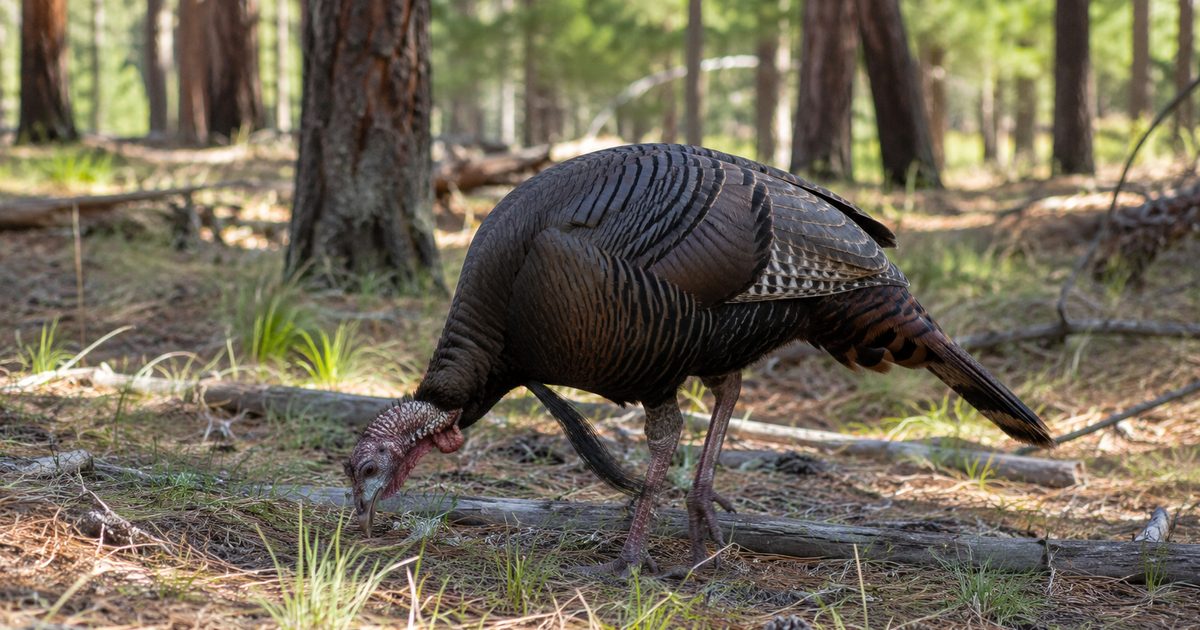
Idaho doesn’t get the turkey hunting headlines that states like Missouri or Alabama grab, but that undersells what northern Idaho genuinely offers. Merriam’s turkeys here live in steep ponderosa pine country, roost on south-facing ridgelines, and gobble hard enough in April to make you forget you hiked 90 minutes to find them. And unlike a lot of quality western hunting, you don’t need a draw. Idaho spring turkey is over-the-counter for both residents and nonresidents. For a breakdown of Merriam’s biology, range, and how they differ from eastern and Rio Grande birds, the wild turkey species guide gives you the foundation before you plan your hunt.
Why Idaho Merriam’s Are Different
Merriam’s turkeys evolved in high-elevation western timber. That shapes their behavior in ways that catch eastern turkey hunters off guard. These birds roost in ponderosa pines on ridgelines, feed in forest openings and creek bottoms, and travel long daily routes between roosting, feeding, and strut zones. They don’t behave like a bird that lives in hardwood hollows and waits for you by the decoy.
Merriam’s gobble freely, often aggressively. The challenge isn’t getting them fired up — it’s closing the distance in terrain that works against you. Birds on a ridge gobble at 400 yards, and the canyon between you is 600 feet deep. Understanding how they move through the landscape is more valuable than any calling technique.
Key behavioral differences vs. eastern turkeys:
- Move significantly longer distances throughout the day
- Use terrain elevation as a navigation anchor — parallel ridgelines are travel corridors
- Tend to respond well to aggressive calling early season before pressure builds
- Strut zones are often on flat benches or saddles, not just in food plots
- Flock structure is looser than eastern birds; satellite gobblers are common
Important
Idaho Merriam’s peak gobbling activity runs mid-April through the first week of May. The first two weeks of the season typically offer the most vocal birds before hunting pressure and warming temperatures quiet things down.
The Two Primary Regions
Clearwater Region: Classic Mountain Turkeys
The Clearwater region — loosely IDFG Units 10 through 15 — is the heart of Idaho turkey hunting. The Nez Perce-Clearwater National Forest provides millions of acres of public access, and turkey densities here are among the highest in the state.
Terrain in the Clearwater is rugged. Ridgelines run steep and long, with creek drainages cutting deep between them. Turkeys roost on the upper third of south-facing slopes where ponderosa pine transitions to open grass. They fly down into creek bottoms and park themselves on benches to feed and strut.
Access is a mix of forest roads and foot travel. Many productive drainages are reached by Forest Road systems, but the birds within easy road distance see pressure quickly once season opens. Two miles off the nearest two-track changes your odds significantly.
Panhandle Region: Agricultural Edges and Timber
The Idaho Panhandle — Units 1 through 6 — offers a slightly different hunting style. The terrain is less severe than the Clearwater, and the proximity to agricultural land means turkeys here often have access to grain fields, pasture edges, and more open habitat. This makes the birds somewhat more predictable and slightly easier to call.
Idaho Panhandle National Forest and adjacent private land create a patchwork landscape. Turkeys move from timber roosts into agricultural settings during mid-morning, and setting up on travel corridors between those two habitat types is a reliable pattern.
Pro Tip
In the Panhandle, focus your scouting on the timber-to-ag transition zones. Birds leave roost heading downhill toward feeding areas after fly-down. Find the funnel points — creek crossings, ridge saddles, fence lines — and set up 15–20 minutes before first light.
IDFG Licensing: No Draw Required
This is the big selling point. Idaho spring turkey tags are sold over the counter — no draw, no application period, no preference points. For nonresidents, the total cost runs approximately:
- Nonresident Hunting License: ~$185
- Nonresident Spring Turkey Tag: ~$50
- Total: ~$235
That’s competitive with most western states for a no-draw turkey hunt, and significantly cheaper than booking a guided turkey hunt in the Southeast. Residents pay substantially less.
Idaho allows one spring turkey per licensed hunter. A fall turkey season exists in some units but is more limited in scope — check the current IDFG regulations for which units are open fall.
Warning
Purchase your Idaho turkey tag before driving to the trailhead. Physical IDFG license agents are scarce in remote northern Idaho — the IDFG online portal is the most reliable purchase method, and your license can be stored digitally.
Tactics for Mountain Merriam’s
Locating Birds Before Season
Pre-season scouting in Idaho is worth doing if you can get there. Turkeys will be in their spring pattern by late March. Drive Forest Service roads at first light and listen for gobbling from the ridge. Merriam’s tend to gobble more freely than eastern turkeys in the roost, and you can often locate multiple toms from a single vehicle stop. Our turkey scouting guide covers how to read roost sign, identify strutting zones, and build a hunt-day map from your pre-season legwork.
Owl hooters and crow calls work for locating at distance. Box calls or slate calls used as locator calls also work well for Idaho birds — they’re not call-shy early in the season.
The Setup
Once you’ve located a roosted bird, positioning is everything. Merriam’s almost always fly down toward a flat or bench rather than straight downhill. If you position below and in front of the roost, the bird may gobble at you all morning but hang up — he expects the hen to come to him.
Get on the same elevation or above the bird before first light. Move quietly and set up 80–100 yards from the roost, giving the tom a clear path to fly down toward you without crossing any terrain obstacles.
Calling Sequences
Aggressive early-season calling works well on Idaho birds. Start with soft yelps and clucks from the roost, then escalate to excited yelping and cutting once the tom is on the ground. Merriam’s respond well to a “leaving” sequence — excited cutting that fades in volume as if the hen is walking away. This triggers competitive instinct and gets a hung-up bird to commit. The turkey calling complete guide breaks down every call type and the sequences that work across all western subspecies.
Once a bird is gobbling on the ground and oriented toward you, go quiet. Let him search. Merriam’s on the move in timber often go silent before they appear. The temptation to call a bird you can’t see often bumps him.
Pro Tip
A lightweight layout blind adds significant value in Idaho’s open ponderosa terrain. Gobblers approaching through open timber can spot movement at 60+ yards. A blind eliminates the need for perfect concealment against a tree and lets you call more aggressively.
Public Land Access
Idaho Panhandle National Forest and Nez Perce-Clearwater National Forest together cover over 8 million acres. Both are largely open to hunting. Key entry points and Forest Road systems are mapped in OnX Hunt, which has accurate access data for Idaho.
State endowment lands (trust land) also provide public hunting access. These parcels require a separate permit in some cases — check IDFG’s Land Access Legacy program for current requirements.
Private land in both regions is significant. Many of the valley bottoms and lower ridges have been homesteaded. Knocking on doors in northern Idaho has a better success rate than most states, but respect private land boundaries and always verify access before crossing.
Gear for Idaho Turkey Hunting
Pack for mountain hunting, not a field edge hunt. You may cover 2–4 miles of steep terrain in a morning. Lightweight system matters:
- Broken-in boots with ankle support — the terrain is loose shale and root-heavy
- 30–40 liter pack with daypack essentials including rain gear
- Lightweight blind or large natural concealment setup
- Multiple call types: slate, box, diaphragm for different scenarios
- 3-inch magnum shells if hunting with shotgun (longer shots are common in timber)
Frequently Asked Questions
Does Idaho turkey hunting require a draw?
No. Idaho spring turkey tags are sold over the counter for both residents and nonresidents. There is no application period or preference point system for turkey in Idaho. You purchase the license and tag through the IDFG online portal or a license agent and can hunt immediately once the season opens.
What makes Merriam’s turkeys different from eastern turkeys?
Merriam’s are a western subspecies that live in ponderosa pine and mixed timber habitat at elevation. They travel significantly longer daily routes than eastern birds, roost on high ridgelines, and use terrain features as navigation anchors. They gobble aggressively and often respond to assertive calling, but they move on their own schedule and hang-ups near terrain obstacles are common. Eastern calling tactics work but need to be adapted for the terrain and the bird’s movement patterns.
What is the best calling sequence to use on Idaho Merriam’s?
Early in the season, escalating sequences work well — start soft from the roost, escalate to excited cutting once the bird is on the ground, then use a “leaving” pattern to trigger commitment from hung-up birds. Once a bird is on the move toward you, go quiet and wait. Over-calling a bird that’s already committed is one of the most common mistakes on Merriam’s. Let him come to you.
Is the Clearwater or Panhandle region better for first-time Idaho turkey hunters?
For first-time Idaho turkey hunters, the Panhandle offers a gentler learning curve. The terrain is less extreme, the timber-to-ag edge pattern is more predictable, and birds may be easier to call into range. The Clearwater is a more demanding hunt with bigger payoff for hunters willing to work the mountain terrain, but it requires more physical fitness and a better understanding of turkey movement in steep country.
Next Step
Check Draw Odds for Your State
Tag-level draw odds across 9 western states — filter by species, unit, weapon, and points. Free to use.
Get the Insider Edge
Join hunters getting exclusive draw odds data, gear deals, and weekly hunt planning tips.
Related Articles

Arizona Unit 36 Border Country Guide
Units 36A, 36B, and 36C sit along the Mexican border west of Nogales — overlooked Coues and javelina country with low draw requirements and solid hunting.

Montana General Elk Tag: Everything You Need to Know
The Montana general elk tag explained — who can buy one, what it covers, best districts, season dates, nonresident options, costs, and tactics for public land.

Arizona Unit 22 Guide: Tonto Basin
Unit 22 runs across the Tonto Basin and the Salt River country — productive elk in the highlands, accessible javelina in the desert, and some of Arizona's most underrated deer country.
No comments yet. Be the first to share your experience!