Idaho Pronghorn Hunting: The Complete Guide
Hunt Idaho pronghorn on pure random draw with no preference points. Best units, draw odds, Owyhee desert tactics, water holes, and why NR hunters keep applying.
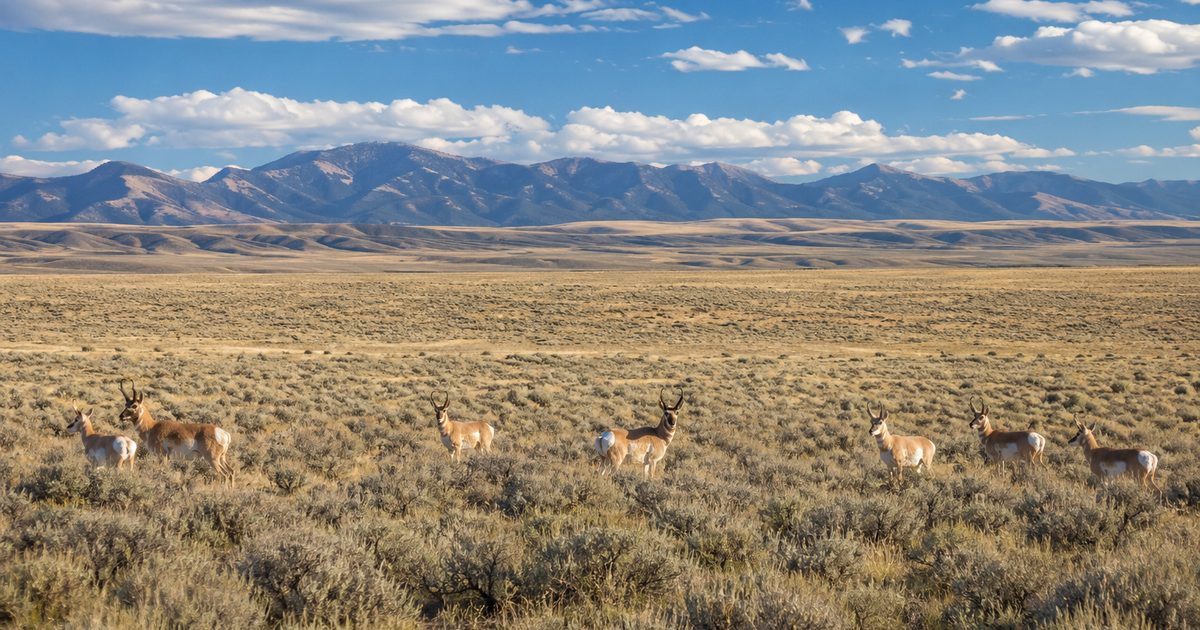
Idaho pronghorn hunting sits in an unusual spot in the Western draw landscape. Every year hunters obsess over stacking preference points in Arizona, Wyoming, and Colorado, calculating the year they’ll finally have enough to draw. Idaho doesn’t work that way. The state runs a pure random draw — zero preference points, no point creep, no ten-year wait. Every applicant has the same odds in September regardless of whether they’ve applied once or fifteen times. Each draw cycle is a fresh lottery, and that single fact changes how you should think about Idaho entirely.
For nonresident hunters who’ve grown tired of watching their preference point totals climb while they sit out hunts for years, Idaho’s approach is a genuine breath of fresh air. Draw odds for most pronghorn units run 15 to 25 percent for nonresidents — which sounds low until you realize that those are your real odds every single year, not a decade-long accumulation strategy. Apply consistently, and statistically you’re drawing an Idaho pronghorn tag every four to six years without tying up a single point.
This guide covers what that means in practice: which units to target, what southern Idaho’s lava and desert terrain demands from a hunter, how to find water in country that looks bone dry, and why this state is genuinely underrated for nonresidents who understand the draw system.
How Idaho’s Draw System Actually Works
There are no preference points for pronghorn in Idaho. Full stop. The state issues controlled hunt tags through a random drawing and every application goes into the same pool. If you drew last year and apply again this year, your odds are identical to someone applying for the first time.
This means two things. First, you cannot “build toward” a specific unit the way you can in Wyoming or Colorado. There’s no payoff for waiting — skipping a year to apply harder next season accomplishes nothing. Second, there’s no strategic reason to hoard applications or stack risk on premium units. The system rewards hunters who apply every single year without exception.
For nonresidents, Idaho typically sets aside 10 percent of controlled hunt tags across most species. Pronghorn draw odds by unit vary, but most units that see nonresident applications sit in the 15 to 25 percent range. Some smaller units with limited tag numbers and lower applicant pools run higher. A handful of the better-known trophy units drop below 15 percent. None of this is fixed — Idaho’s numbers shift annually based on population surveys and tag quotas — but the ballpark holds year to year.
Apply Every Year — Idaho Has No Preference Points
Idaho’s pronghorn draw is pure random. Skipping a year doesn’t help your odds next year, and there is no mechanism to build toward a specific unit. The only way to maximize your lifetime Idaho pronghorn tags is to apply every single year without fail. Missing an application cycle is simply a lost opportunity with no compensation.
The application window typically opens in late winter and closes around April 30 — verify exact dates with Idaho Fish and Game each year, as they shift slightly. Draw results come out in June. Tag fees for nonresidents are reasonable compared to most Western states, typically running $280 to $320 for a pronghorn tag plus license fees. Keep track of Idaho’s deadline alongside your other state applications using the Application Timeline so a date change doesn’t cost you a cycle.
Southern Idaho Pronghorn Country
Most Idaho pronghorn live in the southern half of the state, in a landscape that looks very different from the mountain elk country most hunters associate with Idaho. Forget the steep timber and rushing rivers of the central wilderness. Southern Idaho pronghorn country is desert — big, flat, often harsh desert broken up by lava flows, rimrock, and the occasional drainage choked with willows.
Owyhee County — The Core
Owyhee County anchors the most significant pronghorn hunting in Idaho. The county is enormous — larger than some eastern states — and most of it is BLM ground that hunters can access freely. Units 69, 66A, and 67 all sit within or adjacent to Owyhee County, and they represent the heart of Idaho’s pronghorn draw.
The terrain here is lava desert. Vast basalt flows have shattered into broken rock fields over centuries, and the landscape alternates between open flat sagebrush, rough lava benches, and the kind of broken rocky ground that destroys equipment and makes long walks miserable. Pronghorn love it. The lava breaks line of sight in ways that flat sagebrush country doesn’t, allowing mature bucks to hold close to terrain features that would be invisible from a distance.
Water is the organizing principle in Owyhee. Natural seeps are scattered and often seasonal. Cattle operations on BLM grazing allotments have drilled wells and installed stock tanks throughout the desert — tanks that pronghorn use heavily during hot weather. Locating active water sources before the hunt is arguably more valuable research than any other scouting you can do in this country.
Access in Owyhee County is generally good once you’re willing to drive rough BLM two-tracks. A high-clearance truck is not optional here — it’s the baseline. Many of the tanks and water sources that hold pronghorn are five to fifteen miles off pavement on roads that test chassis clearance and tire sidewalls equally. A flat spare (or two) is standard planning, not paranoia.
Magic Valley — Unit 44
The Magic Valley region around Twin Falls and the Snake River Plain holds consistent pronghorn numbers in Unit 44. The terrain here is different from Owyhee — flatter, more agricultural at the edges, with large tracts of BLM desert broken by private farmland. Pronghorn in this area shift between agricultural stubble and open sage flats seasonally, and the proximity to farming operations means animals can be watered and fed in ways that make them behave differently than pure-desert animals.
Unit 44 draws well for hunters new to Idaho pronghorn because the terrain is more forgiving. The flat sage country is easier to navigate, easier to glass across, and easier to stalk through than Owyhee’s broken lava. The trade-off is that pronghorn in more accessible country are more pressured — they’ve seen hunters, trucks, and dogs for years, and they behave accordingly.
Draw odds in Unit 44 trend toward the better end of Idaho’s nonresident range. It’s a good unit for a first Idaho pronghorn tag.
Camas Prairie
The Camas Prairie northwest of Twin Falls offers a different flavor of Idaho pronghorn hunting. Elevation is higher, temperatures cooler, and the landscape transitions from pure desert scrub into the high-desert grassland that pronghorn prefer when it’s available. Population numbers in this area are lower than Owyhee, but the hunting quality — in terms of terrain, access, and animal size — is solid. Tag numbers reflect the population, so this isn’t a draw with big nonresident quotas.
Water Hole Hunting in the Idaho Desert
If you’re hunting any unit in southern Idaho during September or early October, water hole hunting is the most consistently productive approach available. The desert has very little water. What water exists, every pronghorn knows about — and visits on a schedule you can learn.
The most productive water sources are active stock tanks associated with BLM grazing allotments. They’re maintained by ranchers who hold grazing permits, which means they stay functional through the dry season when natural seeps have dried up. Locating them requires a combination of digital scouting (CalTopo and OnX both show well and tank locations pulled from BLM databases), driving roads to verify they’re active, and checking for tracks and fresh droppings around the water’s edge.
Set up downwind at 40 to 80 yards for archery, 100 to 200 yards for rifle. A ground blind or natural sage concealment works well. Plan to be in position before first light, because pronghorn in heavily grazed desert often water early — sometimes within an hour of daybreak. Midday visits are common during hot weather, and you’ll often see animals again in the hour before dark.
Scout Water Sources Two Months Before the Season
The best Idaho pronghorn water holes get identified in July and August, not opening week. Drive your unit in summer, verify which tanks are active, look for the heaviest pronghorn sign, and note approach routes that keep you downwind. By September, you’ll know exactly where to sit — instead of spending the first two days of your hunt figuring it out.
Pronghorn that have been using a specific tank all summer are predictable. They approach from the same directions, use the same trails, and hit the water on a schedule. That predictability is your advantage. Mature bucks often circle the water source before committing — sometimes for 20 to 30 minutes — scent-checking the perimeter before they drink. Account for that in your wind setup. The buck will work through every downwind quadrant before he steps to the water’s edge.
Spike Camps and BLM Access
One of Idaho’s strongest selling points for the self-reliant DIY hunter is the sheer volume of BLM ground in southern units. The Owyhee Desert alone covers millions of acres of public land with no permit required beyond your Idaho hunting license. You can drive in, set up a spike camp on BLM ground, and hunt from there for the duration of your season.
Dispersed camping on BLM land is generally permitted for up to 14 days in one location without a fee or reservation. Most hunters work a cell service map before they leave home, identify areas without coverage (most of Owyhee qualifies), and plan their camp accordingly. The critical infrastructure items for Owyhee spike camps are water — you carry everything you drink, because there’s nothing to filter — and a reliable vehicle recovery plan. Cell service is effectively nonexistent in most of the productive hunting country. A satellite communicator is not luxury equipment here.
The reward for that self-sufficiency is hunting pressure that is dramatically lower than accessible areas. Hunters who drive 20 miles of two-track to reach a water hole rarely share it with anyone. Pronghorn 30 miles from the nearest paved road behave differently than animals that have watched truck traffic all summer. They’re less spooky, less educated, and more predictable.
Use the Hunt Unit Finder to map BLM access in Idaho pronghorn units before your trip, and run your specific unit through the Draw Odds Engine to see current nonresident numbers before you apply.
Spot-and-Stalk in Lava Desert
Waterhole hunting fills tags efficiently, but spot-and-stalk is the hunt that Idaho pronghorn country rewards on its own terms. The lava benches and broken desert flats of Owyhee give a skilled hunter more cover to work with than most pronghorn terrain in the West.
Glass from high points — lava rimrock and elevated basalt benches provide natural glassing positions. Find a buck worth pursuing, plan an approach using terrain features, and commit to it. The lava fields that look impassable from a distance are actually workable once you’re in them — broken rock and sage provide cover that flat prairie doesn’t.
The challenges are real. Lava rock is loud to walk on. Sharp edges destroy boot soles and cut hands. The footing is unpredictable enough that you’re watching the ground as much as the horizon. Knee pads aren’t essential here the way they are on flat Wyoming prairie, but ankle support from quality boots absolutely is. Twisted ankles on remote lava flats with no cell service are a serious problem.
Wind in the Owyhee Desert swirls differently than open prairie wind. Canyon walls, lava features, and elevation changes create thermal and mechanical eddy currents that can betray a stalk that should have worked. Carry a puff bottle and use it constantly during the approach — don’t assume the wind that was behind you a quarter mile back is still reliable.
Shots in lava country tend to run shorter than on flat plains. Breaking terrain provides natural range limitations, and many stalks in Owyhee end at 150 to 250 yards rather than the 300 to 400-yard shots that define Wyoming and Montana pronghorn hunting. A flat-shooting 6.5 Creedmoor or .270 covers every scenario you’ll encounter.
Draw Strategy for Nonresidents
Because Idaho is a pure random draw with no point system, your strategic decisions are simpler than in point states — but they still matter.
Apply every year. This is the entire strategy. There’s no optimal timing, no point-banking period, and no reason to skip a year. The math is straightforward: at 20 percent nonresident odds, a hunter who applies every year draws statistically once every five years. A hunter who skips years extends that timeline proportionally, with zero compensation.
Choose your unit based on what kind of hunt you want, not point accumulation strategy. Units 69 and 66A in Owyhee offer the most remote, self-reliant hunting experience Idaho has. Unit 44 in Magic Valley is more accessible and forgiving for a first-time applicant. Camas Prairie sits somewhere between them in character.
If you’re managing applications across multiple states simultaneously, Idaho’s pure-random system is actually easier to budget. There’s no growing investment to protect, no “point creep” to monitor, and no year where burning a massive point accumulation feels like a high-stakes gamble. Apply, get drawn when you get drawn, and hunt well when it happens.
Track your active applications and tags across all states with the Preference Point Tracker — even without Idaho preference points to monitor, having a single view of your total application portfolio across every state is valuable for staying organized.
Tag Costs and the NR Value Calculation
Idaho pronghorn tag costs for nonresidents compare favorably against most Western states. A nonresident hunting license runs approximately $185.50, with the controlled hunt pronghorn tag adding another $312.75 — putting total tag costs around $500 depending on the current fee schedule. That’s lower than Wyoming’s nonresident pronghorn tag, significantly lower than Arizona, and comparable to Montana.
Against that cost, Idaho pronghorn hunting delivers a legitimate trophy hunt in a state with less nonresident pressure than Wyoming or Nevada, public land access that rivals any state in the region, and an annual draw cycle that keeps you engaged rather than sitting out hunts for a decade.
The honest comparison: Wyoming’s preference point system offers high-percentage draws in many units and some certainty about when you’ll draw. Idaho’s random system offers lower per-year odds but no point investment to protect and no waiting period that locks up your budget. For hunters who have already committed to preference point strategies in other states, Idaho is a natural complement — a pure-random draw that doesn’t compete with any point-system investment you’re building elsewhere.
Planning the Hunt: Practical Details
Seasons typically run mid-August through mid-September for archery and October through early November for rifle, though exact dates vary by unit and year. Early season rifle in October hits a sweet spot — temperatures have dropped from summer extremes, field care is manageable, and bucks are entering pre-rut behavior that makes them slightly less cautious.
Caliber and optics choices follow standard pronghorn logic. A flat-shooting cartridge in the 6.5 to .270 range covers Idaho’s terrain well. Glass quality matters for desert hunting — bring 10x42 binoculars minimum and a spotting scope rated for distance work. Water plays such a strong role in Idaho pronghorn hunting that early-season rifle hunters can get by with shorter average shot distances than in other states, but prepare for 300-yard shots across open flats regardless.
Cooler management is critical in September and early October. Southern Idaho temperatures during early rifle season can reach 70 to 80°F. Get the hide off and the meat cooling within 20 minutes of the kill. Game bags, ice, and a hard-sided cooler with at least two to three days of ice capacity per animal are non-negotiable gear for any Idaho pronghorn hunt.
Field Care in Idaho Desert Heat
Early-season Idaho pronghorn kills happen in 70°F-plus temperatures regularly. Pronghorn hide insulates body heat effectively — leaving it on after the kill speeds meat spoilage dramatically. Have game bags accessible before you pull the trigger. Remove the hide immediately, bag every quarter, and get meat to ice as fast as terrain allows. Thirty minutes of post-kill logistics discipline is the difference between excellent table fare and a ruined animal.
Navigation in Owyhee County requires offline maps. Download your unit in OnX or HuntStand before you leave home, with BLM boundary layers active. The two-track roads in Owyhee aren’t always on commercial GPS databases, and cell service disappears completely once you’re away from the Snake River corridor. Mark your camp, your water sources, and your approach routes in advance.
Why Idaho Is Underrated
Idaho pronghorn doesn’t get the forum attention that Wyoming or Nevada commands. The draw odds per year look modest. The units aren’t famous. The terrain isn’t the dramatic mountain scenery that generates Instagram content.
What Idaho offers is something harder to quantify: a legitimate western pronghorn hunt in remote desert country, accessible on BLM public land, available to any nonresident willing to apply consistently, at a price point that doesn’t require a second mortgage. The Owyhee Desert at first light — basalt turning gold, a buck working a water hole trail three hundred yards out, nothing but silence and sagebrush in every direction — is as good as pronghorn hunting gets.
The pure-random draw means Idaho rewards persistence and consistency rather than patience and point accumulation. Apply every year with the Draw Odds Engine as your guide for unit selection. When that tag comes, the country will be ready.
Frequently Asked Questions
Does Idaho have preference points for pronghorn?
No. Idaho runs a pure random draw for pronghorn with no preference point system. Every applicant has equal odds each year regardless of how many times they’ve applied previously. Apply every year — there is no benefit to waiting.
What are the draw odds for nonresident Idaho pronghorn?
Most units with meaningful nonresident applicant pools run 15 to 25 percent for nonresidents. Some units with smaller quotas or lower applicant pools run higher. A handful of top units drop below 15 percent. Odds shift annually based on tag numbers and applicant counts.
Which Idaho units are best for nonresident pronghorn hunters?
Units 69, 66A, and 67 in Owyhee County offer the most remote hunting experience with strong BLM access. Unit 44 in Magic Valley is more accessible and draws consistently. Owyhee units reward self-sufficient hunters who can handle remote desert conditions.
When does Idaho’s pronghorn application deadline fall?
Typically around April 30, though the exact date shifts year to year. Verify with Idaho Fish and Game each January and set a calendar reminder early. Missing the deadline costs you a full draw cycle with no preference point compensation.
Is Idaho pronghorn country good for DIY hunters?
Absolutely. BLM ground dominates southern Idaho’s pronghorn units, particularly in Owyhee County. Dispersed camping is permitted, road access exists with a high-clearance truck, and hunting pressure in the more remote areas is very low. Self-sufficiency requirements are higher than in more accessible states, but the hunting experience rewards the effort.
Sources & verification
Seasons, license fees, application windows, and draw structure for Idaho change every year. Always verify the current details against the official Idaho agency before applying or hunting.
- Idaho Department of Fish & Game — idfg.idaho.gov
Next Step
Check Draw Odds for Your State
Tag-level draw odds across 9 western states — filter by species, unit, weapon, and points. Free to use.
Get the Insider Edge
Join hunters getting exclusive draw odds data, gear deals, and weekly hunt planning tips.
Related Articles

Arizona Unit 36 Border Country Guide
Units 36A, 36B, and 36C sit along the Mexican border west of Nogales — overlooked Coues and javelina country with low draw requirements and solid hunting.

Montana General Elk Tag: Everything You Need to Know
The Montana general elk tag explained — who can buy one, what it covers, best districts, season dates, nonresident options, costs, and tactics for public land.

Arizona Unit 22 Guide: Tonto Basin
Unit 22 runs across the Tonto Basin and the Salt River country — productive elk in the highlands, accessible javelina in the desert, and some of Arizona's most underrated deer country.
No comments yet. Be the first to share your experience!