Florida Deer Hunting: Public Land, Late Rut, and WMAs
Florida deer hunting guide — FWC WMA access, zone-based season dates, late November rut, the unique Osceola whitetail subspecies, swamp hunting tactics, and the best public land units in the state.
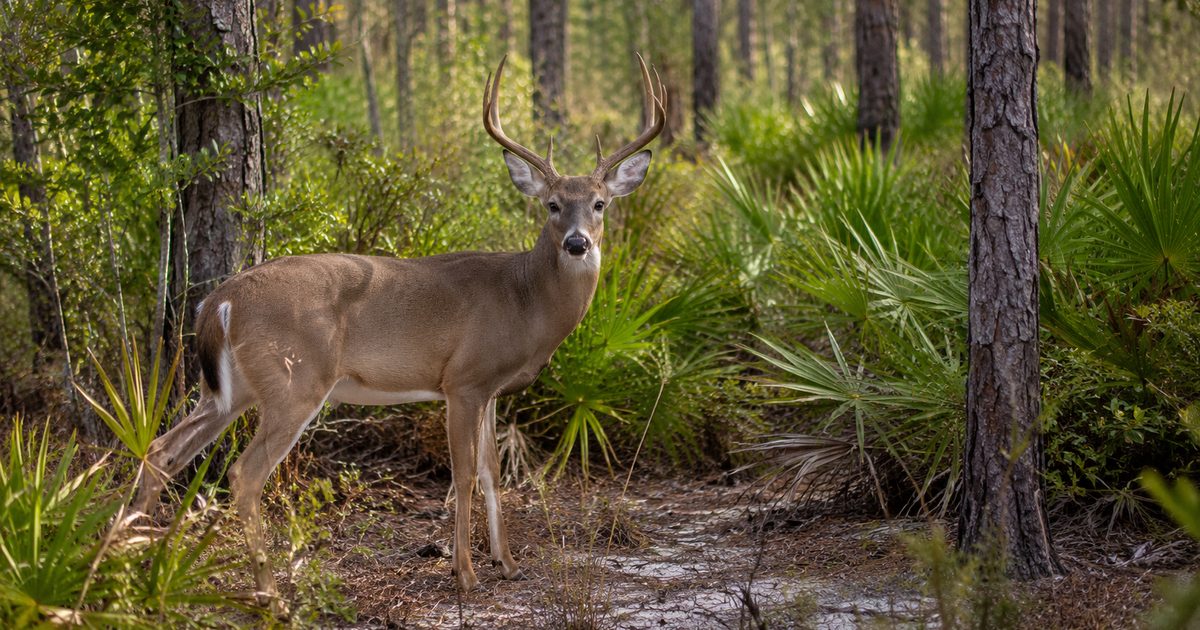
The first time I dragged a treestand into a Florida cypress head in late October, I was sweating through my base layer before I even had the first strap buckled. The air smelled like black water and rotting vegetation, mosquitoes found every gap in my clothing, and a two-foot water moccasin was already annoyed that I’d interrupted his morning. It was perfect.
Florida deer hunting is nothing like hunting the Midwest, and if you show up expecting the same playbook to work, you’ll be back at the truck by noon wondering what went wrong. But if you take the time to learn how this state operates — the WMA system, the zone-based season calendar, the particular habits of the Osceola whitetail — it rewards you with hunting that has almost no pressure by comparison to what’s happening in Georgia or the Carolinas. Big stretches of public timber, a rut that stretches deep into winter, and a subspecies of deer that has adapted to some genuinely odd habitat. Once it gets into your blood, you keep coming back.
The Osceola Whitetail: Florida’s Own Subspecies
Most hunters outside the South don’t realize Florida has its own recognized subspecies of whitetail deer. The Osceola whitetail (Odocoileus virginianus seminolus) is smaller-bodied than the northern whitetails most hunters are used to, which is a direct adaptation to the heat. Smaller body mass means less surface area to shed heat — the same reason deer in the Deep South have leaner frames than their relatives in Wisconsin.
Antler morphology on Osceola bucks tends toward tighter, more compact main beams with shorter tines relative to body size. A mature Osceola buck that gross scores in the 120s is a genuinely impressive animal for the region, and most hunters hunting Florida public land consider anything above 100 inches a quality buck. Don’t measure Florida success against Midwestern standards — you’ll miss what makes these deer special.
Their behavior patterns also differ. Osceola whitetails are more comfortable moving in thicker cover than many northern whitetails, and their home ranges tend to be smaller in areas with concentrated food sources. They’re also warier in ways that are hard to quantify — possibly a function of year-round predator pressure from Florida panthers, black bears, alligators, and coyotes. They did not get relaxed and trusting by surviving in that environment.
Understanding Florida’s Zone System
Florida Fish and Wildlife Conservation Commission (FWC) manages deer seasons through a zone-based system, and getting this wrong will ruin a hunt before it starts. The state is divided into general gun zones — historically labeled A through L — with archery, muzzleloader, and general gun season dates that vary considerably depending on which zone you’re hunting.
The practical consequence is that two hunters can be sixty miles apart and be in completely different points of their seasons. If you’re hunting in the Panhandle around Apalachicola National Forest, your general gun season opens earlier and the rut timing is different from someone hunting the Kissimmee Prairie in central Florida or a south Florida WMA.
Pro Tip
Before you book a trip or scout a WMA, pull the current year’s Florida Hunting Regulations from the MYFWC website and verify the exact zone your target WMA falls under. Zone boundaries and season dates are updated annually, and a mistake here means wasted time in the field during the wrong window.
Always cross-reference the specific WMA regulations as well. Many WMAs have hunt period structures — meaning you need a quota permit for specific periods, and the general season rules for that zone may not apply the same way on quota-managed land. The MYFWC Hunt Zone Finder tool lets you plug in a location and get the zone assignment directly.
Rut Timing Across Florida
Florida’s rut is one of the most misunderstood aspects of hunting the state. The peak breeding window is not a single statewide event — it runs across a long calendar because the zone geography spans from the Georgia border in the north to below Lake Okeechobee in the south.
In the Panhandle and North Florida zones, peak rut behavior typically aligns more closely with what you’d expect in neighboring Georgia — late October through mid-November tends to produce the most daylight buck movement. As you move south, that window slides progressively later. Central Florida WMAs often see peak rut activity in December and into January. The southernmost areas of the state can see breeding behavior push into February.
This creates a hunting opportunity that most states simply cannot match. If you’re willing to travel within Florida and understand the zone system, you can essentially chase rut conditions for three to four months by working north to south through the season calendar. It’s a strategy that hunters who have figured out the Florida system use to stack tags across multiple WMAs.
Indicators to watch regardless of zone: scrape lines along palmetto edges and oak hammock perimeters, bucks pushing does in open pine flatwoods during morning movement, and the sudden appearance of fresh rubs on cabbage palms and young pines that weren’t there the week before. The whitetail rut hunting tactics guide covers how to adapt calling and rattling to Florida’s zone-specific rut windows and thick-cover terrain.
The Florida WMA System and MYFWC Access
Florida’s public hunting land is extensive. The FWC manages dozens of Wildlife Management Areas across the state, and the total acreage available to licensed hunters represents one of the better public land hunting opportunities in the Southeast. The MYFWC website is the hub for everything — quota permit applications, hunt period calendars, WMA maps, and regulation lookups.
Some WMAs require only a valid Florida hunting license and a Management Area Permit (included with most license packages). Others use a quota permit system, where you apply in advance for specific hunt periods and are selected by drawing if the hunt is oversubscribed. Quota hunts tend to have lower pressure and better habitat management as a result.
A few WMAs worth knowing:
Apalachicola National Forest (NW Florida): At roughly 632,000 acres, this is the largest national forest in Florida and offers substantial deer hunting across mixed pine-hardwood habitat. The Apalachee WMA unit on the forest’s eastern side produces consistent buck sightings during the general gun season. The flatwoods and creek drainages here look more like South Georgia than subtropical Florida.
Osceola National Forest (North Central Florida): Named for the same subspecies, this forest holds good deer numbers in the pocosins and bay head thickets. It’s swampy, wet, and requires waterproof boots at minimum. The hunting can be excellent for hunters willing to wade in.
Three Lakes WMA (Central Florida): Located in Osceola County, this is a well-known central Florida WMA with a diverse habitat mix — dry prairie, pine flatwoods, and the lake edges that define the Kissimmee landscape. It draws pressure on quota hunt days, but the off-quota general season hunting is worth exploring.
Fisheating Creek WMA (South Central Florida): This corridor along Fisheating Creek offers some of the most distinctive hunting terrain in the state — creek swamps, live oak hammocks, and palmetto prairies. Deer densities here can be good, and the late rut timing in this zone means December and January hunts can be productive.
Dinner Island Ranch WMA (South Florida): A large working cattle ranch unit with open prairie and scattered oak hammocks. The deer hunting here skews heavily toward afternoon hunting near ag field edges, and the visual scouting is easier than in thick swamp environments.
Reading Florida Terrain
If you’ve hunted primarily in upland or agricultural settings, Florida terrain requires a recalibration of how you think about deer movement.
Deer in Florida use hammocks — dense clusters of live oaks, cabbage palms, and hardwoods — as bedding and thermal cover. These hammocks sit inside a surrounding matrix of palmetto scrub, pine flatwoods, or open prairie, and they are the equivalent of a woodlot edge in the Midwest. Find the hammock-to-open transition, and you’ve found where deer will move at first and last light.
Cypress sloughs and creek swamps function as travel corridors. Deer move through these wet areas more freely than most hunters expect, and the edges where a cypress head meets a dry pine flat are often high-traffic pinch points. When the surrounding flatwoods dry out in the fall, deer that have been bedding in swamp cover during summer heat will push out to find acorns and other hard mast.
Oak hammocks are the key food source in autumn. Florida has several oak species that produce acorns on varying schedules, and finding a live oak or water oak flat that’s actively dropping is the single biggest factor in locating deer during October and November. Palmetto berries are also consumed heavily in late summer and early fall and will concentrate deer before the acorn drop begins.
Warning
Hunting near water in Florida is not optional — it’s the nature of the terrain. But it introduces hazards that Midwestern hunters are not accustomed to. Alligators are present in virtually every body of still or slow-moving water in central and south Florida. Do not wade creek crossings in low light without checking first. This is not an exaggeration — it is a standard risk management practice for Florida hunters.
Heat Management and Early Season Tactics
Florida archery season opens in mid-September in many zones, and the temperature at that point is still fully summer. Highs in the 90s are common, humidity is brutal, and dawn arrives already hot. Hunting in these conditions requires adjusting your expectations and your approach.
Scent control matters more in the heat because thermal activity is erratic and deer are using their noses aggressively in the warm months. Wind-driven setups are more critical here than they would be in October in the North. Elevated stands over water or in the canopy of a hammock can help, but thermals rising in the heat will still carry your scent to any deer downwind below you.
Hunt the first and last hour of light and be willing to get out early. Deer in September heat are moving the minimum they can get away with, and mid-morning hunting pressure just burns your scent into the area for nothing. The most productive Florida hunters treat early season as pure observation and pattern-building, then apply that intel when temperatures drop in November.
Light hunting clothes with moisture-wicking properties are mandatory. Pack out with minimal weight. Some hunters use frozen water bottles to pre-cool before a hunt. It sounds excessive until your first September sit.
Stand Hunting vs. Spot-and-Stalk in Thick Cover
Most Florida public land does not lend itself to spot-and-stalk hunting in the traditional western sense. The vegetation density in palmetto scrub, pine flatwoods, and swamp edge is high enough that your effective visual range is often measured in yards rather than hundreds of yards. Still-hunting in these conditions is viable for bowhunters willing to move extremely slowly through hammock edges.
For gun hunters on public land, elevated stands or ground blinds positioned on known travel routes will consistently outperform blind wandering. Florida’s relatively flat terrain means finding natural elevation changes — a slight rise above a wet flat, the edge of a creek terrace — and placing your stand to take advantage of those transitions.
If you’re using a climber, recognize that Florida’s timber is often smaller-diameter than what you’d encounter in northern hardwood country. Cabbage palms don’t climb. Pine stands with mature timber are your best bet for climbers. Hang-on stands on oak hammock edge trees are a standard setup for Florida hunters who return to the same WMA year after year.
Licenses, Permits, and Quota Applications
A Florida hunting license plus the Management Area Permit covers most general season WMA hunting. Deer require a deer permit (included in comprehensive license packages for residents). Non-residents need a non-resident license plus the applicable permits — the non-resident hunting license guide covers Florida’s current fee structure alongside neighboring Georgia and Alabama for hunters comparing Southeast destinations.
Quota permit applications open well ahead of the season on the MYFWC GoOutdoorsFlorida portal. Check the WMA-specific regulations for which periods require quota permits versus walk-in access. Many popular WMAs have quota periods during peak rut windows that fill quickly, so applying early in the application window is standard practice for serious hunters. The draw odds engine can help you benchmark permit competitiveness across states as you plan your hunting calendar.
Bottom Line
Florida deer hunting is genuinely different, and it asks hunters to adapt rather than apply a template. The Osceola whitetail is a unique animal in a landscape unlike anything in the rest of the whitetail range. The zone system gives you flexibility to chase the rut across months rather than weeks. The WMA network provides legitimate public land opportunity on a scale that surprises most hunters who haven’t looked at it seriously.
The barriers to entry are low if you put in the homework — understand the zone your target WMA falls under, pull the quota permit calendar early, and arrive in the field with an honest understanding of what Florida terrain demands. The hunters who figure it out keep coming back because once you’ve put a mature Osceola buck on the ground in a cypress swamp in December, hunting anywhere else starts to feel a little ordinary.
Next Step
Check Draw Odds for Your State
Tag-level draw odds across 9 western states — filter by species, unit, weapon, and points. Free to use.
Get the Insider Edge
Join hunters getting exclusive draw odds data, gear deals, and weekly hunt planning tips.
Related Articles

Arizona Unit 36 Border Country Guide
Units 36A, 36B, and 36C sit along the Mexican border west of Nogales — overlooked Coues and javelina country with low draw requirements and solid hunting.

Montana General Elk Tag: Everything You Need to Know
The Montana general elk tag explained — who can buy one, what it covers, best districts, season dates, nonresident options, costs, and tactics for public land.

Arizona Unit 22 Guide: Tonto Basin
Unit 22 runs across the Tonto Basin and the Salt River country — productive elk in the highlands, accessible javelina in the desert, and some of Arizona's most underrated deer country.
No comments yet. Be the first to share your experience!