Coues Deer Hunting Tactics: Glass-and-Stalk in the Sky Islands
How to hunt Coues deer in Arizona's sky island ranges — glassing setups, stalk execution, January rut timing, trophy assessment, and draw odds for one of North America's most demanding deer hunts.
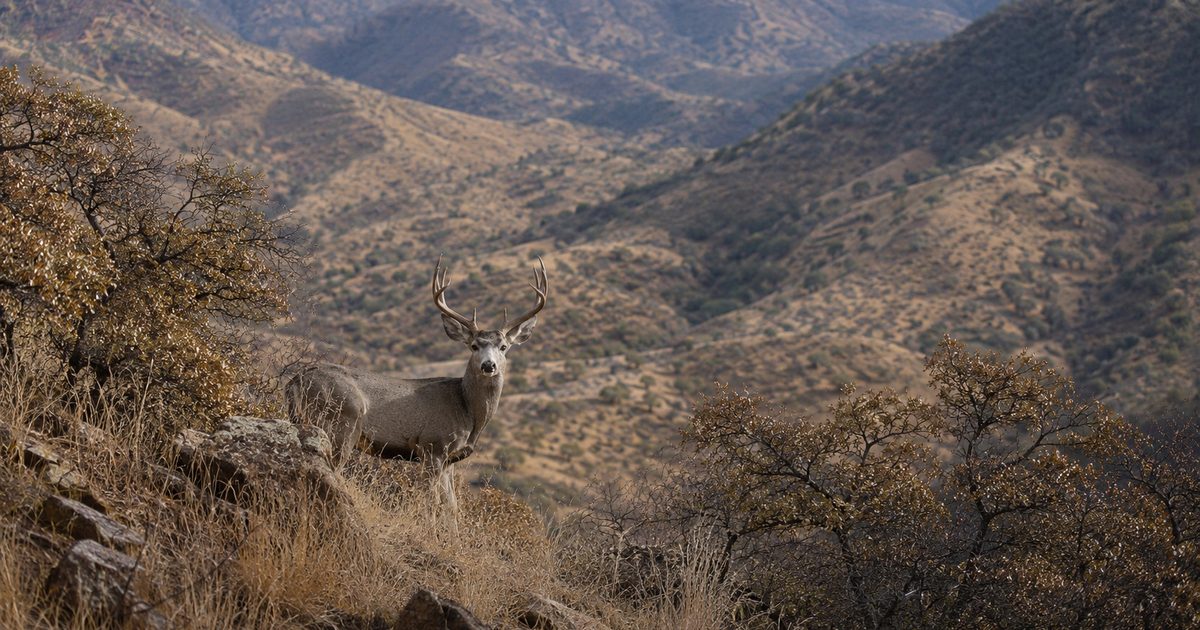
Ask any hunter who’s spent serious time chasing Coues deer to describe the experience, and you’ll hear the same story. Miles of hiking through vertical terrain, hours behind a spotting scope on an empty hillside, and then — usually when you’ve already started thinking about lunch — a small gray shape materializes against the rock at 340 yards and is gone in three seconds. After that, you’re either done with Coues deer forever or you’re planning the next trip before you get back to the truck.
Most hunters choose the second option.
What Makes Coues Deer Different
The Coues whitetail (Odocoileus virginianus couesi) is a recognized subspecies of the common whitetail, but hunting them has almost nothing in common with hunting their Midwestern relatives. They’re smaller — mature bucks typically weigh 80 to 100 pounds — and scored separately by Boone and Crockett because the size difference makes comparison meaningless. A 110-inch Coues buck is a genuine trophy. A 120-inch Coues buck is exceptional. You’re not chasing the same deer as a Wisconsin hunter.
The color is the first thing that gets hunters. Coues deer are ash-gray — not the warm brown of a whitetail back east, but a cool gray that matches granite, dried oak leaves, and lichen-covered canyon rock with unsettling precision. A bedded buck at 300 yards looks like a rock. A standing buck against a rocky hillside looks like a slightly odd-shaped rock. You’ll spend more time identifying potential deer than you will watching actual deer.
What earns them the “gray ghost” nickname isn’t just the color. It’s their stillness. Unlike mule deer, which tend to fidget and look around when nervous, a Coues buck under pressure will stand or lie completely motionless for extended periods while you scan directly over him. Combine cryptic coloration with that kind of discipline, and you have a deer that can functionally disappear in plain sight.
The terrain doesn’t help. Coues country is broken, steep, and relentless. Every potential approach involves loose shale, dense manzanita, and canyon walls that look shorter from a distance than they are.
Start With a Spotting Scope, Not a Rifle
New Coues hunters consistently underinvest in optics. You won’t find these deer without a quality spotting scope — an 80mm at 60x minimum — and 15x binoculars for primary scanning. Showing up with 10x binoculars is like showing up to a chess match having only learned checkers. The terrain and the deer both demand maximum resolution.
The Sky Island Ranges
Coues deer live in a specific elevation band — roughly 3,500 to 7,000 feet — in the mountain ranges that rise out of the Sonoran Desert in southeastern Arizona and southwestern New Mexico. These isolated ranges, called sky islands because they’re surrounded by desert lowland, harbor Mexican pine-oak forest on their upper slopes and dense Sonoran Desert at their bases. That vertical transition creates the habitat Coues depend on.
The Huachuca Mountains near Sierra Vista, the Santa Rita Mountains south of Tucson, the Chiricahua Mountains in Cochise County, the Rincon Mountains east of Tucson, and the Dragoon Mountains all represent classic Arizona Coues country. Further east, the Peloncillo and Animas ranges in New Mexico’s southwestern corner hold deer with less hunting pressure. Sonora, Mexico’s Sierra Madre foothills sit just south of the border and deliver some of the best trophy quality on the continent.
Each range has its own character. The Huachucas are more accessible and see more hunting pressure — trail systems and roads cut through the range, making it practical for hunters without extensive backpacking experience. The Chiricahuas are more remote, with longer approaches and denser forest, but they hold deer in numbers that reward the extra effort. The Santa Ritas sit close to Tucson and draw pressure accordingly, but the canyon systems on their eastern face produce mature bucks every season.
The deer concentrate in oak woodland on mid-elevation slopes. They use dense brush patches — manzanita, wait-a-minute bush, scrub oak — for bedding, and they feed on the open oak flat edges at first and last light. That transition zone between bedding cover and feeding flats is where you find them.
Glass-and-Stalk: The Only Real Strategy
You can’t still-hunt Coues deer effectively. The terrain is too noisy, the deer’s senses too sharp, and the brush too dense for a walking approach to pay off consistently. You can’t drive them like pheasants or pattern them like a food-plot whitetail. What works — what consistently works — is finding deer from a distance with quality optics, evaluating the buck, planning a stalk, and executing that stalk before the deer moves on its own.
Glass first. Stalk second. That sequence isn’t optional.
Positioning your glassing setup: Get above your target terrain whenever possible. You want to look across and slightly down into canyon systems, not straight across at the same elevation. Ridgeline saddles and high promontories that expose multiple canyon walls, bench flats, and open hillsides give you maximum coverage per hour of glassing. The best setups require reaching your position before first light — a 45 to 90-minute approach hike in the dark is standard for serious Coues hunters.
Working the glass methodically: Scan slowly. Most hunters go too fast, looking for movement when they should be examining each section of hillside for shape, line, and proportion. A Coues buck at 350 yards is a gray oval. You’re looking for an oval with slightly too-regular proportions, an ear flick, the horizontal line of a back that doesn’t match the terrain behind it. Work every patch of brush, every rocky bench, every open face. Then start over and do it again.
The midday window: Coues deer — especially during the rut — have a midday browse period from roughly 10:30 AM to 1:30 PM that many hunters miss because they’ve headed back to camp. Bucks that were invisible all morning sometimes stand up and walk across an open bench at noon. Stay behind glass until at least 1 PM before calling it.
Re-glass before committing to a stalk: Once you find a deer, watch it for a minimum of 20 minutes before moving. Learn its direction of travel, identify landmarks near where it bedded, and note any other deer in the area that could blow your approach. More stalks fail because of unseen deer than because of the target buck.
Mark Your Deer Before You Move
When a buck beds down and you’re ready to start a stalk, pick two or three landmarks above, below, and to the side of where he’s lying. Use a topo map or your phone’s GPS to pin the location. The canyon will look completely different from 200 feet lower, and the feature you think you’ll find easily will vanish the moment you drop off the ridge.
Executing the Stalk
Here’s where Coues hunting separates itself from the theoretical. The terrain is open enough to spot deer at distance, but rugged enough that every approach requires genuine route-finding and physical commitment.
Start your stalk only when you’ve identified a route that keeps you hidden. Wind is everything — Coues deer’s nose is as capable as any whitetail’s, and a thermal shift at the wrong moment will end your hunt before you see the deer again. In steep canyon terrain, thermals typically pull uphill in the morning as the canyon heats and fall back down in the evening as it cools. Plan your approach accordingly, and check wind constantly with a puff bottle or lightweight yarn tied to your pack.
Expect the stalk to take longer than it looks. A hillside that appears 400 yards away is often 600. A draw that looks like a straightforward descent has three false ridges and a cliff band. The route you planned from the glassing position will require improvisation. Give yourself two to three times as long as your initial estimate.
Move quietly and slowly in the final 200 yards. Dry grass, loose shale, and crunchy oak leaves make silence nearly impossible, but minimizing noise matters. Long pauses at cover — crouching behind a boulder, working to the edge of a brush patch — let you scan ahead before committing to the next open section. The deer that detects you on the final approach, before you ever get a shot, is the most common outcome of an otherwise well-executed stalk.
Shooting positions in Coues country are rarely ideal. You’ll be on a steep hillside, possibly kneeling on loose rock, shooting across a canyon at a deer on the opposite wall. Practice shooting from field positions — trekking pole rests, pack rests, seated on a hillside — before you go. Standing shots off shooting sticks rarely happen in this terrain.
January Rut: The Highest-Percentage Window
Coues deer rut in late December through mid-January. Peak breeding falls between roughly December 28 and January 18 in most of their Arizona range. This timing surprises hunters who expect a November whitetail rut — but the late calendar exists because fawns conceived in January are born during the July-August monsoon season, when vegetation is at peak nutrition for supporting a fawn through its first months.
For hunters, the January rut is the single most important period of the Coues season. Bucks that are functionally nocturnal most of the year start crossing open terrain in full daylight. A mature buck that would be invisible in October is walking along an exposed ridgeline at 9 AM in early January because a doe crossed it an hour before him. That’s your window.
Calling works during the rut in a way it doesn’t outside it. Coues bucks will respond to doe bleat calls, grunt calls, and rattling, particularly in areas where buck-to-doe ratios are reasonable. Rattling produces bucks from surprising distances in canyon country — sound carries far in that terrain, and bucks that hear a fight will sometimes close several hundred yards to investigate. Don’t rattle aggressively; short, moderate sequences with long pauses work better than prolonged battles.
Cold fronts during the rut are prime hunting time. Temperature drops that push bucks to keep moving in their search for does produce the kind of consistent daylight activity that stacks up kills. If a front is moving through during your January hunt, be on the glass at first light.
The Late Rifle Season Is Your Best Rifle Bet
Arizona offers Coues deer rifle seasons from late October through early February in most units, but the late season — typically running December 20 through January 30, depending on the unit — overlaps with the rut. A tag for a late rifle season in a quality unit like 36A or 35A is worth more hunting hours than an early-season tag in the same unit.
Shot Distances and Caliber
Most Coues deer are taken at 200 to 400 yards. That’s not a preference — it’s the terrain. You’ll find deer at those distances because that’s where the glassing game puts you when a stalk runs out of cover or a buck stands up in an open spot you couldn’t reach without blowing the approach.
Shots under 150 yards are genuinely uncommon in rifle Coues hunting. Shots beyond 400 yards happen, particularly when the stalk closes but not completely. You need a rifle that shoots sub-MOA, a scope with reliable turrets or a well-practiced holdover system, and a rangefinder you actually use before settling into a shooting position.
Caliber selection favors flat-shooting, accurate cartridges in the 6mm to 6.5mm range. The 6.5 Creedmoor, 6.5 PRC, .260 Remington, and .243 Winchester all work excellently. The deer themselves aren’t large — a well-placed 6.5mm bullet is more than adequate — but the accuracy requirement at distance is what matters. A caliber you shoot accurately at 350 yards beats a magnum you shoot accurately at 200 yards.
Practice shooting from field positions at 200 to 400 yards before the hunt. Not from a bench — from a rocky slope with a pack rest, or sitting with trekking pole support, which is how most of these shots actually happen.
Trophy Assessment
Coues deer are scored under the same Boone and Crockett system as standard whitetail, but the numbers look different. The B&C minimum for typical entry is 110 inches. The all-time record sits just above 143 inches.
In the field, assessing a Coues buck is difficult because the deer are small and the terrain is often bad for perspective. Some general benchmarks: a buck whose antlers extend past his ear tips on both sides is likely in the 90-inch range; a buck whose main beams extend noticeably past his ears and carries good tine length is probably 95 to 100 inches; a 110-class buck will have main beams that appear wide and heavy for the animal’s size, with tines that stack up clearly. Width and tine length both matter.
Give yourself time to assess before shooting. A 70-class buck at 300 yards can look like a legitimate trophy through a spotting scope if you’re wound up from a long stalk. Calm down, look at the ears for reference, and count tines carefully.
Arizona Draw Odds
Arizona Coues deer hunting runs on a bonus point system. Most of the premier Coues units — 36A, 36B, 35A, 37A, 37B, 33, 34A — require draw applications. The good news is that archery units draw at 0 to 2 points for many hunters, making archery Coues accessible relatively early in your point-building career.
For rifle tags in premium units, nonresidents typically need 8 to 14 points to draw competitively in the best units. Draw odds fluctuate year to year based on applicant pressure. Check current data in the ProHunt Draw Odds Engine before committing your points — applicant trends in the top Coues units have shifted over the past several years, and some units draw significantly better than their reputation suggests.
If you want to start hunting Coues sooner rather than building toward a trophy unit, some lower-draw-pressure units in the Chiricahua and Peloncillo drainages draw at 3 to 5 points and still hold quality deer. Arizona draw odds data by unit is available on ProHunt for current analysis.
Optics Priority List for Coues Hunting
Budget in this order: spotting scope first (80mm, 60x minimum — Kowa, Vortex Razor, Swarovski), binoculars second (15x56 or 15x60 — Swarovski, Zeiss, Leica), rangefinder third (1,000+ yard rated). Everything else is secondary. Cutting corners on glass in Coues country costs you deer you’ll never even know you missed.
Getting to the Field
Most Coues country in southeastern Arizona is managed by Coronado National Forest. Roads into the primary ranges are typically passable with a high-clearance vehicle in dry conditions — the Huachuca and Santa Rita approaches are doable in a 4WD truck. The Chiricahua Mountains have more remote drainages that require longer foot travel or horseback.
Water in November through February is usually available from seasonal springs and stock tanks, but Coues country in Arizona can go dry. Carry a minimum of 3 liters from camp and know your nearest reliable water source before committing to a long stalk that pushes you to the far end of a drainage.
Cell service is spotty to nonexistent in most sky island drainages. Download offline maps before you go. OnX Hunt with the Arizona layer is the standard tool for this country.
The learning curve for Coues hunting is real. First-time hunters in this terrain spend significant time simply figuring out how to read the landscape — which canyon walls heat first and hold deer in early morning, which drainages funnel deer movement between feeding and bedding areas, which ridgelines give glassing access to multiple systems. A first DIY Coues trip often functions as scouting for the next one. Go knowing that, stay patient, and you’ll come back with information that makes the second trip a real hunt.
The gray ghost earns that name. Give it the time it demands.
Sources & verification
Seasons, license fees, application windows, and draw structure for Arizona change every year. Always verify the current details against the official Arizona agency before applying or hunting.
- Arizona Game & Fish Department — azgfd.com
Next Step
Check Draw Odds for Your State
Tag-level draw odds across 9 western states — filter by species, unit, weapon, and points. Free to use.
Get the Insider Edge
Join hunters getting exclusive draw odds data, gear deals, and weekly hunt planning tips.
Related Articles

Arizona Elk Calling: September Archery
September archery elk in Arizona means calling. Here's the practical guide to bugles, cow calls, and the timing that produces bulls.
Arizona Hound Hunting Regulations Guide
Arizona hound hunting for bear and lion requires specific permits and tags. Here's the complete regulatory guide for 2026.

Arizona Shed Hunting: Rules & Season Guide
Arizona has specific rules on shed antler collecting. Here's the complete guide to the season, the ethics, and the most productive areas.
No comments yet. Be the first to share your experience!