Alaska Moose Hunting: The Complete Guide
Everything you need to hunt moose in Alaska — top GMUs, draw systems, DIY vs. guided options, gear, costs, and field-tested tactics for the biggest game in North America.
This article contains affiliate links. We may earn a small commission if you purchase through these links, at no extra cost to you.
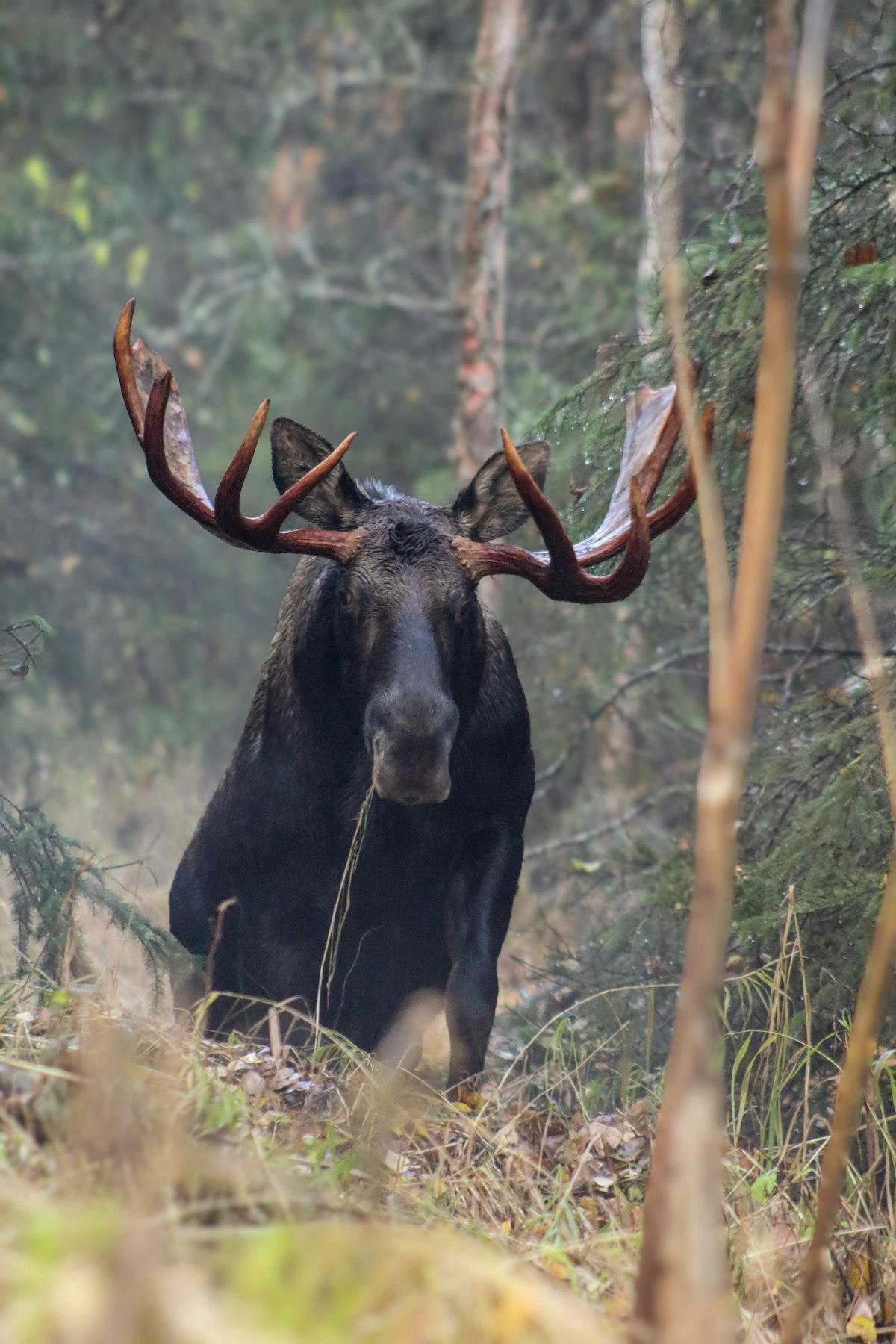
Alaska moose are the largest subspecies of moose on earth. A mature Alaskan-Yukon bull can stand seven feet at the shoulder, weigh 1,600 pounds, and carry antlers that spread 70 inches or more. For hunters, filling an Alaska moose tag is one of the defining achievements in North American big game — and it takes serious planning to make it happen.
Alaska offers opportunities that no other state can match: general season hunts available to any resident, draw hunts with some of the highest success rates in the country, and vast roadless wilderness where moose densities remain healthy. But the logistics of hunting in Alaska — getting to remote areas, dealing with weather, and packing out 700+ pounds of meat without road access — make this one of the most demanding hunts on the continent.
Whether you’re a resident building a DIY hunt cost plan or a nonresident weighing guided options, this guide covers every angle of planning an Alaska moose hunt.
Quick Facts: Alaska Moose Hunting
| Detail | Info |
|---|---|
| Species | Alaska-Yukon moose (Alces alces gigas) |
| Seasons | General: Sep 1–25 (varies by GMU) · Draw hunts: Aug–Nov (unit-specific) |
| Application Deadline | Mid-December (Tier II) · Mid-February (draw hunts) |
| License Cost (Resident) | $25 hunting license + $10 moose locking tag |
| License Cost (Non-Resident) | $160 hunting license + $800 moose locking tag |
| Guided Requirement (NR) | Required for Dall sheep and brown bear; moose is DIY-legal for nonresidents |
| Estimated Moose Population | ~175,000–200,000 statewide |
| Statewide Success Rate | 18–22% general season, 40–60% draw hunts |
| Record Antler Spread | 77 5/8” (Boone and Crockett world record) |
| Average Meat Yield | 500–700 lbs bone-in, 350–450 lbs boneless |
Alaska’s Moose Hunting Regions
Alaska is divided into 26 Game Management Units (GMUs) that span an area twice the size of Texas. Moose habitat, access, and hunting pressure vary enormously across these units. Understanding the regional differences is the first step in planning a successful hunt.
Interior Alaska (GMUs 12, 13, 20)
| Unit | Access | Moose Density | Avg Bull Size | Pressure Level | Success Rate |
|---|---|---|---|---|---|
| 20A | Road + ATV | High | 50–60” | Moderate-High | 20–28% |
| 20B (Fairbanks) | Road | Moderate | 45–55” | High | 15–20% |
| 13 (Nelchina) | Road + ATV | High | 50–65” | Moderate | 22–30% |
| 12 (Tok) | Road + ATV | Moderate | 50–60” | Low-Moderate | 25–35% |
The Interior is where most Alaska moose hunts happen. Units along the road system — particularly GMU 20A south of Fairbanks and the Nelchina Basin in GMU 13 — hold strong moose populations and relatively accessible terrain. These are the workingman’s moose hunts: drive to a trailhead or put a boat in a river, hunt hard for two weeks, and pack meat back to the truck.
GMU 13 is arguably the single most popular moose unit in the state. The Nelchina Basin produces big bulls in the 55–65-inch class, and road access via the Glenn Highway and Denali Highway keeps logistics manageable. The trade-off is pressure — this unit sees heavy ATV and boat traffic during the September general season.
Western Alaska (GMUs 17, 18, 19, 21, 22)
Western Alaska holds some of the densest moose populations in the state, but access is the challenge. There are no roads. Getting in requires bush planes, jet boats, or rafts.
| Unit | Access | Moose Density | Avg Bull Size | Pressure Level | Success Rate |
|---|---|---|---|---|---|
| 19 (McGrath area) | Bush plane/boat | High | 55–65” | Low | 30–40% |
| 21 (Lower Yukon) | Bush plane/boat | Moderate-High | 55–65” | Low | 35–45% |
| 17 (Bristol Bay) | Bush plane/boat | High | 55–70” | Very Low | 40–50% |
| 22 (Seward Peninsula) | Bush plane | Moderate | 50–60” | Low | 30–40% |
GMU 19 around McGrath is a classic fly-in moose hunt. Outfitters and DIY hunters stage out of McGrath, then fly bush planes or raft river systems to reach remote hunting areas. Bull moose in this region regularly push 60+ inches, and the low hunting pressure means animals are less wary than their road-system counterparts.
GMU 17, in the Bristol Bay drainage, produces trophy-class bulls with some of the widest spreads in the state. This is where serious antler hunters focus their efforts, but the logistics require either a quality outfitter or significant bush flying experience.
Southcentral Alaska (GMUs 6, 7, 14, 15, 16)
| Unit | Access | Moose Density | Avg Bull Size | Pressure Level | Success Rate |
|---|---|---|---|---|---|
| 14A (Matanuska) | Road | Moderate | 45–55” | Very High | 12–18% |
| 14C (Anchorage) | Road/foot | Low | 40–50” | Very High | 8–12% |
| 16 (West of Anchorage) | Boat/plane | Moderate-High | 50–60” | Moderate | 20–30% |
| 15 (Kenai Peninsula) | Road + ATV | Moderate | 45–55” | High | 15–22% |
Southcentral units near Anchorage and the Kenai Peninsula see the heaviest hunting pressure in the state. These hunts are accessible but competitive. Trophy potential is lower than western or interior units, but the convenience factor makes them popular with residents.
GMU 16B west of Anchorage is a standout — accessible by boat or bush plane from the road system, this unit holds strong moose numbers and produces bulls in the 55-inch class without the extreme logistics of Western Alaska.
How to Get an Alaska Moose Tag
Alaska’s tag allocation system is different from the Lower 48 states. Understanding the layers is critical.
General Season Hunts (No Draw Required)
Most Alaska moose hunting happens during the general season, which runs from September 1 through September 25 in most units. Any licensed hunter — resident or nonresident — can purchase a harvest ticket and hunt during the general season in open units. No draw, no application, no preference points.
General season regulations typically specify legal bulls by antler restrictions:
Antler Measurement in the Field Is Your Responsibility
Misidentifying a legal bull is a criminal violation in Alaska, not a paperwork issue. Before your hunt, practice measuring antler spread using your fist (roughly 4 inches) and study the brow tine counting rule for your specific GMU. ADF&G publishes unit-by-unit diagrams in the regulations booklet.
- 50-inch minimum: Bull must have an antler spread of at least 50 inches, OR
- 3 brow tines: At least three brow tines on one antler, OR
- Spike/fork: Some units allow spike or fork bulls
These antler restrictions vary by unit. Always check the current Alaska hunting regulations booklet before hunting.
Drawing Permit Hunts
Alaska runs draw hunts for specific units where biologists want tighter harvest control. These hunts often carry higher success rates than general season — sometimes 50%+ — because they limit hunter numbers.
| Hunt Type | Application Period | Fee | Point System |
|---|---|---|---|
| Draw Permit Hunts | Nov–Feb | $10 application | No points — pure random |
| Tier II Subsistence | Oct–Dec | Varies | Based on customary/traditional use |
| Registration Hunts | Open enrollment | No fee | First-come, first-served |
Alaska does not use preference or bonus points for its draw hunts. Every application is a pure random draw. This means a first-time applicant has the same odds as someone who has applied for 20 years. It also means there’s no point in “investing” in the system — either you draw or you don’t.
Key draw hunts worth targeting:
- GMU 14A antlerless moose: Produces near the road system with 30–40% success
- GMU 1 Berners Bay: Accessible from Juneau with high success
- GMU 15C Kenai archery: Limited entry with excellent bull-to-cow ratios
- GMU 22 Seward Peninsula: Trophy potential with limited competition
Nonresident Requirements
Nonresidents can hunt Alaska moose without a guide. This is different from Dall sheep and brown/grizzly bear, which require either a licensed guide or a resident relative to accompany the nonresident. For moose, you’re legally clear to hunt DIY as a nonresident.
However, the logistical reality of hunting remote Alaska solo as a first-timer is daunting. Most successful nonresident moose hunters either hire a quality outfitter or team up with an experienced Alaska partner.
Cost Breakdown: Alaska Moose Hunting
| Cost Category | DIY Road System | DIY Fly-In | Guided Fly-In |
|---|---|---|---|
| Hunting License (NR) | $160 | $160 | $160 |
| Moose Locking Tag (NR) | $800 | $800 | $800 |
| Application Fee (if draw) | $10 | $10 | $10 |
| Airfare to Alaska | $500–900 | $500–900 | $500–900 |
| Bush Plane Charter | N/A | $1,500–3,500 | Included |
| Vehicle/ATV Rental | $1,200–2,500 | N/A | N/A |
| Outfitter/Guide Fee | N/A | N/A | $12,000–22,000 |
| Meat Processing | $400–800 | $400–800 | $400–800 |
| Meat Shipping | $300–600 | $300–600 | $300–600 |
| Camping/Food (14 days) | $300–500 | $300–500 | Included |
| Taxidermy (shoulder mount) | $1,500–3,500 | $1,500–3,500 | $1,500–3,500 |
| Total Estimate | $3,700–6,800 | $5,500–10,700 | $16,000–28,000 |
A road-system DIY moose hunt in Interior Alaska is one of the most affordable big game hunts in North America relative to the size and quality of the animal. A fly-in hunt jumps significantly due to bush plane costs. Guided fly-in hunts carry the highest price tags but dramatically increase success rates for nonresidents unfamiliar with Alaska.
Calculate your total hunt cost
Gear for Alaska Moose Hunting
Alaska moose hunting demands specific gear decisions that differ from Lower 48 hunts. The combination of remote wilderness, potentially extreme weather, and massive pack-out weights means your gear choices have real consequences.
Rifles and Calibers
| Caliber | Pros | Cons | Best For |
|---|---|---|---|
| .300 Win Mag | Proven moose killer, flat trajectory, available everywhere | Moderate recoil | All-around best choice |
| .338 Win Mag | Devastating terminal performance, handles brush | Heavy recoil, fewer factory loads | Timber and close-range |
| .30-06 Springfield | Lighter recoil, proven on moose for a century | Limited at extreme range | Budget-conscious hunters |
| .375 H&H | Legal for everything in Alaska including brown bear | Expensive ammo, heavy recoil | Hunters in brown bear country |
| 7mm Rem Mag | Flat shooting, moderate recoil | Less terminal energy than .300+ calibers | Open tundra hunts |
The .300 Win Mag loaded with 200–220 grain premium bonded bullets is the most recommended Alaska moose cartridge. It delivers enough energy at 400 yards to anchor a 1,400-pound bull while remaining manageable in recoil for accurate shooting in field conditions.
Compare the best hunting rifles
Essential Gear List
Optics:
- 10x42 binoculars — roof prism, nitrogen-purged for fog resistance
- 20-60x spotting scope — essential for judging antler spread at distance
- Laser rangefinder with angle compensation — best rangefinders reviewed here
Clothing:
- Breathable rain gear (it will rain)
- Insulated mid-layer for September mornings (temps can hit 20s)
- Waders or hip boots for river crossings
- Extra wool socks — minimum 4 pairs
Pack-Out Gear:
- Heavy-duty pack frame rated for 150+ lbs (Kifaru, Mystery Ranch, Stone Glacier)
- Game bags — minimum 8 heavy-duty bags for a whole moose
- Compact bone saw
- Paracord (100 feet minimum) for hanging meat
Camp:
- 4-season tent (weather can turn in September)
- Sleep system rated to 15°F or lower
- Bear-resistant food container
- Satellite communicator (InReach or equivalent) — cell service is nonexistent
Pack-Out Reality
This is where Alaska moose hunting gets physically demanding. A mature bull moose yields roughly 500–700 pounds of bone-in meat, plus the cape and antlers if you’re doing a mount. Without horse or boat access, that means 5–8 pack frame trips through tundra, over rivers, and across muskeg.
Kill Near Water and Cut Your Pack-Out in Half
The single most effective tactic for managing a moose pack-out is killing within dragging distance of a navigable waterway. Plan your hunting routes around rivers and lakes — floating quarters out by raft or packraft saves more labor than any other preparation you can make.
Strategies for managing the pack-out:
- Hunt near water whenever you can. If you can kill a moose within dragging distance of a river, you can float the meat out by raft or inflatable canoe — and that single decision will save you more labor than anything else on the list.
- Bring a partner or two if at all possible. Only one hunter kills the moose, but having two or three people hauling quarters cuts the total trip count roughly in half.
- Plan for two full days after the kill. A bull taken in the afternoon on day one means day two and most of day three belong to the pack-out. Budget the time before you pull the trigger.
- Debone in the field. It takes an extra hour on the carcass, but boneless meat runs about 30–40% lighter than bone-in quarters — and every pound matters when you’re on trip six through tundra.
- Keep the meat moving air. September temperatures can swing from 25°F at night to 55°F midday, so hang the quarters in shade with game bags to keep flies off and get air circulating around the meat as fast as you can.
Hunting Tactics for Alaska Moose
Pre-Rut (August 25 – September 5)
Bulls are still in bachelor groups or solo, feeding heavily in river bottoms, willow flats, and lakeshores. They haven’t started responding to calls yet. This is a spot-and-stalk period.
Glass river corridors. Moose are creatures of water. They feed on aquatic vegetation, use rivers as travel corridors, and bed in willow thickets near water. Set up on ridges or river bluffs and glass systematically at dawn and dusk.
Watch mineral licks. Natural mineral licks and muddy wallows draw bulls during late summer. Trail cameras on these features (if you can get them in position during pre-season) reveal patterns.
Peak Rut (September 5–20)
This is when Alaska moose hunting peaks. Bulls are actively searching for cows, making scrapes, and responding to calls. Aggressive, vocal hunting tactics work.
Cow calling is the go-to tactic during this window. A series of nasal cow moans — made through a birch bark megaphone or even just your cupped hands — can pull a bull crashing through the willows from a mile out.
Brown Bear Will Respond to Moose Calls Too
During the rut, brown bears sometimes approach cow moose calls anticipating an easy kill. Always set up with your back to cover, keep your rifle ready, and scan behind you as aggressively as you scan for moose. Don’t call in dense brush where a bear could be on top of you before you see it.
Call every 15–20 minutes from a spot where you have enough visibility to see him coming before he’s on top of you.
If calling alone doesn’t move a bull, try raking. Scraping a moose scapula or a heavy stick through brush mimics the sound of a rival bull working his antlers through the alders. Combined with some deep grunts, it tends to irritate a dominant bull into investigating what’s on his turf.
Bush plane access for timing. Many successful fly-in hunts time the bush plane drop to coincide with September 7–12, catching the window when bulls are most responsive but before heavy pressure from other hunters pushes them nocturnal.
Late Season (September 15–25)
By mid-September, the most aggressive phase of the rut has passed in many areas. Bulls become warier and travel less. Tactics shift toward patience and habitat knowledge.
Still-hunt timber edges. Walk slowly along the borders between spruce forest and open willow flats. Bulls bed in timber during the day and move to openings at dusk.
Focus on cow groups. Late in the rut, find the cows and you’ll find the bulls. A group of three to five cows in a meadow will have a bull nearby — possibly bedded just inside the treeline.
Top Outfitters and Bush Plane Services
For nonresidents planning a first Alaska moose hunt, the outfitter or transporter you choose can make or break the trip. Two categories of services:
Guided Hunts ($12,000–22,000)
A fully guided Alaska moose hunt includes bush plane access, camp setup, guiding in the field, meat care, and transport back to a road-accessible location. The best outfitters maintain exclusive operating areas in high-density moose units and run success rates of 60–80%.
When evaluating outfitters, ask for 5-year success rates, hunter references (specifically hunters who didn’t harvest), and confirmation of their operating permit in the specific guide area. Alaska requires guides to hold an area-specific license.
How to evaluate and choose a hunting outfitter
Transporters ($2,500–5,000)
Air taxi services (transporters) are the DIY hunter’s alternative to a full guide. They fly you to a pre-scouted drop point, deliver your camp and gear, and return on a scheduled pick-up date to extract you and your meat.
Good transporters know their operating area intimately and will recommend specific landing strips, gravel bars, or lakes based on recent moose activity. This local knowledge is worth the premium over a random charter.
Field Processing and Meat Care
Alaska law requires that all edible meat from a moose be salvaged and removed from the field. This includes the four quarters, backstraps, tenderloins, neck meat, and rib meat. Leaving salvageable meat is a criminal offense — referred to as “wanton waste.”
Processing timeline after the kill:
| Step | Timeframe | Details |
|---|---|---|
| Initial gutting | Immediately | Open body cavity, remove organs, cool the carcass |
| Skinning and quartering | Within 2–4 hours | Skin, debone, place in game bags |
| Hang meat | Same day | Hang in shade with airflow, 4+ feet off ground |
| Begin pack-out | Day 2 | First loads of meat to pickup point |
| Complete pack-out | Day 2–4 | All meat to pickup point, coolers, or bush plane |
Warm Temperatures Are Your Biggest Threat After the Shot
September temperatures in Alaska can swing from 25°F at night to 55°F by midday. A moose carcass left un-skinned and un-hung in afternoon sun can sour in 4-6 hours. Get the hide off, the quarters in game bags, and air circulating around the meat within two hours of the kill — no exceptions.
Critical meat care tips:
- Bring citric acid spray or meat preservation bags to keep flies off
- Separate the hide from the meat immediately — body heat trapped under hide causes spoilage
- In warm weather (above 50°F), prioritize getting meat into game bags and air-cooled within hours
- If using a transporter, confirm they have cooler capacity for a full moose
Alaska Moose Hunting Regulations Overview
Legal shooting hours: One half-hour before sunrise to one half-hour after sunset.
Antler restrictions: Vary by unit. Most general season units require 50-inch minimum spread or three brow tines on one side. Some units are any-bull. Check the current regulations by GMU.
Salvage requirements: All edible meat must be removed before antlers or cape. Meat takes priority over trophy.
Wanton waste: Leaving edible meat is a criminal violation with fines up to $10,000 and loss of hunting privileges.
Same-day airborne: You cannot hunt the same day you’ve been airborne. If your bush plane drops you at camp Tuesday afternoon, the earliest you can legally hunt is Wednesday morning.
Brown bear considerations: Much of Alaska moose habitat overlaps with brown/grizzly bear territory. Carry bear spray, know how to hang meat away from camp, and be prepared for a bear to claim your moose if you leave it unattended. Killing a bear in defense of property (your moose meat) requires an immediate report to ADF&G.
Important: Alaska hunting regulations are complex and vary significantly by Game Management Unit. Always verify current regulations at the ADF&G website before your hunt. Last verified: March 2026.
Frequently Asked Questions
Do I need a guide to hunt moose in Alaska as a nonresident?
No. Alaska does not require nonresidents to hire a guide for moose hunting. Guide requirements only apply to Dall sheep, mountain goat, and brown/grizzly bear. You can legally hunt moose in Alaska completely DIY. That said, the logistics of remote Alaska hunting are demanding, and many first-time nonresidents benefit significantly from a transporter or guided experience.
How much does an Alaska moose hunt cost?
A DIY road-system hunt costs $3,700–6,800 for nonresidents, including tags, travel, and supplies. A DIY fly-in hunt runs $5,500–10,700 with bush plane charters factored in. Guided fly-in hunts range from $16,000 to $22,000+ depending on the outfitter, location, and hunt length.
What is the best month to hunt moose in Alaska?
September is the primary moose hunting month in Alaska. The general season runs September 1–25 in most units. The peak rut falls between September 5 and September 20, when bulls are most active and responsive to calling. The first two weeks of September offer the best combination of rutting activity and favorable weather.
How do you pack out a moose in Alaska?
Deboning the meat in the field saves weight — a boneless moose produces 350–450 pounds of meat. Use heavy-duty game bags and a pack frame rated for 150+ pounds. Hunting near rivers allows you to float meat out by raft. Plan for 5–8 trips between the kill site and your pickup point, or bring hunting partners to share the load.
What caliber is best for Alaska moose?
The .300 Win Mag is the most popular and recommended Alaska moose caliber. The .338 Win Mag provides extra stopping power for close-range timber shots. The .30-06, .7mm Rem Mag, and .375 H&H are also effective choices. Use premium bonded bullets weighing 180–220 grains for reliable penetration on an animal that can weigh over 1,500 pounds.
Is there a preference point system for Alaska moose draws?
No. Alaska does not use preference or bonus points for any species. All draw hunts are pure random lottery. A first-time applicant has equal odds to a 20-year applicant. This makes Alaska draw hunts less predictable but also more accessible than point-heavy states like Colorado or Wyoming.
How big do Alaska moose get?
Alaska-Yukon moose are the largest subspecies. Mature bulls weigh 1,200–1,600 pounds and stand 6–7 feet at the shoulder. Antler spreads on mature bulls average 55–65 inches, with exceptional bulls exceeding 70 inches. The Boone and Crockett world record Alaska moose scored 261 5/8 with a 77 5/8-inch spread.
When should I apply for Alaska moose draw hunts?
Draw hunt applications open in November and close in mid-February. Results are announced in late February or March. Apply every year — since there are no preference points, every application is a fresh random chance. There’s no strategic advantage to waiting.
Plan Your Alaska Moose Hunt
- Hunt Cost Calculator — Estimate your total Alaska moose hunt budget
- Draw Odds Engine — Check draw odds for Alaska moose permits
- Outfitter Comparison — Compare Alaska moose outfitters and transporters
- Gear Loadout Builder — Build your Alaska moose gear list
- Application Timeline Planner — Track Alaska draw deadlines alongside other states
Sources & verification
Seasons, license fees, application windows, and draw structure for Alaska change every year. Always verify the current details against the official Alaska agency before applying or hunting.
- Alaska Department of Fish & Game — adfg.alaska.gov
Next Step
Check Draw Odds for Your State
Tag-level draw odds across 9 western states — filter by species, unit, weapon, and points. Free to use.
Get the Insider Edge
Join hunters getting exclusive draw odds data, gear deals, and weekly hunt planning tips.
Related Articles

Arizona Unit 36 Border Country Guide
Units 36A, 36B, and 36C sit along the Mexican border west of Nogales — overlooked Coues and javelina country with low draw requirements and solid hunting.

Montana General Elk Tag: Everything You Need to Know
The Montana general elk tag explained — who can buy one, what it covers, best districts, season dates, nonresident options, costs, and tactics for public land.

Arizona Unit 22 Guide: Tonto Basin
Unit 22 runs across the Tonto Basin and the Salt River country — productive elk in the highlands, accessible javelina in the desert, and some of Arizona's most underrated deer country.
No comments yet. Be the first to share your experience!