Utah Turkey Hunting: Merriam's in the Wasatch and Uinta Highlands
Utah turkey hunting — Merriam's subspecies, spring draw system, best units, and draw odds. One of the most accessible OTC turkey hunts in the intermountain West.
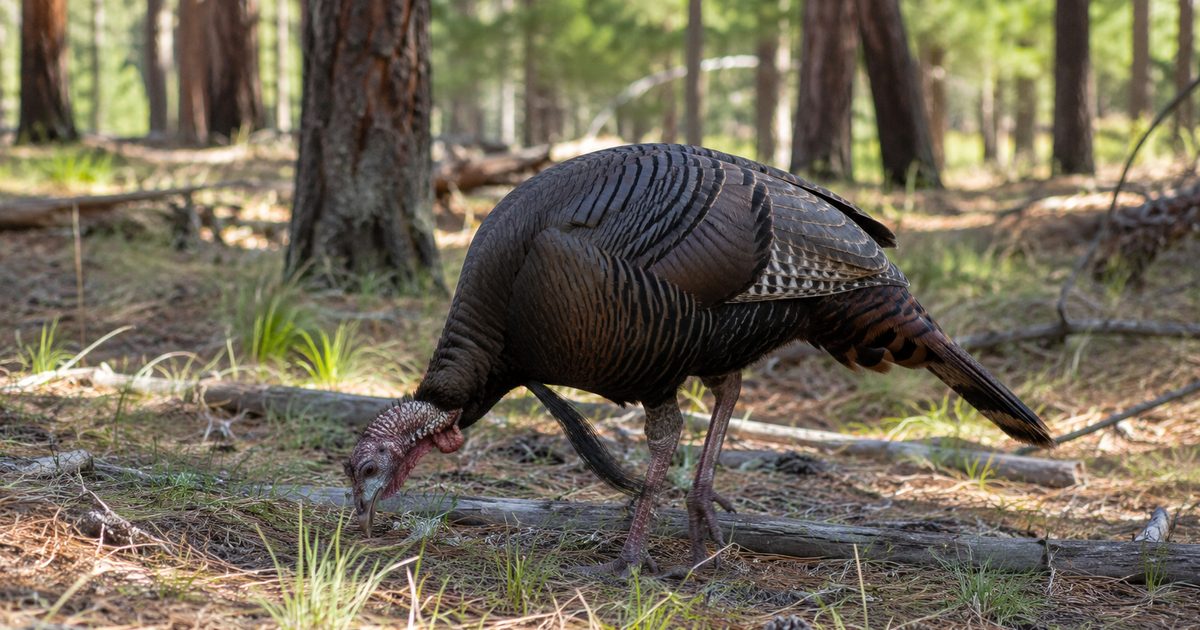
Utah’s deer and elk tags get all the attention — and for good reason. But hidden inside the same state that runs some of the most competitive draw systems in the West sits one of the most accessible spring turkey hunts in the intermountain region. Over-the-counter tags available in many units. Merriam’s turkeys on national forest land. Scenery that rivals anything you’d find on a big-ticket draw hunt. If you’re already planning a Utah trip for any reason, adding a spring turkey tag is one of the easiest decisions you can make.
Quick Facts: Utah Turkey
| Detail | Info |
|---|---|
| Subspecies | Merriam’s throughout the state |
| Spring Season | Typically April 12–May 31 |
| OTC Tags Available | Yes — many units; no draw required |
| Draw Units | Some premium or high-demand areas require draw |
| NR OTC Tag Cost | ~$40 spring turkey tag |
| NR Draw Tag Cost | ~$65 in limited/premium units |
| Fall Turkey | OTC fall tags available in most units (archery + shotgun) |
| Top Units | Cache National Forest, Uinta Mountains, Manti-La Sal NF |
| Primary Agency | Utah Division of Wildlife Resources (wildlife.utah.gov) |
Disclaimer: Dates, fees, and regulations listed here were accurate as of early 2026. UDWR updates these annually — always confirm current rules at wildlife.utah.gov before purchasing tags or planning your hunt.
OTC Tags: The Key Advantage
This is the most important thing to understand about Utah turkey hunting: many units don’t require a draw at all. You walk in, buy a $40 over-the-counter nonresident spring turkey tag, and go hunting. No application. No preference points. No waiting until next April to find out if you drew.
That’s a fundamentally different situation from Utah’s deer, elk, and pronghorn systems, which require years of point accumulation to access quality tags. Turkey hunting sidesteps all of that. For hunters who want a quality western Merriam’s experience without committing to a multi-year application strategy, Utah’s OTC turkey hunt is one of the best entry points available.
OTC Availability — No Draw Needed in Most Units
Utah spring turkey tags are available over the counter in most units across the state — no draw required. This is the single biggest advantage Utah turkey hunting has over the state’s deer and elk programs. Buy your tag at any UDWR licensed dealer or online at wildlife.utah.gov. Some limited-entry units in high-demand or sensitive population areas do require a draw, but the majority of public land turkey habitat is OTC.
Some units run a draw for spring turkey — typically areas with higher bird density near population centers or areas where UDWR is managing harvest carefully. Draw odds in these units are generally high (50–90 percent in most years), and the limited-entry tags come with a slight cost premium. For most hunters, the OTC option in adjacent units gives up very little and eliminates the application complexity entirely.
Fall turkey tags are also available over the counter in most Utah units, valid for both archery and shotgun during the fall seasons. If you’re already in Utah for deer or elk in October, a fall turkey tag in your pocket costs almost nothing and could produce a bonus bird.
Merriam’s Turkey in Utah: What You’re Hunting
All of Utah’s wild turkeys are Merriam’s — the mountain subspecies. There are no Eastern or Rio Grande populations of note, and that’s a feature rather than a limitation. Merriam’s are widely considered the most visually spectacular turkey subspecies in North America. The tail fan feathers have brilliant white tips, which stand out sharply against the bird’s black and bronze body. A mature Utah Merriam’s tom in full strut in April aspen country is a sight that makes any spring hunter stop moving.
Merriam’s also have a reputation for being the most aggressive calling subspecies in favorable conditions. Early-season gobblers that haven’t been educated by hunting pressure respond to locator calls, tree yelps, and aggressive clucking with hard gobbles and confident approach. Utah’s mountain terrain creates scenarios where you can hear a bird hammering from a half-mile away and still intercept him before he reaches the meadow he was already heading for.
The mountain habitat matters. You’re not hunting flat farmland or low-country river bottoms. Utah Merriam’s live in ponderosa pine, Gambel oak, aspen, and mixed conifer country — the same forests where mule deer and elk spend their winters. The terrain requires more physical effort than a lowland turkey hunt, but the reward is hunting country that most turkey hunters never experience.
Best Units for Utah Spring Turkey
Cache National Forest — Northern Utah’s Best Merriam’s Hunt
The Cache National Forest near Logan in northern Utah consistently produces some of the state’s best Merriam’s hunting. The forest straddles the Bear River Range in Cache and Rich Counties, and the combination of open ridgeline parks, aspen groves, and ponderosa pine habitat is exactly what Merriam’s prefer. Bird numbers here are healthy, draw pressure is manageable, and the proximity to the Utah State University area means reasonably good road access.
Cache National Forest: Best Northern Utah Merriam's
The Cache National Forest near Logan is the best single destination for spring Merriam’s turkey in northern Utah. Bird populations are strong, OTC tags apply, and the Gambel oak and aspen habitat along the Bear River Range ridgelines puts turkeys in huntable terrain throughout the spring season. Glass ridge edges and drainage heads in the first hour of light — gobblers often strut in the open before retreating to timber mid-morning.
Uinta Mountains
The Uintas hold Merriam’s turkey on the western and southern flanks of the range, particularly in the areas where ponderosa pine and aspen transition to the high-mountain spruce-fir forest. Spring turkey hunting in the Uintas combines early-season birds with the backdrop of the highest mountain range in Utah. Access roads are open by mid-April in most years, though late-season snow can complicate things. The western Uinta foothills near Heber and Kamas have particularly reliable bird populations.
Manti-La Sal National Forest
The Manti-La Sal is one of Utah’s most beautiful hunting destinations and holds a strong turkey population throughout its mixed conifer country. The San Pitch Mountains and Manti unit in Sanpete County are especially worth targeting — rolling terrain with mixed ponderosa and Gambel oak, open parks, and bird populations that rarely see the hunting pressure that northern units do. The La Sal Mountains near Moab hold a separate population on the eastern unit.
Sanpete Valley Units
The units surrounding Sanpete Valley in central Utah deserve more attention than they typically receive. Rolling terrain, accessible public land, and a Merriam’s population that benefits from relatively light pressure. These units are good candidates for hunters who want a quality hunt without competing with the crowds that build around Cache and Wasatch-area hunting.
Hunt Tactics: Reading Utah Merriam’s Country
Utah Merriam’s hunting rewards hunters who understand the terrain. A few principles consistently separate productive setups from frustrating ones.
Set up on south-facing ridges and drainage points. Turkeys roost in tall ponderosa pines and then move downhill to south-facing slopes that warm first in the morning. Find the roost trees by listening for gobbling in the last ten minutes before dark, then position yourself between the roost and the first south-facing open area below it. Be there before first light.
Use locator calls before you reveal your position. At first light, an owl hoot or crow call will shock-gobble birds on the roost and tell you exactly where they are. Don’t commit to a setup until you’ve located birds first. In mountain terrain, a gobbler that’s two ridges over isn’t coming to you — knowing his location before fly-down saves you from burning a morning on an empty call.
Call aggressively early, then back off. Utah Merriam’s gobblers in early-season hunts (first two weeks of April) are fired up and respond well to loud, excited tree yelps and aggressive ground calling. As the season progresses past mid-April and hens get tight to nests, dominant toms become more unpredictable. Back off the aggressive calling and try soft clucks and purrs when birds hang up.
Work the Gambel oak edges. In central and southern Utah units, Gambel oak is a key habitat component. Turkeys scratch under oak canopy for insects and old acorns in spring, and the oak edges adjacent to open parks create natural travel corridors. Set up where the oak fingers into open parks and you’re in the path birds naturally want to walk.
Spring Season Timing
Utah’s spring turkey season typically opens in the second week of April and runs through May 31. The best hunting in most units falls between April 15 and May 10 — birds are actively gobbling, hens are initially scattered, and gobblers respond aggressively to calls. By late May, nesting hens have pulled toms off the strut and calling effectiveness drops.
Late April in the Uintas and Cache range can bring spring snowstorms. Don’t let the forecast discourage you. Turkeys in mountain country are often most active in the first day or two after a storm, moving to open south slopes as the snow melts and insects become available.
Spring Merriam's Gear Setup
Pack for temperature swings. Utah mountains in April can be 28 degrees at 5:00 a.m. and 65 degrees by noon. A packable down or synthetic jacket for the pre-dawn setup, a turkey vest with seat cushion and call pockets, and waterproof boots for wet spring terrain are the core kit. For calls, bring a box call for volume and a slate or glass pot call for soft work when birds are close. One or two hen decoys — a feeding hen with or without a breeding pair — work well in Utah’s open park setups where incoming birds can see the decoys from distance.
Fall Turkey in Utah
Fall turkey tags are available OTC in most Utah units and are valid for both archery and shotgun. Fall turkey hunting is a different game — calling a flock by imitating the assembly yelp of scattered birds, or still-hunting oak brush country and intercepting birds by sight. Fall tags are cheap, available immediately, and a natural add-on to any deer or elk trip in October and November.
Planning and Licensing
Buy your OTC spring turkey tag through the UDWR online licensing portal at wildlife.utah.gov. Nonresident spring turkey OTC tags run approximately $40. Limited-entry draw tags in specific units cost around $65. The application window for limited-entry spring turkey tags typically opens in January.
For full draw odds data on Utah’s limited-entry turkey units, the ProHunt Draw Odds Engine provides unit-by-unit breakdowns. See the Utah draw odds page for the complete picture on application strategy and point accumulation across all Utah species.
The OTC tag, the Merriam’s subspecies, the national forest public land access, the spring mountain scenery — Utah turkey punches well above its reputation. It’s one of the most accessible spring hunts in the intermountain West, and it’s sitting in plain sight right next to a draw system that takes years to navigate.
Next Step
Check Draw Odds for Your State
Tag-level draw odds across 9 western states — filter by species, unit, weapon, and points. Free to use.
Get the Insider Edge
Join hunters getting exclusive draw odds data, gear deals, and weekly hunt planning tips.
Related Articles

Western State Draw Systems Explained
How all 9 western state hunting draw systems actually work — preference points, bonus points, and pure lotteries compared side by side with real odds data.

Arizona Bighorn Sheep Draw Odds Guide
Arizona bighorn is the definition of a lifetime tag. Here's the point math, unit breakdown, and why you apply every year regardless of your bonus point total.

Arizona Fall Turkey Draw Odds Guide
Arizona fall turkey is a low-point draw in the ponderosa country. Here's the unit breakdown, typical point requirements, and how to stack it with other Fall Draw applications.
No comments yet. Be the first to share your experience!