Turkey Calling: The Complete Guide to Every Call and When to Use It
From box calls to diaphragms — every turkey call explained, when to use each, and the calling sequences that bring in tight-lipped gobblers when nothing else works.
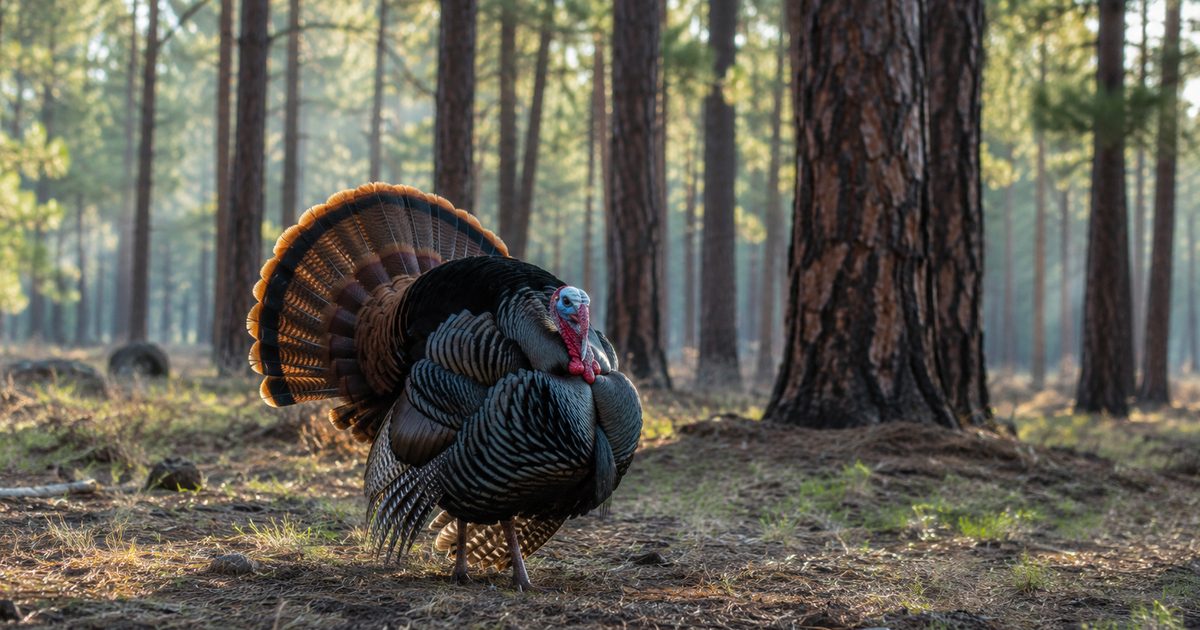
There is no skill in turkey hunting that matters more than calling, and no skill that more hunters get wrong in exactly the same way. They call too much, too loud, too fast, and then they wonder why the gobbler won’t come. Understanding how turkeys communicate — what sounds they make, what those sounds mean, and when to use them — changes everything about how you hunt. If you want context on turkey behavior, breeding cycles, and how gobbling patterns vary by subspecies, the wild turkey species guide is worth reading first.
This guide covers every call in the turkey hunter’s toolkit: the hardware, the technique, and the exact situations where each call works. We’ll get specific about the sequences that close the distance on fired-up birds, bring in henned-up toms, and coax call-shy gobblers out of tight timber when nothing else will.
Why Calling Turkeys Is an Art, Not a Script
Most hunters treat turkey calling like a recipe — three yelps, pause, two clucks, wait five minutes, repeat. That approach kills some birds, especially naive two-year-old toms in areas with low pressure. But it fails against mature gobblers, henned birds, and anything that has survived a hunting season or two.
Real turkey calling is a conversation. The gobbler is not just listening to the sound you make — he’s interpreting context. The speed of your yelps tells him how excited the hen is. The volume tells him how far away she is. The pauses tell him whether she’s moving toward him or waiting. When you string calls together without thinking about what they communicate, the gobbler reads the inconsistency and stalls.
The best turkey callers I know all say the same thing: they think less about what call to make and more about what story they’re trying to tell. Is the hen relaxed and feeding nearby? Is she fired up and coming his way? Is she moving away from him and triggering his chase instinct? Every calling decision flows from answering that question.
The other thing the best callers share is restraint. They call less than they want to. In turkey hunting, silence is often your most powerful tool — and learning to sit on your hands while a gobbler drums just out of range is the hardest skill to develop.
Understanding Turkey Vocabulary
Turkeys are highly vocal birds. Wild turkeys produce more distinct calls than almost any other North American game species. You don’t need to master all of them, but knowing what they mean tells you how to respond.
The yelp is the foundational turkey sound — a multi-note call that serves as general communication between birds. Hens yelp to locate other birds, to maintain contact while feeding, and to express varying levels of excitement. Gobblers yelp too, in a coarser, lower-pitched version called a gobbler yelp.
The cluck is a single sharp note. Hens cluck while feeding, while moving through cover, and when content. A series of relaxed clucks signals a calm, confident hen. It’s one of the most productive subtle calls in close-range situations.
The purr is a soft rolling sound made by contented birds. Feeding turkeys purr almost constantly. It signals comfort and safety, and it’s the call that reassures a gobbler that the hen he heard is real, relaxed, and close.
The cutt is an aggressive, irregular series of sharp clucks delivered rapidly. It signals an excited, agitated hen — either fired up over a gobbler or reacting to competition. It’s loud, assertive, and often triggers a shock gobble or causes a reluctant bird to commit.
The cackle is a series of rapid irregular notes produced as a turkey flies down from the roost. It’s useful for gobblers on the roost just before they fly down, or as an aggressive call to simulate a hen landing nearby.
The assembly yelp is a slow, long series of loud yelps that a hen uses to gather her poults. It’s a deep, pleading call that can reach out several hundred yards. It doesn’t sound like a typical hen yelp — it’s slower, more drawn-out, and more plaintive.
The gobble is the dominant tom’s primary broadcast call. Hunters can use gobble calls to locate other toms, but in public-land pressure situations, gobbling in the field is risky — other hunters have shot at the sound. Use it with caution.
The kee-kee is a fall call made by young turkeys (jakes and jennies) looking for the flock after separation. In the fall, it’s extremely effective. In spring, it can trigger curiosity from dominant toms who want to investigate.
Drumming and spitting are sounds a gobbler makes while strutting — a low, resonant “boom” followed by a sharp “spit” sound produced by wing feathers. You rarely call with these, but hearing them from a close bird tells you he’s very close and actively displaying.
Box Calls: The Best Starting Point
The box call is where most hunters begin, and it remains one of the most effective calls in the field for the entirety of a hunting career. It consists of a wooden box with a hinged paddle lid. Dragging or rocking the lid across the box edge creates sound through friction.
Why box calls work: The wood-on-wood friction produces a naturally raspy, loud call that carries well in timber and over terrain. A quality box call — Quaker Boy, Lynch, Primos, or a custom hand-carved call — sounds like a real turkey hen in a way that’s difficult to beat with any other platform.
How to use one: Hold the box in one hand, fingers along the sides below the rim without touching the edges. With your other hand, draw the paddle slowly across the rim with even pressure. For yelps, a slow downstroke on one side of the box produces one note; a short upstroke on the other produces the second note in a two-note yelp sequence. For clucks, strike the paddle down sharply onto the box edge and catch it. For cutts, strike rapidly and erratically.
Weaknesses: Box calls are weather-sensitive. In rain or high humidity, the friction diminishes and the call goes dead. Many hunters treat the box with chalk before going out in wet conditions, and some manufacturers sell weatherized models with synthetic or sealed wood. The bigger issue in close encounters is movement — using a box call requires both hands and visible motion, which gobblers can pick up at close range.
Box Call Chalk Trick
Keep a small piece of blackboard chalk in your turkey vest and apply it lightly to the box rails and paddle edge before every hunt. It restores friction in damp conditions and improves the call’s rasp and volume. Don’t use colored chalk — it stains the wood and affects tone over time.
Best situations: Box calls shine for reaching out to roosted birds before flydown, for firing up distant gobblers across open terrain, and for cutting through wind or heavy timber. If a tom is 200-plus yards away and you need to get his attention, a box call gets the job done faster than anything else.
Slate (Pot) Calls: Versatile and Realistic
Slate calls — also called pot calls — consist of a round striking surface (slate, glass, crystal, or aluminum) mounted in a wooden or acrylic pot, operated with a wooden or carbon striker. Dragging and circling the striker across the surface produces friction-based calls.
The slate call is, in my view, the most realistic-sounding call available to the average hunter. The range of sounds a quality slate can produce is remarkable — from deep, raspy yelps to soft, airy purrs — and the learning curve is shorter than a diaphragm while the ceiling is higher than a box call.
How to use one: Hold the pot lightly in your non-dominant hand, supported from below. The striker goes in your dominant hand between the first two fingers, like a pencil. For yelps, make small oval shapes on the surface — the down-stroke produces the first note, the upstroke the second. For clucks, make short downward strokes with a slight drag at the end. For purrs, lighten your pressure and make slow, erratic strokes. For cutts, shorten the stroke and increase speed drastically.
Surface material matters: Slate surfaces produce a raspy, loud yelp — excellent for reaching out and matching the tone of a real hen. Glass surfaces run cleaner and clearer, better suited for soft purrs and subtle feeding clucks. Crystal surfaces split the difference. Aluminum runs loudest and cuts through wind and terrain better than any other surface.
Weather resistance: Glass, crystal, and aluminum surfaces are immune to humidity and rain. Slate becomes unresponsive when wet — keep it dry. Strikers matter as well; carbon strikers are less weather-affected than wood. Carry multiple strikers.
Re-Texturing Your Slate
Slate surfaces develop a glaze from use that kills the rasp. Keep a small piece of fine sandpaper (220-grit) in your vest and scuff the surface lightly between calling sessions. Same for wood strikers — rough up the tip. A freshly conditioned slate sounds dramatically better than a glazed one.
Best situations: Slate calls are at their best for working a close gobbler where realism matters more than volume, for extended back-and-forth dialogue with a hung-up bird, and for producing soft purrs and clucks during the final 30 yards. Many serious hunters use a slate as their primary call for 90% of hunting situations and reach for a box only when they need maximum volume.
Diaphragm (Mouth) Calls: Hands-Free and Deadly
The diaphragm call — a small horseshoe-shaped frame holding one or more latex reed membranes — fits in the roof of the mouth and produces sound through controlled airflow. It requires no hands. When a gobbler is at close range and a hunter can’t risk movement, the diaphragm is the only option that works.
The tradeoff is real: diaphragm calls have the steepest learning curve of any turkey call, by a significant margin. Many hunters give up on them in the first season. The hunters who push through that plateau and develop their mouth call end up with the most complete turkey hunting skill set available — and in close-range situations, the advantage is decisive.
Learning the basics: Start alone, in a car, away from anyone who might hear you. The first goal is simply producing sound without gagging — some hunters need days to get comfortable with a reed in their mouth. Once you can tolerate it, practice soft yelps by pushing air over the reed while arching your tongue up toward the roof of your mouth. The harder you push, the louder and more raspy the call. Volume comes from diaphragm air pressure, not cheek pressure.
Reed configuration: Single-reed calls run cleaner and are easier to learn but lack the rasp of multi-reed calls. Double and triple-reed calls produce more rasp and volume but require more air pressure. Stacked reeds with cuts produce the most realistic hen rasp. Most serious hunters carry two or three diaphragms of different configurations.
Why it’s worth the work: In the final 40 yards, when a gobbler is looking at your position and you cannot move your hands, a diaphragm call lets you cluck and purr while your gun stays shouldered and your eyes stay on the bird. That capability alone changes the outcome of close-range encounters in a way nothing else can replicate.
Don't Abandon the Diaphragm Too Early
Most hunters quit mouth calls after two weeks because they can’t get consistent sound. The breakthrough for most people comes around the three-week mark when muscle memory develops enough to produce a clear yelp reliably. Stick with 10 minutes of daily practice in the truck or around the house, and the payoff in the field is substantial.
Best situations: Any close-range encounter where movement will bust the bird. The diaphragm is also ideal for calling while walking — during run-and-gun scenarios where you’re moving aggressively and don’t want to stop and pull out a pot call. Many hunters use a diaphragm for all in-close work and pair it with a slate or box for longer-range calling.
Locator Calls: Crow Calls, Owl Calls, and Shock Gobbles
Locator calls serve one purpose: getting a gobbler to give away his location with a shock gobble without any calling dialogue. A shock gobble is an involuntary response to a sharp, loud sound — turkeys gobble at crows, owls, coyotes, car doors, thunder, and chainsaws because that’s how their nervous system works.
Crow calls are the most versatile locator for daytime use. A loud crow call series fired into timber or across open ground often triggers an immediate gobble from any tom within earshot. The crow call works from fly-down through midmorning, and it carries the advantage of sounding completely natural in spring woods.
Owl calls (barred owl hoots) are the classic pre-dawn locator. Before first light, when calling with turkey sounds is premature, a series of barred owl hoots will shock-gobble roosted toms and reveal their tree locations. The standard sequence: hoot loud and sharp, eight notes, listen for five seconds. A gobble in response tells you where to set up. At first light, nothing beats owl hoots for pinning down roosted birds.
Gobble calls — tubes, shakers, or diaphragm techniques that replicate a gobble — can shock-gobble nearby toms and occasionally draw in a subordinate bird. Use them sparingly on public land. Other hunters hear gobbles and move toward them, and I’ve watched hunters walk into each other’s setups over gobble calls more than once. Reserve them for low-pressure private land or large blocks of public ground where you know your position.
Coyote howlers and train whistles both work for shock gobbles in open terrain. Any loud, sharp, unexpected sound triggers the response. If you hunt near roads, a car door slamming sometimes does the same thing for free.
Wingbone Calls and Tube Calls
The wingbone call is the oldest turkey call in North America — Native Americans made them from the three bones of a turkey wing, joined together to form a suction-based instrument. Instead of blowing into the call, you suck air through it while making kissing motions with your lips.
Wingbone calls produce a softer, more natural-sounding yelp than friction calls, with a unique tone that some hunters swear is unmatched for pressured birds that have heard every box and slate combination a hundred times. The learning curve is similar to a diaphragm — it takes practice to produce consistent sound — but the payoff is a call that sounds genuinely different from anything else.
Tube calls work on the same principle as a wingbone — they’re cylindrical friction-and-air calls — but they’re made from latex stretched over a tube. Pinching the latex and blowing produces a wide range of sounds including gobbles, yelps, and clucks. Tube calls are underused by modern hunters and perform well in cold weather when other calls struggle.
Neither the wingbone nor tube call needs to be your primary option, but adding one to your vest gives you a different sound to try when a gobbler has heard everything else.
The Yelp: Your Most Important Call
If you learn one turkey call and only one, make it the yelp. The yelp is the foundation of turkey communication — it’s how hens locate other birds, maintain contact, and signal their position and mood. Everything else in your calling repertoire builds on what the yelp communicates.
A basic hen yelp consists of two notes: a higher first note and a slightly lower second note, delivered together as a unit. A series of four to eight yelps strung together is a standard contact call. The cadence should be moderate — not rushed, not painfully slow — roughly one to one-and-a-half yelps per second.
What changes with the yelp is the speed, the volume, the rasp, and the number of notes:
Plain yelp: Four to six notes at moderate speed and medium volume. Content hen at moderate distance. Your default call.
Excited yelp: Eight to twelve notes at faster cadence, louder, with more rasp. Hen that’s worked up — responding to a gobble, moving toward a tom. Use when a gobbler is already gobbling and you want to match his energy level.
Tree yelp: Very soft, muffled, slow yelps. Hen on the roost before flydown. Use at first light, before the bird has left the tree.
Lost yelp (assembly yelp): Very loud, drawn-out, slow yelps — four to six notes per series with longer pauses between each. Searches for the flock. Use when a gobbler has gone quiet and you need him to think he’s missing out on something.
Match the Gobbler's Energy
When a tom is gobbling frequently and at full volume, match his intensity with faster, louder yelps. When he goes quiet and seems tentative, drop to soft, slow yelps or go silent entirely. Calling louder at a quiet bird almost always makes things worse — you’re communicating urgency when the hen should be playing it cool.
Practice your yelp first. Everything else — the clucks, the purrs, the cuts — adds layers on top of a foundation that starts with a convincing, consistent yelp.
Clucks, Purrs, and Assembly Yelps: Subtle Calls That Close the Distance
The calls that close the distance are rarely the loud ones. When a gobbler is inside 60 yards and working his way to your position, the worst thing you can do is make another series of loud yelps. He’s close enough to expect to see a hen. Your job at that point is to sound like a hen that’s right there, focused on feeding, not calling across the mountain.
The cluck is your primary tool inside 60 yards. A single soft cluck tells the gobbler the hen is close and focused on something other than him — confident, content, not going anywhere. Two or three slow clucks spaced 20–30 seconds apart communicate the most effective thing you can tell a hung-up gobbler: the hen is right there and completely relaxed. Many times a hung-up bird that has been stalled for 20 minutes will break at this sound and come directly to the gun.
The purr amplifies what the cluck communicates. A feeding purr — slow, rolling, irregular — tells the gobbler he’s hearing a hen that is completely at ease, actively feeding, and not paying attention to him. In combination with a cluck, the purr is almost irresistible to a tom who is already close. Make it soft enough that he’d have to be within 30 yards to hear it clearly — this forces him to close the distance to find the source.
The assembly yelp is a different tool: it’s for birds that have gone silent and need a reason to refocus. This is the loud, slow, mournful yelp a hen uses to gather her brood. When a tom stops responding and you need to jar him back into the conversation, a series of loud, slow assembly yelps communicates that the hen is confused about where he went — a concept that can trigger a shock gobble from a tom who was done answering.
The key with subtle calling is patience. Most hunters call too soon after making a soft sound. Make a cluck, then wait three to five minutes. If nothing happens, try a single purr. Wait again. The gobbler may be standing 40 yards away in dense cover, drumming silently and working up the nerve to commit. If you fill that silence with another series of loud yelps, you’ve just told him the hen is moving away, not waiting.
Cutting and Cackles: Aggressive Sequences
Cutting is an aggressive, rapid series of sharp clucks delivered without rhythm or pattern. Where a feeding cluck is deliberate and spaced, a cutt is fast, loud, and erratic — two to eight notes in less than a second, repeated with short pauses. It signals a fired-up, agitated hen, and it provokes an immediate shock gobble from most active toms.
Cutting works best early in the morning before toms have henned up, and in situations where standard calling has produced gobbling but no movement. A hen that is cutting is a hen in competition — and a dominant tom wants to get to that competition. The aggressive tone also short-circuits a cautious bird’s hesitation. Where soft calling says “I’m here, come find me,” cutting says “I’m here, something’s happening, and you’re missing it.”
The cackle is the fly-down call — a rapid, irregular series of notes that gets louder toward the end, simulating a hen going airborne and landing nearby. It’s most effective in the few minutes before and during fly-down. A roosted gobbler hearing a cackle followed by wing beats (slapping your cap against your leg) believes a hen has just hit the ground and is looking for him. Combined with a few aggressive yelps after the cackle, this sequence often gets a roosted bird to fly directly toward you rather than gliding to his strut zone.
Don't Lead With Cutting
Cutting is a shock call — it’s most effective when the gobbler hasn’t heard you yet, or when he’s been passive and needs to be jolted into action. If you’ve been calling steadily for 30 minutes and the bird is tracking your every move, cutting rarely adds anything. It tells a bird who’s been listening that you’ve suddenly gotten more excited for no apparent reason, which reads as unnatural. Reserve cutting for opening volleys and for gobblers that need a hard reset.
When Gobblers Go Silent: Reading the Situation
A gobbler that goes silent is one of the most misread situations in turkey hunting. The typical hunter response is to call louder or more aggressively. This is almost always wrong.
When a tom stops gobbling, one of three things has happened: he’s coming in silently, he’s moved away, or something spooked him. Identifying which one determines your response.
Silent approach: The most common reason a fired-up gobbler goes quiet. He’s committed and he’s walking toward you. Do not call again. Many hunters lose birds at this stage by calling a bird that was already coming, causing him to stop and look for the hen. When a gobbler goes quiet after gobbling consistently, get ready. He’s likely inside 100 yards. Watch for movement, listen for drumming.
He’s moved off: If 20 minutes have passed and there’s nothing — no gobble, no drumming, no movement — he likely went the other direction, probably toward real hens. Your option here is to reposition aggressively. Circle wide, get ahead of where he’s likely to go, and set up fresh. A bird that has moved off can often be recovered with a new position and a new calling sequence 30 minutes later.
Spooked bird: If the gobbling stopped suddenly after an unusual sound from your direction — a snapped branch, a cough, a bump against your tree — the bird may have hung up out of sight, trying to identify what he heard. Go completely still. Don’t call. Give it 15 minutes of absolute silence. Spooked birds sometimes recover if nothing else confirms their suspicion. If you call during that window, you confirm you’re not a hen.
The hardest thing to accept is that sometimes you’ve already done your job. You called a gobbler in, he committed, he’s coming — and now your only task is to hold still and wait. Every extra call you make after that point is a liability.
Calling Sequences by Hunting Scenario
Understanding specific scenarios and how calling changes within each one separates hunters who consistently kill birds from hunters who consistently lose them.
Fired-up bird off the roost: Before flydown, use soft tree yelps every five to eight minutes. After fly-down, switch to a series of four to six yelps at moderate volume, then pause and listen. If he double-gobbles, let him settle for 30 seconds, then answer with a shorter series. Keep the dialogue going but don’t match every gobble. Let him lead. If he cuts you off mid-call, go silent — he’s excited and your job is to be the hen he can’t quite find.
Hung-up gobbler: He’s 80-100 yards out, gobbling, strutting, not moving. Classic response: go completely silent for 10 full minutes. Most hunters can’t do it. The silence communicates that the hen has gotten tired of waiting and started moving away. A tom that has been gobbling at a stationary hen and suddenly hears nothing will often break and come looking. If silence doesn’t work after 15 minutes, try one series of very soft clucks, then silence again. The last resort is aggressive cutting — which either fires him up or drives him away, but at least produces a result.
Henned-up gobbler: The tom has real hens with him. He gobbles but won’t leave. This is the hardest situation in turkey hunting. Your best option is to focus on the hens, not the tom. Call aggressively and competitively toward the hens — cutts, aggressive yelps, even gobbler yelps. If you can get the dominant hen angry enough at the competing hen sound she hears, she’ll lead the flock your direction to confront the intruder. The gobbler follows his hens. You never needed to convince him at all.
Pressured bird on public land: He’s been called at multiple times already this season and he knows the drill. Your approach should be the opposite of what other hunters have been doing. If most hunters in the area are loud and aggressive, go quiet and subtle. Use soft clucks and purrs rather than yelping series. Position yourself closer to his travel route rather than calling from a stationary ambush. In extreme cases, don’t call at all — just sit in his strut zone and let him walk to where he expects hens to be. Our turkey scouting guide covers how to identify strut zones and travel routes before you hunt.
Midday gobbler: The morning hens have dispersed and toms are alone for the first time. Midday is underrated by hunters who pack up after the morning hunt. Set up near food sources, logging roads, field edges, or open timber where toms cruise looking for hens. Use assembly yelps at moderate volume — a lost hen looking for company. Midday birds often respond faster and with less caution than pressured morning birds because the early-morning competition has dissipated.
The Midday Reset
Many hunters have killed their best birds by returning to the woods between 10:30 AM and 1:30 PM when other hunters have gone home. Gobblers that survived the morning pressure are now alone, actively cruising, and far less cautious. A series of loud assembly yelps near a field edge during this window produces gobbles more often than most hunters expect.
Common Calling Mistakes
Most calling mistakes fall into the same patterns. Recognizing them lets you stop doing them.
Calling too much. The most common error. More calling does not equal more gobbles. After you’ve established contact and the bird is responding, let him lead the conversation. Call back, then wait. If he gobbles once, you answer once — not with three more series and a round of cutting. Every extra call you make beyond the necessary minimum is a chance for him to hear something that doesn’t sound right.
Calling too loud for the distance. A hen yelping at the volume needed to reach across a valley sounds wrong when heard 30 yards away. Match your volume to the distance. Close birds get soft calls. Distant birds get loud calls. Many hunters make every call at the same volume regardless of where the bird is.
Calling from the same position for too long. A hen that has been yelping from the same tree for 45 minutes without moving is not behaving like a real turkey. Real hens move. If a bird is gobbling but not coming in, try moving 50-75 yards and calling from a new position. This simulates a hen walking away, which triggers a gobbler’s chase instinct far more effectively than continued calling from a fixed spot.
Calling to a bird that’s already coming. When a gobbler is on a direct line and gobbling steadily, he is coming. The moment you call again, he stops, looks toward the sound, and expects to see a hen. When he doesn’t see her, he hesitates. His approach stalls. Let a committed bird walk to you without interruption.
Using the wrong call for the situation. A box call that worked in the open timber at 6 AM is wrong inside 40 yards at 8:30 AM. A diaphragm call working softly when you need to reach a bird 300 yards across a field is insufficient. Carry multiple call types and understand what each one does best at different ranges and situations.
Giving up too early. Gobblers work on their own schedule. A bird that hasn’t responded after 30 minutes in pressured country isn’t necessarily gone or disinterested. He may be 100 yards away, watching the area, not gobbling because he’s learned that gobbling gets him killed. Sit still, call minimally, and stay patient. The hunter who sits an extra hour kills more birds than the hunter who decides to run-and-gun at the first sign of silence.
Turkey calling rewards hunters who think more than they call. Know what sound you’re making, know what story it tells, and know when silence is the most powerful tool in your vest. The rest comes with time in the woods. Pair your calling skills with the right visual presentation — our turkey hunting decoy guide covers the setups that keep a gobbler committed once he’s in range.
Next Step
Check Draw Odds for Your State
Tag-level draw odds across 9 western states — filter by species, unit, weapon, and points. Free to use.
Get the Insider Edge
Join hunters getting exclusive draw odds data, gear deals, and weekly hunt planning tips.
Related Articles

Arizona Elk Calling: September Archery
September archery elk in Arizona means calling. Here's the practical guide to bugles, cow calls, and the timing that produces bulls.

Arizona Hound Hunting Regulations Guide
Arizona hound hunting for bear and lion requires specific permits and tags. Here's the complete regulatory guide for 2026.

Arizona Shed Hunting: Rules & Season Guide
Arizona has specific rules on shed antler collecting. Here's the complete guide to the season, the ethics, and the most productive areas.
No comments yet. Be the first to share your experience!