Still-Hunting for Deer: How to Move Through the Woods and Find Bucks
Still-hunting is the most underused whitetail tactic — moving slowly through the woods to cut deer off rather than waiting. Here's the technique, conditions, and terrain that make it work.
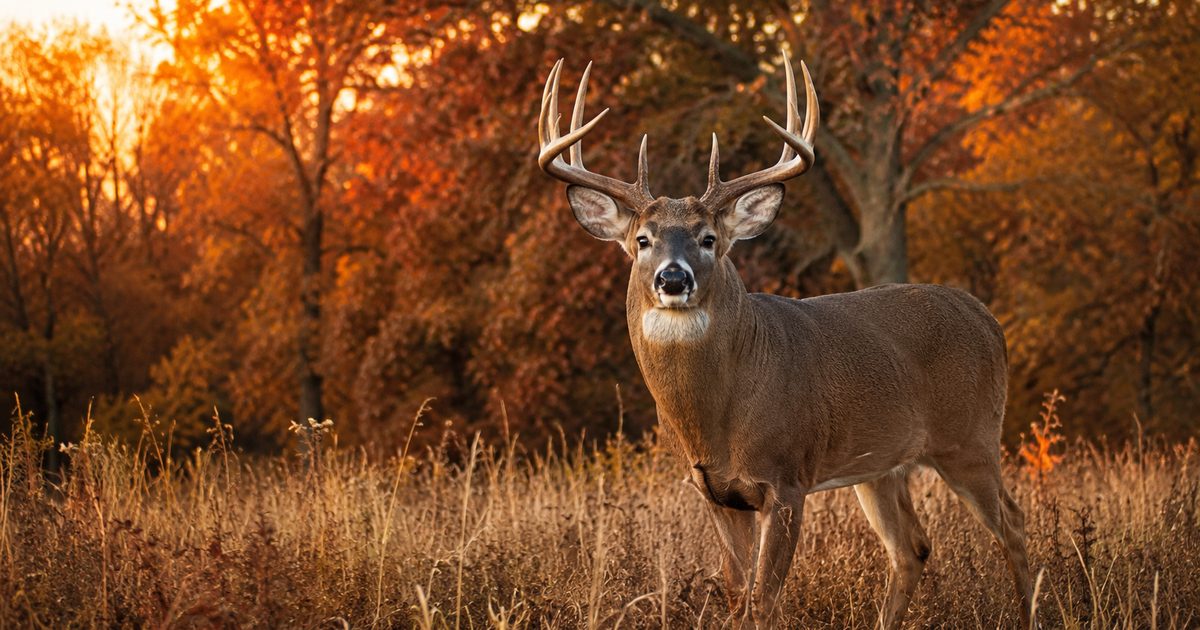
I spent the first eight years of my deer hunting career planted in tree stands. I was a fixture. Early morning, I’d climb before first light, sit until I couldn’t stand it, maybe slip out for lunch, and climb back up before dark. Some of those years were great. Most were long, cold, and quiet.
Then a neighbor — a retired wildlife biologist who killed a mature buck almost every year — watched me haul my climber to the truck one November afternoon and said something that changed how I hunt: “You’re waiting for deer to come to you. What if you went to them instead?”
That was my introduction to still-hunting. Not sitting still. Moving through the woods — deliberately, quietly, and slowly — to cover ground, intercept deer, and put yourself in front of animals instead of hoping they wander past your stand. If you’ve been sitting on stands for years and have started wondering whether there’s another way, this is it. Still-hunting is learnable. It just takes practice, patience, and a willingness to move like you have all the time in the world.
What Still-Hunting Actually Is
The name is confusing, and a lot of newer hunters get it wrong. Still-hunting is not sitting still in the woods. It’s the opposite. Still-hunting means moving through deer habitat — slowly, quietly, with frequent long stops — to find deer before they find you.
Think of it as hunting on foot, but at a pace that would frustrate anyone who walks a golf course. You take two or three steps, then stop and stand completely motionless for a minute, two minutes, sometimes five. You glass the timber ahead of you. You watch for horizontal lines, ear flicks, leg movement, the glint of an antler tine. Then you take two or three more steps and do it again.
The goal is to cover terrain systematically and create encounter opportunities with deer that you never would have found sitting in one spot. Stand hunting is a waiting game. Still-hunting is an active game — and when you do it right, it can be devastatingly effective.
The “still” part refers to stillness during your pauses, not stillness of your entire body for hours at a time. When you’re moving, you’re hunting. When you’re stopped, you’re scanning. The deer you kill still-hunting are almost always spotted during a pause, not mid-step.
When to Still-Hunt — and When to Stay on the Stand
Still-hunting isn’t a replacement for stand hunting. It’s a tool, and like any tool, it works better in some situations than others. Knowing when to move is half the battle.
Best conditions for still-hunting:
Midday during the rut is prime time. Bucks are on their feet all day, cruising transition zones and thick cover looking for does. They’re not on any predictable food-to-bed pattern — they’re moving constantly. You can cover that same terrain and bump into them on their own terms. I’ve killed three of my best bucks between 10 a.m. and 2 p.m. while still-hunting during the rut.
Post-rut midday is another window. Bucks are worn down and need to feed, but they’re tight to cover and won’t move to fields until dark. Working through dense pockets — cedar runs, thick creek bottoms, south-facing slopes — can push you through their bedding areas and create a close encounter.
Mast flats in mid-October are also excellent. When white oaks are dropping hard, deer congregate in the woods, not in fields. Still-hunting a ridge loaded with fresh scrapes and mast sign in October is as good as it gets.
Hilly, broken country with terrain features — ravines, benches, saddles — is ideal. You can use the terrain to break your silhouette and stay below the skyline while covering ground.
Worst conditions for still-hunting:
Early season feeding patterns are tough. Deer funnel from specific bedding areas to specific food sources on predictable paths, and a stand or blind at the pinch point will outperform moving almost every time.
Open agricultural fields are simply wrong for this approach. There’s nowhere to hide, your silhouette is visible at 300 yards, and deer will bust you long before you get close.
Extremely dry, crunchy conditions — frozen leaves, drought-parched forest floors — make quiet movement nearly impossible. Some hunters push through it, but I’d rather wait for a damp day.
Pro Tip
The best still-hunting days have soft, damp ground from recent rain or light snow. The silence underfoot lets you focus on scanning ahead instead of worrying about every footfall. If rain falls overnight and the morning is calm and overcast, that’s your day to move.
The Cadence: How to Actually Move
This is where most first-time still-hunters fail. They walk too fast. Even hunters who think they’re moving slowly are typically moving three or four times faster than they should be.
Here’s the cadence that works:
Two to three slow steps. Not normal walking steps — shortened, deliberate steps where you place each foot gently, heel to toe, and shift your weight fully before lifting the other foot. Test the ground with your front foot before putting weight on it. Avoid sticks, dry leaves, anything that crunches. If a step sounds bad, freeze, lift your foot, and find a better placement.
A long pause. This is not a quick look around. Stop completely and stand motionless for at least 60 seconds. Two minutes is better. During this pause, you’re not resting — you’re hunting. Pick apart every piece of cover in front of you. Look for pieces of deer: a horizontal brown line in vertical gray timber, the twitch of an ear, the flick of a tail, the rocking motion of a leg shift. Your eyes should be moving constantly, your body completely still.
Glass if the cover allows it. I carry compact 8x42 binoculars and use them constantly while still-hunting. A buck bedded at 80 yards in thick timber is nearly invisible to the naked eye. Even a quick bino scan during each pause will pick up details you’d walk right past.
Read the wind. Before each move, know where your scent is going. This is covered in more detail below, but during your pause is also the moment to reassess the wind and decide which direction your next steps should go.
Repeat this sequence for hours. The average still-hunter who kills deer consistently covers 200 to 400 yards per hour. That’s not a typo. A quarter mile per hour. It feels impossibly slow at first. After a few seasons, it starts to feel natural.
Wind and Thermal Management While Moving
Wind is harder to manage when you’re moving than when you’re on a fixed stand. On a stand, you set it up once with the wind in mind and stay put. Still-hunting demands constant adjustment.
The foundational rule: always move with the wind in your face or quartering into you. Never still-hunt with the wind at your back — you’ll push a scent stream into every piece of cover ahead of you, and every deer in that zone will know exactly what you are before you get anywhere close.
Thermals add complexity. In the morning, cool air drains downhill. Hunt across hillsides or up the slope, not down. By midday, thermals typically reverse and begin rising. Hunt down off ridges as the afternoon progresses, or cut along contour lines so your scent rises above the deer rather than flowing into them at ground level.
Swirling winds in valleys and creek bottoms are brutal for still-hunting. If you notice your wind direction shifting more than 30 degrees repeatedly, your scent control plan falls apart. I’ve had good days working along ridge spines above valley floors specifically because the wind was more consistent up high.
Carry a wind indicator — the small puff-bottle kind — and use it every few minutes. What you feel on your face isn’t always what’s happening at deer nose level in the cover ahead.
Warning
If the wind swirls more than 30 degrees in either direction repeatedly, switch strategies. Swirly wind makes still-hunting a scent disaster. Move to a stand positioned for the dominant wind, or hunt a different terrain feature where the airflow is more predictable.
Scent-eliminating clothing and rubber boots are important here. Rubber soles don’t absorb ground scent the way leather does, so you leave less odor trail behind you as you move. Treat your outer layer with scent-killing spray at minimum, and consider a carbon-lined suit if you’re investing serious time into this style of hunting.
Footwear and Clothing for Silent Movement
Equipment matters more for still-hunting than for almost any other whitetail method. The goal is to be a ghost.
Rubber boots. Beyond scent control, rubber-soled boots are quieter on dry leaves than leather. They flex quietly and don’t have the hard heel strike that telegraphs your movement. Lacrosse, Muck, and Irish Setter all make rubber boots designed for this kind of work.
Wool outer layers. Wool is the gold standard for silent contact with brush, branches, and bark. When a wool sleeve brushes a branch, it passes quietly. When a nylon or synthetic sleeve does the same thing, it whispers or scratches audibly. In tight timber, that difference matters. Wool is also forgiving in temperature swings during a long day of moderate-effort walking.
Soft-soled booties over your boots. Some dedicated still-hunters wear fleece or wool slip-on booties over their boots in the final approach to a deer or in particularly crunchy conditions. It looks ridiculous. It works.
Avoid backpacks with dangling straps or metal buckles. Everything should be secured and silent. I use a chest harness for my binos, a safety harness under my jacket if there’s any chance I’ll take a shot from an elevated position, and I leave the full pack in the truck on still-hunting days.
Spotting a Deer at 40 Yards in the Timber
This is the moment everything comes down to. You’re moving slowly, you pause, and there it is — a deer at 40 yards, standing broadside in the timber. What do you do?
Freeze completely. Don’t jerk, don’t reach for your gun, don’t look away. Make yourself a tree. If the deer is already looking at you, that first second of your absolute stillness can convince it that nothing is there. Deer have incredible motion detection but rely on movement to confirm threat. Give it nothing to react to.
Assess the situation. Is it a doe? A buck you want? Can you get a clear shot from where you stand? Is there a branch between your muzzle and the deer? Where is the deer looking? All of this happens in about five seconds.
Plan your next move. If you have a clear shooting lane from where you are, your move is slow — very slow — to raise your rifle and find a rest. Look for a tree trunk to your left or right that you can use to steady the shot. Don’t rush. A deer at 40 yards in timber can be gone in three seconds if it catches movement.
If the deer is partially obscured or facing directly at you, wait. Most deer that haven’t confirmed a threat will eventually shift position, offering a better angle. You have time — use it.
Use a tree for a rest. Still-hunting shots in timber are close, but they’re rarely from a bench. Find the nearest tree trunk and use your hand against it to steady the forestock. If you’ve been using a shooting stick while moving, it’s already in your hand — deploy it slowly while the deer looks away.
Pro Tip
Practice this scenario before the season. Set up a cardboard deer cutout at 30, 40, and 50 yards in your backyard or at a range with obstacles. Practice raising your rifle from a low-ready position and finding a rest while minimizing movement. The muscle memory is valuable when a real deer is standing there.
Best Terrain for Still-Hunting
Not all terrain is created equal for this method. The best still-hunting country shares a few traits: broken topography that helps you manage your silhouette, enough cover to conceal your movement between pauses, and features that concentrate deer.
Hardwood ridges with mast production are the classic still-hunting environment. A long oak ridge with scattered blow-downs and a bench along the side offers good footing, natural screen from deer below, and concentrated deer sign when the acorns are falling.
Cedar thickets and conifer screens are excellent during the post-rut and late season. Bucks hole up in heavy thermal cover. Still-hunting through a cedar thicket on a cold December day, working the downwind edge, can produce encounters with deer you’d never see from a stand 200 yards away in open hardwoods.
Creek bottoms and drainages funnel deer movement and concentrate sign. Work the edges of creek bottoms rather than the wet floor of the drainage itself — you’ll be quieter, you’ll have better visibility, and deer moving through the bottom will pass in front of you rather than behind you.
Hilly country with benches and saddles. Deer love benches — the flat shelves that run along hillsides — for both travel and bedding. Hunting a bench while keeping the hill above you and below you visible means you’re hunting prime deer real estate. Saddles between ridges are pinch points; work them slowly and you’ll encounter deer passing from one drainage to another.
For more on how terrain ties into rut movement specifically, see our whitetail rut hunting tactics guide — the concepts overlap significantly when bucks are cruising during the peak rut.
Shot Opportunities While Still-Hunting
Expect your shot opportunities to be different from what you’re used to on a stand. Still-hunting shots are typically closer — 30 to 60 yards is the sweet spot — and they happen faster. You’ll rarely have a minute to settle in, range the deer, and get comfortable. You’ll have seconds.
This changes what you need from your setup. A rifle with a low-power variable scope (1-6x or 2-7x) lets you shoot fast at close range with the power turned down while still having capability at longer distances. Fixed 4x scopes have killed a lot of deer while still-hunting — they’re fast to acquire and simple.
You’ll also take shots from irregular positions more often. Off a tree, from one knee, or using a natural windfall as a rest are all common. Practice those positions before the season.
Because still-hunting produces close-range, fast encounters, it’s also a very effective method for archery hunters willing to move during the rut. The close encounter range fits well with bow range. If you’re already doing rut stand hunting and want to combine it with rattling sequences, see the breakdown in our deer rattling and calling tactics guide — calling from the ground while still-hunting during the rut is a legitimate and effective combination.
Warning
Don’t try to cover too much ground. The most common still-hunting mistake is moving too far, too fast. If you covered 600 yards in an hour and saw nothing, you moved three times too fast — not three times too far. Slow down, not spread out. One productive 200-yard strip of timber hunted right beats two miles of woods hunted carelessly.
Building the Skill Over Time
Still-hunting takes more time to develop than stand hunting. The first few seasons, you’ll snap sticks, bump deer, and wonder if you’re doing anything right. That’s normal. Every good still-hunter has a catalog of blown opportunities from their early years.
What makes you better: hunting the same terrain repeatedly until you know where every blowdown and wet patch of leaves is. Going out specifically to observe deer behavior from a distance so you understand how they hold in cover. Hunting with someone more experienced and watching how they move, where they pause, what they look for.
The payoff is real. When still-hunting clicks — when you top a rise and spot a buck 50 yards out, frozen, not sure what you are yet — it’s a different kind of hunting than anything you experience from a stand. You earned that encounter with your feet, your patience, and your attention to the wind. There’s nothing else quite like it.
Frequently Asked Questions
What’s the difference between still-hunting and stalking?
Still-hunting and stalking are related but different. Still-hunting means moving through deer habitat proactively to encounter deer you haven’t spotted yet. Stalking means you’ve already spotted a specific deer and are closing the distance to it. Still-hunting covers ground; stalking is targeted. Many encounters that begin as still-hunting turn into a stalk once you spot a deer ahead.
How slow do you really need to move?
Slower than you think. Serious still-hunters cover 200 to 400 yards per hour in good timber. That means pausing for one to three minutes after every two or three steps. Most hunters feel ridiculous moving this slowly at first. Once you start encountering deer that haven’t detected you, the pace makes sense. Speed is the single biggest mistake beginners make.
Can you still-hunt with archery equipment?
Yes — and the rut is actually a great time to try it with a bow. During the rut, bucks are on their feet midday in tight cover, and the typical still-hunting encounter distance of 30 to 50 yards fits archery range well. The challenge is that archery shots require more movement to draw, so you need even more patience after spotting a deer to wait for the right moment and angle.
Is still-hunting effective in thick cover?
Thick cover is actually some of the best still-hunting terrain. Cedar thickets, young regeneration cuts, and dense creek bottoms hold deer that never expose themselves to stand hunters in adjacent open timber. The key is working the downwind edges and using the cover to break your silhouette, not fighting through the middle of it where noise and visibility both work against you.
What firearm setup works best for still-hunting?
A lightweight rifle with a low-power variable scope — something in the 1-6x or 2-7x range — is ideal. You want fast target acquisition at close range (under 40 yards), a forgiving reticle at low magnification, and a rifle light enough that it doesn’t fatigue your arms during hours of slow carrying. The .243, .308, 6.5 Creedmoor, and .30-06 all work fine. The scope setup matters more than the cartridge for this style of hunting.
Next Step
Check Draw Odds for Your State
Tag-level draw odds across 9 western states — filter by species, unit, weapon, and points. Free to use.
Get the Insider Edge
Join hunters getting exclusive draw odds data, gear deals, and weekly hunt planning tips.
Related Articles

Arizona Elk Calling: September Archery
September archery elk in Arizona means calling. Here's the practical guide to bugles, cow calls, and the timing that produces bulls.
Arizona Hound Hunting Regulations Guide
Arizona hound hunting for bear and lion requires specific permits and tags. Here's the complete regulatory guide for 2026.

Arizona Shed Hunting: Rules & Season Guide
Arizona has specific rules on shed antler collecting. Here's the complete guide to the season, the ethics, and the most productive areas.
No comments yet. Be the first to share your experience!