New Mexico San Agustin Plains Pronghorn: High Desert Speed Goats and the Points Game
The San Agustin Plateau is one of the premier pronghorn destinations in the Southwest. Here's why it produces exceptional horn length, what the draw really costs in points, and how to plan a hunt on this high-elevation grassland.
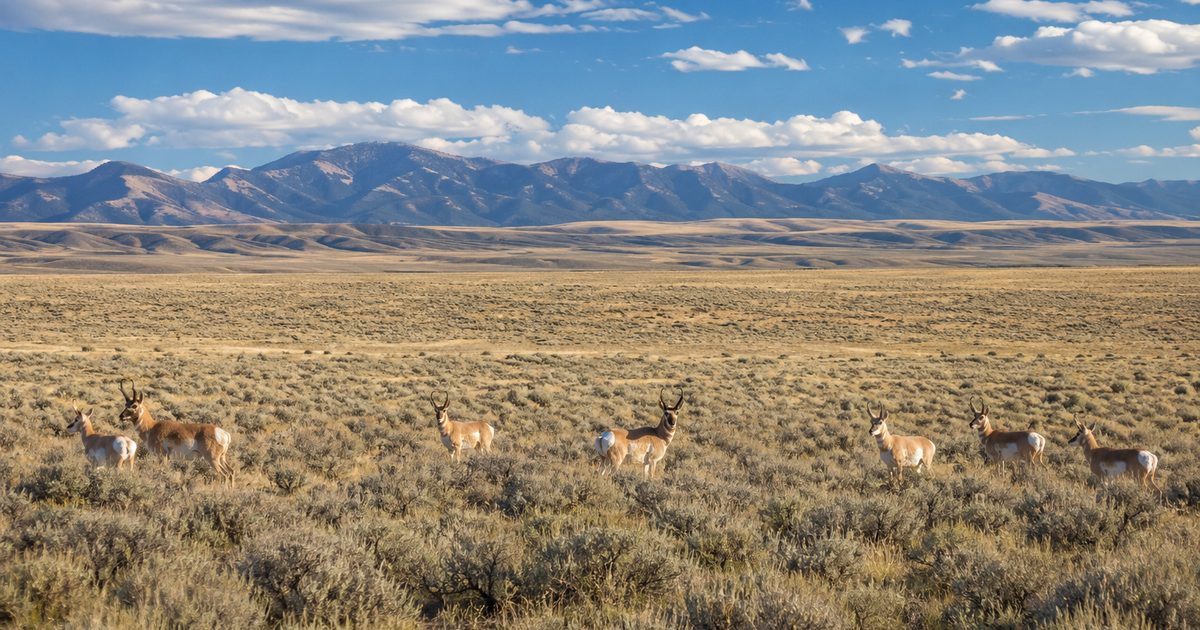
The San Agustin Plateau sits at around 7,000 feet in western New Mexico, a broad grassland basin cradled between the Magdalena Mountains to the east and the Black Range foothills to the south. Most hunters driving through Socorro on their way somewhere else have no idea that one of the best pronghorn herds in the entire Southwest is grazing right over that next ridge. That’s probably fine with the hunters who’ve been putting points in for it.
This isn’t a hidden secret anymore — the San Agustin is well-known enough among serious pronghorn chasers. But it doesn’t get the same magazine coverage as Wyoming’s Thunder Basin or the Bighorn Basin, and the New Mexico draw system still keeps it accessible in ways that other elite pronghorn units aren’t. If you’re willing to do the points work, this plateau delivers.
Why the San Agustin Produces Trophy Horn Length
Pronghorn horn growth is almost entirely a function of age, genetics, and nutrition. The San Agustin checks all three boxes in ways that most other pronghorn ranges in the West don’t.
The elevation matters here. At 7,000 feet, the plateau gets slightly more precipitation than the low-desert antelope country in southern New Mexico or the panhandle of Texas. That translates to better grass. Better grass means does raise fawns in better condition, which means more pronghorn survive to older age classes. Bucks that survive to four and five years old in good nutrition country grow horns that will stop a serious pronghorn hunter cold.
The basin’s semi-isolated geography also keeps the herd relatively contained. Pronghorn don’t cross mountain ranges readily. The plateaus and breaks that define this country act as soft boundaries that keep genetics cycling within a defined population. Over decades of that dynamic, the San Agustin herd has developed a body of evidence — in taxidermy shops in Socorro and Magdalena, in the record books — that the local genetics trend long.
A 15-inch buck here isn’t a fantasy. It’s a realistic target for a hunter who draws the right tag designation and takes the time to glass enough bucks before pulling the trigger.
Hunt the Plateau's Eastern Edge First
The eastern fringe of the San Agustin, where the grassland breaks toward the Magdalena Mountains, concentrates bucks in early September. Water sources along that transition zone pull animals predictably in the heat of the day. Glass from your vehicle on the main roads before committing to a stalk — you’ll cover more country and burn less energy during the warm early season.
The Draw Odds Reality
You won’t draw this unit on your first try. The premium designations on the San Agustin — particularly the Antelope Units in the 16-series that cover the heart of the plateau — have historically required 8 to 15 preference points depending on the year and the tag type. Rifle tags in the prime units have tended to land around 10-12 points in recent years. Archery designations can move a bit faster but still demand serious patience.
New Mexico’s preference point system adds one point per year for unsuccessful applications, with an extra half-point for drawing a tag. Non-residents can apply, and they do — this is a unit worth the annual investment even from out of state.
The practical math for most out-of-state hunters: if you’re starting from zero points in your early 30s, you’re looking at a realistic draw window in your early-to-mid 40s for the best rifle designations. Some hunters shift to archery or muzzleloader to try to cut that timeline. Others look at second and third-tier designations in the same region that still carry good pronghorn but require fewer points.
Check the New Mexico draw odds and run the numbers through the Draw Odds Engine before you commit your application strategy. The spread between rifle designations in the same general area can be 4-5 points — and that’s the difference between hunting this decade or the next one.
New Mexico vs. Wyoming and Montana
Wyoming’s over-the-counter antelope tags in certain units offer a faster path to a pronghorn hunt, but the average horn length and trophy potential in top Wyoming units don’t consistently match the San Agustin’s ceiling. Montana’s pronghorn draw is less competitive in some districts but produces smaller animals on average. If your goal is a legitimate 14-inch-plus buck with exceptional mass, New Mexico’s points investment is hard to argue with.
Access Logistics: Socorro and Magdalena as Your Base
Socorro is the primary logistics hub for a San Agustin hunt. It’s got gas, groceries, a couple of motels, and a local sporting goods presence that understands pronghorn hunting. The drive from Socorro west on US-60 takes you through Magdalena — a small mountain town that functions as the last real supply stop before you’re on the plateau.
Magdalena itself is worth knowing. It’s a working ranching community at the base of the mountains, and the people there have a practical relationship with the public-land hunting on the San Agustin that you won’t find in resort-adjacent hunting towns. Stop at the local hardware store, talk to people, and you’ll learn more about current antelope concentrations than any aerial survey report will tell you.
The plateau is accessible by paved roads and improved two-tracks, and vehicle access for glassing is straightforward in most conditions. You don’t need a high-clearance 4WD rig for basic access, though one helps if you want to push down rougher ranch roads. Cell service on the plateau is spotty to nonexistent — download your maps, save your waypoints, and don’t count on Google to get you home.
Public Land vs. Private Land Mix
The San Agustin is a genuine mix. Bureau of Land Management land covers significant portions of the plateau, and pronghorn move freely across ownership boundaries. The New Mexico State Land Office manages additional acreage that’s accessible with a permit — non-residents need to pick up a state land access permit, which is inexpensive and straightforward.
Private ranches occupy substantial chunks of the best habitat. Some ranches have historically been accessible to permit holders through New Mexico’s SHARE and Open Gate programs, but availability changes year to year and ranch to ranch. Don’t build your hunt plan around private land access unless you’ve confirmed it well in advance.
The honest truth: there’s enough quality BLM and state land on the San Agustin that a hunter with good legs and patience can have an excellent hunt entirely on public ground. The private land just gives you more options, not a fundamentally different experience.
Verify Land Status Before Walking
The patchwork of BLM, state, and private land on the San Agustin looks deceptively simple on a road map. It isn’t. Download the onX Hunt layer for the unit before your trip and verify ownership on foot before closing distance on a buck. Trespassing on private ranch land here isn’t ambiguous — ranchers know the boundaries, and they notice unfamiliar pickups.
Glassing Strategies for Open Country
Pronghorn hunting on the San Agustin is fundamentally a glassing game. The terrain is open enough that long-range optics are the primary tool, and how you deploy them matters more than almost anything else about your physical setup.
Vehicle glassing is legitimate and effective early in the hunt. Pronghorn on this plateau are accustomed to vehicle traffic — they’ve seen trucks their entire lives — and a truck parked on the roadside with a tripod set up in the window or on the roof doesn’t alarm them the way a walking human does. Cover the roads systematically at first light and again before dark. You’ll locate bucks, get a rough count, and identify the shooter you want before you ever leave the pavement.
Once you’ve found a target buck and committed to a stalk, the math changes fast. The terrain that looks like it offers concealment from the road often doesn’t hold it at close range. Pronghorn have exceptional eyes — better than white-tailed deer, arguably better than elk — and they pick up movement at distances that will surprise you. A crawling stalk is frequently required to close the last 200 yards, and even then, 250-300 yards may be your realistic shot distance on a mature buck in open terrain.
On-foot glassing works in the breaks and the rocky transition zones where the plateau rolls toward the mountain edges. These areas have more topographic relief and let you work below ridgelines and glass down into basins. This is where you’ll find the oldest bucks in the pre-rut period — holed up in terrain features with good sight lines in multiple directions.
Early September Heat and Pronghorn Behavior
Most New Mexico pronghorn tags run in the first two to three weeks of September. That’s a warm time of year on a 7,000-foot plateau, with midday temperatures in the 80s and direct sun that makes the grassland shimmer. Heat affects pronghorn behavior in ways that a hunter coming from the late-season rut experience needs to adjust for.
In high heat, pronghorn compress their active periods into the first two hours after sunrise and the last 90 minutes before dark. From roughly 9 AM to 4 PM on a hot September day, mature bucks will be bedded in whatever shade or breeze pocket they can find, which isn’t much on an open plateau. You’ll see them, but they won’t be moving much, and a pronghorn bedded in the open with its eyes constantly scanning is the hardest animal in North America to approach.
Plan your days accordingly. Be on the plateau glassing at dawn. Work through the morning movement period aggressively. From late morning through early afternoon, regroup, drink water, study your maps, and identify fresh bedding locations for the afternoon hunt. Mature bucks will often hold the same general area for days at a time, so a buck you spotted at 7 AM and couldn’t stalk is still worth going after at 5 PM in the same basin.
The heat also means water sources get traffic. Any reliable stock tank, dirt pond, or natural seep on the plateau will have pronghorn visiting throughout the day. Setting up with a good downwind position and a long glass on a water source during the midday lull can put a mature buck in front of you that you’d never have found glassing moving animals.
Optics Investment Pays Off Here
On the San Agustin, a quality tripod-mounted 15x56 binocular does more work than any other piece of gear you’ll carry. You’re glassing long distances across open terrain for the majority of your hunting time. Cheap glass causes eye fatigue by mid-morning; quality glass lets you glass for hours and still pick out a buck’s horn length at 800 yards. Bring a 15-50x spotting scope for confirmation before committing to a stalk.
What Class of Buck Is Realistic
If you’re hunting the San Agustin on a rifle tag in a premier designation, a realistic goal is a 13-to-15-inch buck with good mass and cutters. That’s a legitimate trophy by any measuring standard. A 16-inch-plus buck exists in this country, but it’s a buck you may see once in a 5-day hunt and may or may not get a shot at.
Don’t let the big-number aspiration cause you to let a 13-inch buck walk on day four. Pronghorn hunts have a way of not producing that “better” buck on the final morning, and a 13-inch San Agustin antelope with double-cutters and a decent prong is an animal you’ll be proud of for a long time.
The early season also means most bucks are still in their late-summer bachelor groups or transitioning into pre-rut territories. You’ll see multiple bucks together, which makes comparison easier. When you find a group of three or four bucks on day one, take the time to sort them carefully. The oldest buck in the group will have the longest horns but often the most worn tips and heaviest bases — a combination that’s easy to underestimate at a glance.
Know your shot distances before the hunt. Pronghorn country demands honest proficiency at 300 yards and comfortable shooting to 400 yards for most hunters. Shoot your rifle at those distances before you go, not after you arrive.
The San Agustin Plateau rewards patience twice over — once for the years you spend building points, and again on the ground when you take the time to find the right buck before you shoot. It’s one of the genuinely great pronghorn addresses in the West, and the draw investment makes the tag feel earned in a way that a raffle draw or a non-resident walkup tag never quite does.
Sources & verification
Seasons, license fees, application windows, and draw structure for New Mexico change every year. Always verify the current details against the official New Mexico agency before applying or hunting.
- New Mexico Department of Game & Fish — wildlife.state.nm.us
Next Step
Check Draw Odds for Your State
Tag-level draw odds across 9 western states — filter by species, unit, weapon, and points. Free to use.
Get the Insider Edge
Join hunters getting exclusive draw odds data, gear deals, and weekly hunt planning tips.
Related Articles

Arizona Unit 36 Border Country Guide
Units 36A, 36B, and 36C sit along the Mexican border west of Nogales — overlooked Coues and javelina country with low draw requirements and solid hunting.

Montana General Elk Tag: Everything You Need to Know
The Montana general elk tag explained — who can buy one, what it covers, best districts, season dates, nonresident options, costs, and tactics for public land.

Arizona Unit 22 Guide: Tonto Basin
Unit 22 runs across the Tonto Basin and the Salt River country — productive elk in the highlands, accessible javelina in the desert, and some of Arizona's most underrated deer country.
No comments yet. Be the first to share your experience!