Nevada Turkey Hunting: Merriam's and Rio Grande in Basin and Range Country
Nevada turkey hunting — Merriam's and Rio Grande subspecies, spring and fall seasons, best units, and draw odds for one of the West's most overlooked turkey hunts.
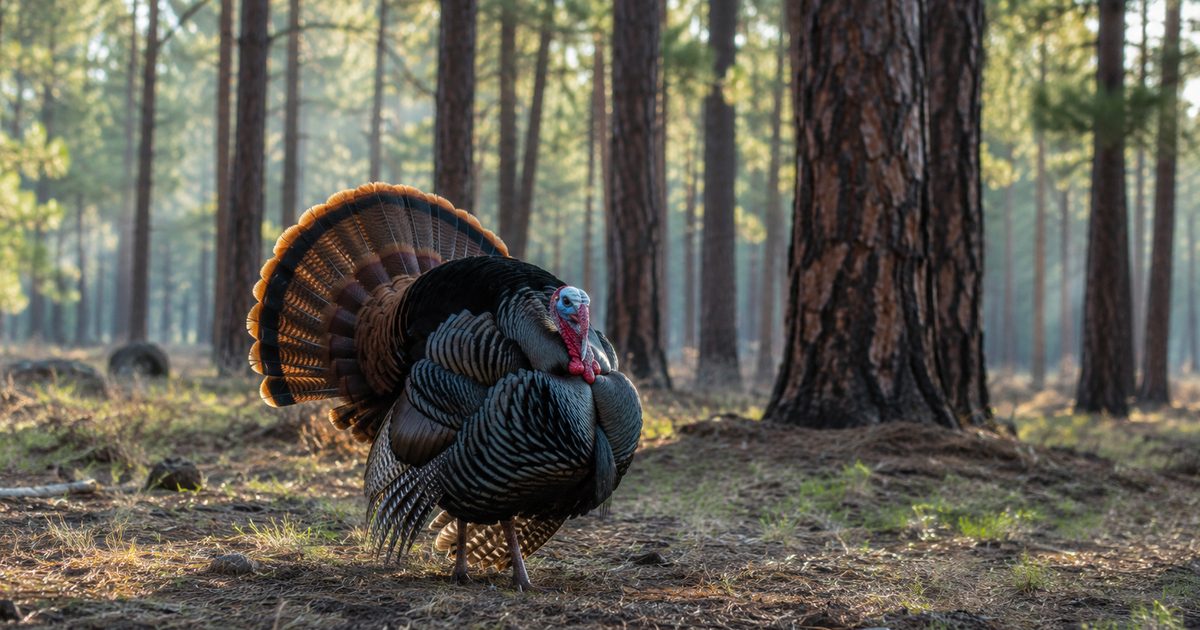
Nevada doesn’t show up on most turkey hunters’ radars, and that’s exactly why it’s worth paying attention to. The state holds both Merriam’s and Rio Grande turkeys across dramatically different habitat types, the spring draw odds are significantly better than anything Nevada offers for deer or pronghorn, and the hunting itself — mountain gobblers hammering in ponderosa pine at 7,000 feet — is something most hunters haven’t experienced. If you’re spending points on Nevada species, turkey is one of the most rewarding places to cash them.
Quick Facts: Nevada Turkey
| Detail | Info |
|---|---|
| Subspecies | Merriam’s (northern mountain ranges), Rio Grande (lower elevations with oak chaparral) |
| Primary Season | Spring (March–May) |
| Draw Requirement | Spring turkey requires draw in most units |
| Fall Tags | Sometimes OTC in select units — varies by year |
| Spring Draw Odds | 20–50% in many units — far better than deer or pronghorn |
| NR Tag Cost | ~$35 spring turkey tag |
| Top Units | Unit 161 (Ruby Mountains), Unit 107 (Jarbidge/Elko County) |
| Primary Agency | Nevada Department of Wildlife (ndow.org) |
Disclaimer: Dates, fees, and regulations listed here were accurate as of early 2026. NDOW updates these annually — always confirm current rules at ndow.org before applying or purchasing a license.
Nevada’s Turkey Draw System
Spring turkey tags in Nevada require a draw application, and the application period typically runs in late winter. The key thing to understand is that draw odds for turkey are dramatically better than what Nevada hunters face for coveted mule deer or pronghorn tags. In many units, draw odds sit between 20 and 50 percent. Some lower-demand units clear near 100 percent. That means a hunter with a modest preference point balance has a realistic shot at drawing a tag most years.
Nevada’s turkey draw doesn’t use an accumulated preference point system the way deer and elk do — it operates more like a weighted lottery. Applicants with more preference points get more entries, but you don’t need a decade of banked points to draw a spring turkey tag. First-time applicants draw turkey tags in Nevada every year.
Spring Turkey Requires a Draw Application
Don’t show up to Nevada expecting to buy a spring turkey tag over the counter. Most spring turkey units require a draw, and the application window closes months before the season opens. Submit your application through NDOW’s licensing portal during the winter application period. Miss it and you’ll be sitting on the sideline until next year.
Fall turkey seasons are a different story. In certain Nevada units, fall turkey tags are available over the counter. Availability varies year to year based on population assessments, so check NDOW’s current regulations each fall before assuming OTC tags are still on the shelf.
The Two Subspecies: Merriam’s and Rio Grande
Nevada sits at an interesting geographic crossroads for wild turkeys. Two subspecies occupy distinctly different parts of the state, and they hunt differently enough that it’s worth knowing which one you’re after.
Merriam’s Turkey: Mountain Gobblers Above 6,000 Feet
Nevada’s Merriam’s population lives in the northern mountain ranges — the Ruby Mountains, East Humboldt Range, Santa Rosa Range, Pine Forest Range, and the ranges around Elko County. These are high-altitude birds in ponderosa pine habitat, typically found between 6,000 and 9,000 feet elevation. Spring hunts here put you in country that looks more like Montana than Nevada — open pine parks bordered by aspen and mountain mahogany, with distant peaks still carrying snow in April.
Merriam’s are the most visually striking turkey subspecies. The tail fan feathers have brilliant white tips instead of the brown or buff tipping you’d see on an Eastern or Rio Grande. A mature Merriam’s tom in full strut against a backdrop of ponderosa pine is hard to forget. The birds are also known for having long beards and heavy spurs relative to their body size, which tends to run larger in mountain populations.
Rio Grande Turkey: Oak Chaparral and Lower Terrain
Rio Grande turkeys occupy the drier, lower-elevation portions of Nevada where oak chaparral, pinyon-juniper, and brushy drainages create suitable habitat. These birds aren’t as widely distributed across the state as Merriam’s, and the hunting can feel more like pursuing Rio Grandes in Texas hill country than what most people picture when they think of Nevada. Rio Grandes have tan or buff-tipped tail fan feathers and tend to be slightly longer-legged and more open-country adapted than Merriam’s.
Best Units for Nevada Turkey
Nevada has a handful of units that consistently produce quality spring turkey hunting.
Unit 161 — Ruby Mountains (Best Merriam’s Unit)
The Ruby Mountains are the best Merriam’s turkey destination in Nevada. The range rises sharply from the Elko Basin, and the eastern slopes hold a well-established turkey population in ponderosa pine and aspen habitat. Spring gobblers in the Rubies spit and drum loudly in the mountain silence, and setup locations in open parks and adjacent to roost trees can produce aggressive responses from first light.
Access is good on the eastern face via Forest Service roads. The western slope is steeper and more remote. For hunters who want the best Nevada Merriam’s experience with reasonable draw odds, Unit 161 is where you start.
Ruby Mountains: The Best Unit in Nevada for Merriam's
Unit 161 in the Ruby Mountains is Nevada’s premier Merriam’s turkey destination. Spring draw odds in this unit are typically better than 30 percent, and the turkey population is stable and huntable. If you’re going to build one Nevada turkey application, start here. The combination of scenery, bird numbers, and realistic odds is hard to match anywhere else in the state.
Unit 107 — Jarbidge/Elko County
Unit 107 covers the Jarbidge country in the far northeastern corner of Nevada — one of the most remote mountain ranges in the lower 48. Jarbidge Wilderness holds a small but solid Merriam’s population. This is a hunt for hunters who want genuine solitude and don’t mind earning access. The roads in are long, and the terrain is unforgiving. But if you pull a tag here, you’re hunting country few turkey hunters will ever see.
Santa Rosa Range (Humboldt County)
The Santa Rosa Range offers another quality Merriam’s option in northwestern Nevada. Elevations are lower than the Rubies, and the turkey habitat is a mix of ponderosa pine and mountain sage. Spring birds here can be called in aggressively in May when the weather warms and gobblers are fully active. Draw odds in Santa Rosa units are often among the better in the state.
Calling Tactics for Mountain Merriam’s
Mountain Merriam’s respond differently than lowland Rio Grandes or Eastern turkeys. Several adjustments help in high-altitude Nevada spring hunting.
Set up in meadows and parks, not timber. Merriam’s in ponderosa pine country prefer to strut in open areas. Calling from inside heavy timber limits your visibility and the gobbler’s ability to locate you. Find a park or opening, get your back against a tree at the edge, and let the bird come to you across open ground.
Use locator calls to find birds first. In mountain terrain, turkeys can be spread out across miles of ridgeline. Owl hoots and crow calls at first light will get shock gobbles from birds on the roost. Listen for direction and distance before setting up. A locator call costs you nothing and saves you from burning a setup in empty country.
Call aggressively in early spring. Merriam’s gobblers respond to assertive calling when hens are scarce and breeding competition is high. Don’t be shy with the volume in open mountain parks — sound travels differently at altitude, and a quiet call can get lost in the wind. Start with a series of loud yelps and escalate if the bird hangs up.
Be patient after fly-down. Mountain birds often go silent after flying down and landing in timber before moving to open country. Give it thirty minutes after the roost goes quiet before repositioning. The bird may be working toward you silently.
Spring Season Timing and Conditions
Nevada’s spring turkey season typically runs from late March through May, with unit-specific dates published in the NDOW regulations. The best hunting in Merriam’s country comes in late April and early May, when birds are fully into the breeding season and gobblers are actively responding to calls.
High-Altitude Spring Turkey Gear
Merriam’s hunting in Nevada mountain ranges means cold mornings even in late April. Bring layers — temperatures at 7,000 feet can sit in the 20s before sunrise and reach the 60s by afternoon. Snow is possible in May in the Rubies and Jarbidge. Pack waterproof boots and a packable down jacket for the pre-dawn setup. A quality friction call (slate or glass) and a box call for volume cover the range of conditions you’ll encounter in mountain terrain.
Late April storms are common in the Rubies and northern Nevada ranges. A bluebird spring morning can turn into six inches of snow by afternoon. Build flexibility into your schedule — the day after a spring storm is often exceptional hunting, as birds get active and vocal once the weather clears.
Tag Costs and Application
Nevada’s spring turkey tag costs approximately $35 for nonresidents — among the lowest prices for any western big game tag. Add a base nonresident hunting license and you’re looking at a very affordable western hunt, especially compared to the cost of Nevada’s premium deer and pronghorn tags.
Apply through NDOW’s licensing portal during the winter application period. Check application deadlines carefully — they change annually. For current draw odds broken down by unit, the ProHunt Draw Odds Engine gives a full Nevada turkey breakdown by unit and year. See the Nevada draw odds page for the full picture on point accumulation and application strategy.
Nevada turkey hunting is one of the best-kept secrets in western big game. The Merriam’s experience in the Ruby Mountains alone is worth the trip — mountain ponderosa pine, snow-capped peaks in the background, and gobblers that hammered your call from a quarter mile away. It won’t stay underrated forever.
Next Step
Check Draw Odds for Your State
Tag-level draw odds across 9 western states — filter by species, unit, weapon, and points. Free to use.
Get the Insider Edge
Join hunters getting exclusive draw odds data, gear deals, and weekly hunt planning tips.
Related Articles

Western State Draw Systems Explained
How all 9 western state hunting draw systems actually work — preference points, bonus points, and pure lotteries compared side by side with real odds data.

Arizona Bighorn Sheep Draw Odds Guide
Arizona bighorn is the definition of a lifetime tag. Here's the point math, unit breakdown, and why you apply every year regardless of your bonus point total.

Arizona Fall Turkey Draw Odds Guide
Arizona fall turkey is a low-point draw in the ponderosa country. Here's the unit breakdown, typical point requirements, and how to stack it with other Fall Draw applications.
No comments yet. Be the first to share your experience!