Hunting Deer in the Rain: Why Bad Weather Means Good Hunting
Rain hunting tactics for whitetail deer — how rain affects deer movement, scent cone behavior, which rain conditions are best, and gear setup for an all-day wet weather hunt.
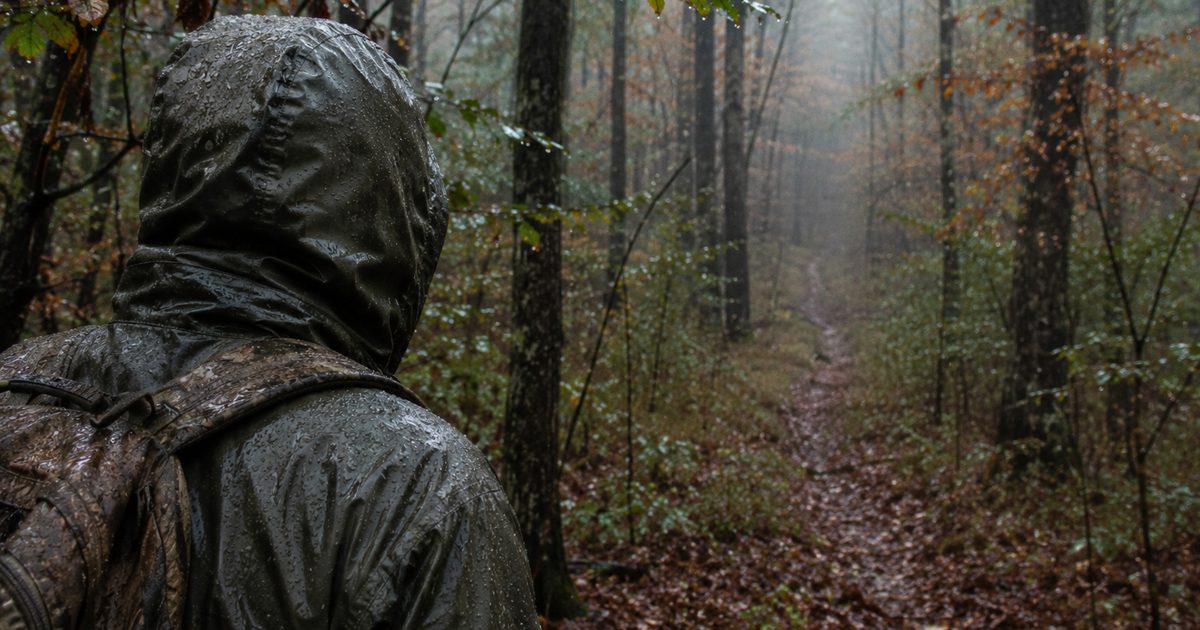
I’ve sat in more wet stands than I care to count, and I’ll tell you something most hunters miss: some of my best encounters with mature deer have come on days when the parking lot at the trailhead was empty because everyone else stayed home. Rain keeps people out of the woods. And an empty woods is a deer hunter’s best friend.
There’s a persistent myth in whitetail hunting that rain means wasted time — that deer bed down and refuse to move, that your optics fog, that the whole experience is miserable and unproductive. Some of that is true under the wrong conditions. But most hunters are leaving high-percentage days on the table because they don’t understand what rain actually does to deer behavior, scent dispersal, and your own odds of getting close.
Let’s break it down the right way.
Why Most Hunters Skip Rain Days (And Why That’s a Mistake)
Walk into any hunting camp on a drizzly morning and you’ll hear the same chorus: “Too wet today. Deer won’t move. I’ll sit tomorrow when it clears up.” What those hunters are really saying is that they’re uncomfortable. And they’re handing you the woods.
Reduced hunting pressure is one of the most underrated advantages in deer hunting. Whitetails pattern human activity just as surely as we pattern them. After a week of hunters slamming truck doors at 5 AM, walking the same trails, and leaving scent across every access route, even the most daylight-active bucks start adjusting. Give those deer a two-day break from human intrusion — which is exactly what rainy weather provides — and they relax. Their guard drops. Their daytime movement increases.
Pressure reduction alone is worth suiting up for.
What Rain Does to Deer Movement
Rain’s effect on deer depends almost entirely on what stage of the weather system you’re in. Pre-front, during the rain, and post-front each produce distinctly different deer behavior. Understanding the sequence is the difference between hunting on a schedule and hunting smart.
The Pre-Front Feeding Binge
This is the window most hunters know about but rarely capitalize on. As a low-pressure system moves in — typically the 12 to 24 hours before rain actually arrives — deer go into a feeding frenzy. Barometric pressure drops, and whitetails seem to feel it before we see a single cloud. They’re on their feet, hitting food sources hard, moving with less hesitation than they show on calm bluebird days.
If you get one day to choose, choose the afternoon before the rain starts. A dropping barometer, overcast skies, and a slight breeze rolling in ahead of the storm is about as close to a guaranteed deer movement window as this sport offers. During the rut, this is when mature bucks throw caution aside and cruise doe bedding areas in broad daylight.
Light to Moderate Steady Rain — Hunt Aggressively
Once the rain actually arrives, the picture splits based on intensity. Light drizzle to moderate steady rain keeps deer on their feet. This is your green light. The reasons stack up in your favor all at once.
Sound dampening is enormous. Wet leaves, soft ground, and the constant white noise of falling rain mean you can get into position — and stay there — without the crunching footfalls and twig snaps that betray you on dry days. I’ve had deer walk to within 20 yards of my stand on steady rain days that would have busted me at 60 yards in dry conditions. The woods absorbs noise in the rain. Use it.
Scent dynamics shift in your favor in a specific way. Your ground scent — the trail you walked to your stand — gets actively washed by falling rain. Within an hour of moderate rain, the thermal scent stream you laid down on entry starts breaking down faster than it would on a dry morning. That’s a meaningful advantage, especially if you had to push through cover to reach your position.
During the rut, light to moderate rain during daylight hours is one of the highest-percentage conditions you can hunt. Bucks are already keyed up. The reduced pressure and muffled acoustics give them confidence to move. Get in your stand and stay there.
Pro Tip
If steady light rain is in the forecast from first light through mid-morning during the rut, treat that day exactly like an opening morning. It deserves full commitment — early entry, your best stand, your full scent control routine. Don’t mail it in because it’s wet.
Heavy Downpours — Wait It Out
Heavy rain is a different animal. When water is sheeting down, visibility drops, driving through puddles becomes its own problem, and deer largely bed down in dense cover. This isn’t a myth — it’s real. Whitetails are practical. A soaking downpour offers no feeding advantage and carries real thermoregulation costs, so they tuck in tight and wait.
If you’re already on stand when a heavy storm rolls through, sit tight if you can. Often these intense cells pass within 45 minutes to an hour, and the deer that were bedded nearby will get up and feed immediately once the intensity drops back to moderate rain. Some of the best 30-minute windows I’ve ever experienced have come right after a heavy burst backed off to a steady drizzle.
The Post-Front Cold Clear Day — Second Best Window
After the system passes and skies clear, you’re in the second-best movement window of the sequence. Cold, clear post-frontal air, especially a genuine cold front with a sharp temperature drop, puts deer on their feet again. Pressure is rising. Temperatures have dropped. If it’s November and you’re dealing with a post-front clear morning at 28 degrees, that’s premium whitetail movement. The deer that were largely nocturnal during the warm pre-storm period will push hard on food sources to compensate.
This post-front window pairs well with the hunting cold fronts and weather guide breakdown of pressure changes and how to sequence your hunts around weather systems rather than just individual days.
How Rain Actually Affects Your Scent
Here’s where hunters get confused. Rain helps you. Rain also hurts you. Both things are true at once, and understanding the distinction keeps you from making mistakes.
Rain washes ground scent off your entry trail faster than dry conditions would. That’s the benefit. Your boot prints, the compressed vegetation, the skin cells you shed — all of it breaks down faster when it’s wet. A deer crossing your entry trail three hours after you walked it in the rain has a meaningfully shorter scent memory to react to than the same deer crossing your dry-day trail.
The drawback is humidity. High humidity causes scent molecules to disperse more laterally — they spread wider rather than rising sharply and dissipating. Your body odor, your breath, the scent from your clothing — it all travels farther horizontally in saturated air. A deer that’s downwind at 100 yards in high humidity can catch more scent than the same deer at 80 yards on a dry, sunny afternoon.
The practical takeaway: your entry trail is cleaner in rain, but your stand position needs to be as carefully positioned for wind as ever — possibly more so. Don’t get complacent about scent control just because it’s raining.
Warning
High humidity after rain intensifies lateral scent spread. Don’t abandon your scent control routine because it’s wet — wash your hunting clothes in scent-eliminating detergent, store them in a sealed bag, and use activated carbon or scent-eliminating spray before every sit. The rain helps your trail; it does not forgive your stand position.
Gear Setup for All-Day Wet Weather Hunting
Comfort is a performance issue. A hunter who’s shivering, soaked through, or shifting constantly to wring out their socks is not a still, patient, effective hunter. Gear matters more on rain days than any other day of the season.
Waterproof Outer Layer — But Quiet
The trap hunters fall into is buying a waterproof jacket that crinkles or flaps in the wind. Modern waterproof membranes — Gore-Tex, event fabrics, brushed exterior face fabrics — can be both waterproof and nearly silent. Avoid anything that sounds like a grocery bag when you draw your bow or raise your rifle. Soft-shell waterproof fabrics are usually quieter than hard-shell laminates. Check the best hunting rain gear guide for specific recommendations on quiet waterproof layers sorted by hunting style.
Waterproof pants matter as much as the jacket. Wet denim or fleece against your skin pulls heat out fast. A lightweight waterproof bibs layer over your insulation base keeps you dry without adding bulk that restricts movement on the draw.
Rubber Boots — Non-Negotiable
This is the one piece of gear that directly affects your hunting success, not just your comfort. Rubber boots carry no scent. Leather and fabric hunting boots, even well-treated ones, absorb and release human odor. On a rain day, when you’re walking through wet vegetation and standing water, a rubber boot wipes clean and leaves almost no ground scent. Pull-on rubber boots or lace-up neoprene insulated rubber are both good options depending on temperature.
Bow String Issues in the Wet
Bowhunters need to think about their equipment in rain. Traditional bowstrings, especially those with natural fibers or less aggressive serving, can absorb moisture and stretch. Synthetic strings — Dyneema, Flemish twist synthetics, Spectra-based materials — are far more moisture stable, but they’re still worth inspecting before a wet hunt.
A wet bowstring can slow arrow velocity slightly and affect point of impact at distance. More practically, water on the string and cables can affect your release aid or fingers depending on your setup. Keep a dry cloth in a sealed pocket to wipe your string, cams, and arrow rest before drawing. A quick wipe-down after prolonged rain exposure takes 10 seconds and removes a real variable.
Scope Caps and Lens Protection
Rifle hunters: use scope covers and remove them the moment you get on stand. Fog and water droplets on your objective lens will kill a shot opportunity faster than any other equipment failure. Flip-up scope covers take one motion to open and keep your glass dry during movement. Keep a microfiber lens cloth in a waterproof pocket. Clean optics before you settle in, not after you’ve already missed the deer.
Staying Warm When Wet
The core principle of wet-weather warmth is layering for moisture management, not just insulation. A wet baselayer against your skin will hypothermiate you faster than a lighter dry one. Wool or synthetic moisture-wicking base layers stay warm even when damp. Avoid cotton entirely — it loses all insulating value when wet and stays cold.
Heat loss accelerates when you’re sitting still. A hand warmer in each pocket and a pair of oversized neoprene gloves over your shooting gloves can extend your time on stand by hours. Tuck chemical toe warmers into your boots before entering. Once your feet are cold in a tree stand, your hunt is effectively over — you’ll be moving constantly, which defeats every advantage the rain gave you.
Hunting Strategies to Put It All Together
The most effective approach to deer hunting in rain isn’t just passive — it’s about positioning yourself to take advantage of the specific conditions.
On light to moderate rain days, move to stands positioned on food-to-bed travel routes. Deer will still be feeding, but they’ll use tighter, more predictable corridors. Creek bottoms with overhanging timber offer deer overhead cover and give them natural travel lanes that stay consistent regardless of weather. Cedar thickets at field edges are classic rain day staging areas.
Hunt longer sits. The deer that were bedded during the heaviest rain cells will get up the moment intensity drops. If you bailed at 10 AM because it got heavy, you missed the 11:30 movement burst when it backed off. Stay patient.
Don’t overcomplicate calling and rattling in moderate rain. Grunt calls work — sound travels fine through light rain, and noise-suppressing conditions mean you can get away with calling more aggressively without blowing out nearby deer. During the rut, a grunt tube followed by 20 minutes of patient waiting is often more productive in steady rain than on any dry day, simply because any buck in the area has already been on his feet and is more receptive to stimulus.
Frequently Asked Questions
Do deer move during rain?
Yes, with important distinctions. Light to moderate steady rain keeps deer moving and often increases daytime activity, especially during the rut. Heavy downpours push deer into dense cover temporarily. The most significant movement windows are the 12 to 24 hours before rain arrives (pre-front feeding binge) and the clear, cold morning after the front passes.
Does rain wash away deer scent for tracking?
Moderate rain does wash away ground scent from your own entry trail, which helps reduce your human odor impact. However, rain also washes away blood trails and disturbs the ground sign deer leave when moving. If you’re tracking a hit deer, light rain gives you a short window before the sign starts to fade. Act quickly — rain doesn’t preserve a blood trail, it degrades it.
Is bow hunting in the rain worth it?
Absolutely. Bowhunters often benefit more from rain conditions than rifle hunters because the noise suppression is most valuable at close range. Wet leaves, soft saturated ground, and rain noise all allow closer approach without detection. Maintain your bow — wipe the string and cams dry before drawing — and rain days can be your highest-percentage close-range encounters of the season.
What is the best rain intensity for deer hunting?
Light drizzle to moderate steady rain is the sweet spot. Deer stay on their feet, sound is muffled, human pressure drops, and your entry trail scent breaks down faster. Once rain becomes a heavy downpour — wind-driven, reducing visibility significantly — deer bed down and hunting productivity drops sharply until intensity decreases.
Next Step
Check Draw Odds for Your State
Tag-level draw odds across 9 western states — filter by species, unit, weapon, and points. Free to use.
Get the Insider Edge
Join hunters getting exclusive draw odds data, gear deals, and weekly hunt planning tips.
Related Articles

Arizona Elk Calling: September Archery
September archery elk in Arizona means calling. Here's the practical guide to bugles, cow calls, and the timing that produces bulls.
Arizona Hound Hunting Regulations Guide
Arizona hound hunting for bear and lion requires specific permits and tags. Here's the complete regulatory guide for 2026.

Arizona Shed Hunting: Rules & Season Guide
Arizona has specific rules on shed antler collecting. Here's the complete guide to the season, the ethics, and the most productive areas.
No comments yet. Be the first to share your experience!