Elk Calling: Bugles, Cow Calls & When to Stay Silent
Master elk calling with proven bugling techniques, cow call sequences, setup strategies, wind management, and the timing that separates filled tags from blown opportunities.
This article contains affiliate links. We may earn a small commission if you purchase through these links, at no extra cost to you.
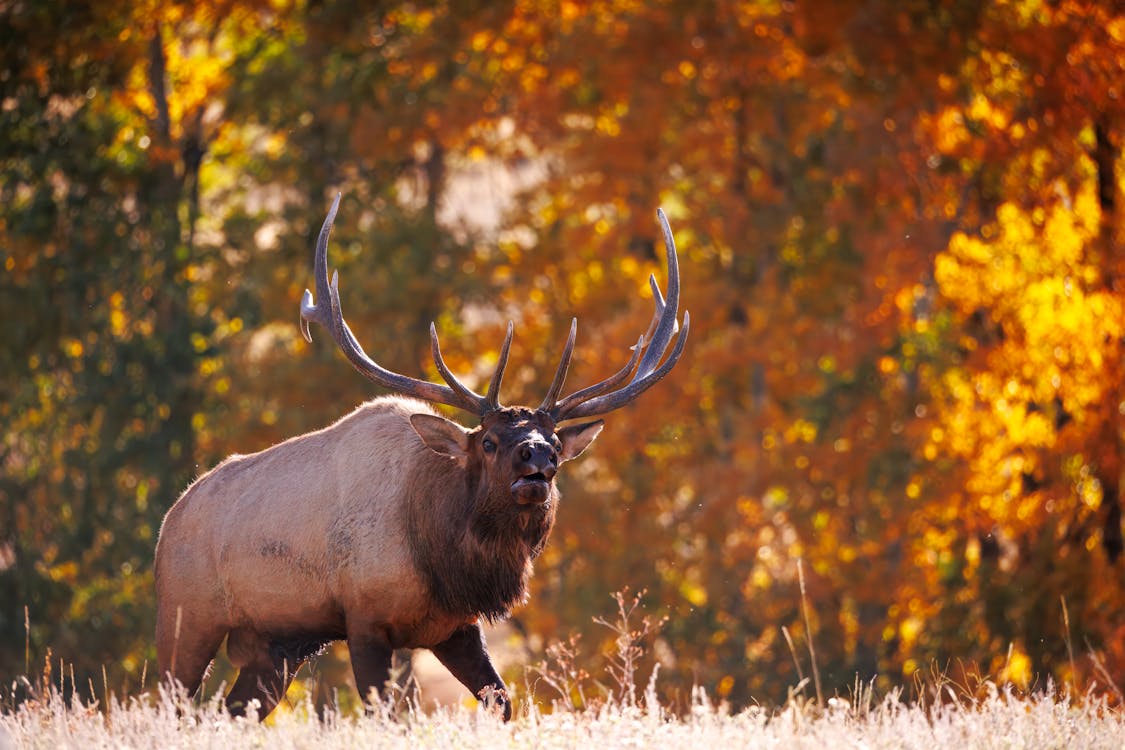
Elk calling is the most thrilling and most frustrating skill in Western hunting. When it works, a screaming 6x6 bull marches through the timber straight at you, closing from 200 yards to 30 in minutes, and your hands shake so badly you can barely draw your bow. When it doesn’t work — which is most of the time for inexperienced callers — you either push bulls out of the country or get ignored entirely.
The difference between those two outcomes isn’t natural talent. It’s understanding what calls to make, when to make them, when to shut up, and how to position yourself so the bull’s approach puts him in your lap instead of downwind of your setup. Every piece of that puzzle matters. Get one wrong and the whole sequence falls apart.
We break down elk calling into the components that actually determine success: the calls themselves, the timing, the setup, the wind, and the mistakes that burn most hunters. Whether you’re a first-year elk hunter or a veteran who can’t seem to close the deal, something here will change how you hunt this September.
Understanding Elk Vocalizations
Before you can call elk effectively, you need to understand what the sounds mean. Elk aren’t just making noise — they’re communicating status, location, mood, and intent. Every call you make is a sentence in a conversation. If your sentence doesn’t make sense in context, the bull knows something is wrong.
The Bugle
Nothing defines elk season quite like the bugle. A mature bull’s bugle starts with a low growl, rises to a high-pitched scream, and finishes with a series of grunts called chuckles. Each element communicates different information:
- Scream — Announces presence and challenges rivals. A longer, higher-pitched scream generally indicates a larger, more dominant bull.
- Chuckles — Those grunts at the end signal aggression and dominance. More chuckles = more aggression. A bull that finishes his bugle with six or eight deep chuckles is telling every other bull in the drainage that he’s ready to fight.
- Location bugles — Shorter, less aggressive versions that bulls use to announce their position to cows and other bulls. Think of it as a “here I am” rather than a “come fight me.”
Cow Calls
Cow elk communicate constantly with a vocabulary of mews, chirps, and estrus calls:
- Mew — A soft, single-note contact call. Cows mew to stay in touch with the herd while feeding and traveling. This is the most common elk sound in the woods and the safest call you can make.
- Chirp — A shorter, sharper version of the mew. Cows chirp to communicate with calves and other cows at close range.
- Estrus whine — A drawn-out, nasally mew that a cow in heat makes to signal availability to bulls. This is an attention-getter during the peak rut. Use it sparingly — an estrus whine at the wrong time sounds out of place and makes educated bulls suspicious.
- Assembly call — A series of rapid, excited mews. Cows use this to gather the herd. It conveys urgency and can trigger a bull’s herd-guarding instinct.
Calf Sounds
Calves make high-pitched mews and distress calls. You won’t use these much in hunting, but hearing them tells you a cow-calf group is nearby — and where cows are, bulls follow during the rut.
The Calls You Need to Learn
Learn the Cow Mew Before Anything Else
New elk hunters who skip the cow call and go straight to bugling will spook far more bulls than they call in. Spend at least two weeks practicing a clean, single-note mew before touching a bugle tube. The cow call works in every situation; the bugle only works in specific ones.
Cow Call (Priority One)
If you learn one elk call, make it the cow mew. A soft, realistic cow call is the most versatile sound in your toolkit. It works in every phase of the rut, on every type of bull, in every scenario. It’s non-threatening, natural, and pulls bulls toward what they think is a receptive cow.
Practice with a Primos Hoochie Mama or Rocky Mountain Hunting Calls Palate Plate diaphragm until you can produce a clean, single-note mew that rises slightly in pitch and trails off naturally. It should sound like a real cow — not a kazoo, not a duck call, and not the nasal honk that bad diaphragm technique produces.
Bugle (Priority Two)
Bugling is high-reward, high-risk. A well-timed bugle at the right bull triggers a territorial response that brings him charging in. A bugle at the wrong bull — a satellite, a herd bull that’s already been challenged all week, or a bull that’s been pressured by other hunters — sends him the other direction.
A bugle tube is essential. A diaphragm call alone can produce a bugle, but the tube amplifies the sound, adds resonance, and allows you to produce the deep chuckles that sell the impression of a real bull. The Carlton’s Calls Herd Master and the Phelps Game Calls AMP are both proven tubes.
You don’t need a competition-quality bugle. In fact, a less-than-perfect bugle can work in your favor — it sounds like a young, subordinate bull, which a dominant herd bull sees as an easy target to run off. A screaming, chuckle-heavy bugle from an unknown bull in his territory makes a smart herd bull gather his cows and leave rather than risk a fight.
Combination Sequences
Mixing cow calls and bugles to simulate a real scenario produces the most effective sequences:
“Satellite bull with a cow” — A short, non-aggressive bugle followed by two or three cow mews. This tells the herd bull that a smaller bull has peeled off one of his cows. Few things make a herd bull angrier than hearing a cow with another bull.
“Lost cow” — A series of progressively louder mews with longer pauses between them. This simulates a cow that’s been separated from the herd and is looking for company. It’s non-threatening and effective on bulls in all mood states.
“Challenge bugle” — A full, aggressive bugle with heavy chuckles, followed by silence. This is the nuclear option. Use it on a bull that’s already fired up and approaching, or on a bull that’s answering your calls but hanging up at 100 yards. Don’t open with this — it escalates the situation immediately and there’s no scaling back.
When to Call
Timing is more important than technique. A mediocre caller with excellent timing will kill more elk than an incredible caller who doesn’t understand when to open his mouth.
Pre-Rut (Late August – Early September)
Bulls are in bachelor groups or just starting to break off. They’re vocal at dawn and dusk but not aggressively responsive to calling. This is a scouting and locating phase.
What works here: Use location bugles at dawn and dusk to get bulls to reveal their position. A single bugle from a ridgetop at first light can trigger shock gobbles — elk bugles — from multiple bulls across a drainage. Mark those locations and plan your approach for peak rut.
Cow calling is effective for pulling curious bulls within range. Pre-rut bulls are interested in finding cows before the competition does, so a lone cow mew in the right spot can bring a bull investigating.
Peak Rut (Mid-September – Early October)
Prime time. Herd bulls are defending cows, satellite bulls are circling looking for opportunities, and everyone is vocal. Peak rut is when calling is at its most effective — and most dangerous, because every sound you make is scrutinized by animals in a heightened state of alertness.
Your move: Match the bull’s energy. If he bugles aggressively, answer with a moderate bugle and cow calls. If he’s screaming and coming, stop calling and get ready. If he bugles once and goes quiet, cow call softly to keep the conversation going without escalating.
During peak rut, cow calls are more consistently effective than bugles. A bugle tells the herd bull “here’s another bull.” That might make him come fight, or it might make him round up his cows and leave. A cow call tells him “here’s an unattended cow” — and every herd bull wants more cows.
Post-Rut (Mid-October and Later)
Calling effectiveness drops significantly. Bulls are tired, beat up, and less responsive to challenges. They’ve been bugled at by hunters for a month. But they still respond to cow calls, especially soft mews that suggest a late-estrus cow. Post-rut bulls are more cautious, approach slower, and hang up more often. Patience is critical.
Scale way back: Cow calls only. Soft, infrequent. One sequence every 20-30 minutes. If a bull responds, go quiet and let him work his way in. Post-rut bulls will not tolerate aggressive calling.
Get location-specific rut timing for your hunt unit with our AI Advisor — rut timing varies by elevation and latitude.
Silence Is a Tactic, Not a Failure
After calling, the single most productive thing you can do is stop. A bull moving toward your call is trying to find the source. Additional calling gives him your exact position before he’s in range. Once a bull is committed and moving, put down the call and get ready to shoot.
When to Stay Silent
Most calling articles skip this section, and it’s arguably the most important one.
A bull is closing the distance. If you called and a bull answered, and he’s moving your direction, stop calling. Every additional call gives him a more precise fix on your location. He’s coming to where he heard the cow — let him search. The searching keeps him moving and prevents him from pinpointing your exact position before he’s in range.
You’re at his level or below. Bulls almost always approach calls from above. If you’re below a bull and calling, he’ll circle to get above and downwind before committing. This almost always ends with him winding you. If you can’t get above or at least level with a bull, call from a distance to locate him, then close the gap silently before calling again from a better position.
Bad wind will betray you. If the wind is blowing from you toward the bull’s likely approach route, don’t call. You’ll pull him straight into your scent stream. Move, reposition, or wait for the wind to shift. Calling on bad wind is worse than not calling at all.
Never Call Into a Downwind Bull
If you can smell your own campfire smoke drifting toward a bull you’re trying to call, he can smell you from three times that distance. Reposition before you call, not after. A bull that winds you during a setup educates not just himself but every elk that hears his alarm bark.
Pressured bulls play a different game. A bull that goes silent after hearing your bugle has been educated by other hunters. Switch to soft cow calls or go completely silent and use spot-and-stalk tactics instead. Pressured bulls still want cows — they just won’t commit to the sound of what might be another hunter with a diaphragm.
You haven’t read the situation yet. Blind calling in thick timber can work, but it can also pull a bull into your lap from a direction you’re not set up for, or it can alert a cow that’s feeding 40 yards away and send the whole herd running. Before you call, spend 10-15 minutes glassing and listening. Know what’s around you.
Check moon phase and rut timing for your hunt dates with our Moon Phase & Solunar Hunt Planner.
Setup for Calling: Position Is Everything
Even a perfect call from a terrible position produces nothing. Calling setup is a chess game — you need to control where the bull ends up when he arrives.
The Ideal Calling Setup
-
Get above or level with the bull. Elk move downhill reluctantly when responding to calls. Uphill or same-elevation approaches are far more common.
-
Keep the wind in your face or crossing. The bull will try to circle downwind. You need to set up so his downwind approach still keeps him in front of you, not behind you.
-
Position yourself 50-80 yards in front of the caller (if hunting with a partner). The bull will approach the sound. If you’re the caller and the shooter, you need the bull to commit past your position before he reaches where the sound came from. Offset your actual position from where you’re projecting the call — angle your body, use terrain to bounce sound, or call into a canyon wall.
-
Choose a spot with shooting lanes. A bull at 30 yards in timber so thick you can’t draw your bow is worthless. Set up where you have 2-3 clear shooting lanes at 20-40 yards. Identify these before you start calling.
-
Have a backstop. Sit or kneel against a tree, rock, or terrain feature that breaks your outline. Elk coming to a call are looking hard for the source. A human silhouette standing in an opening will bust you instantly.
The Calling Partner Setup
Two-person calling setups are devastatingly effective when executed correctly. The caller positions 80-100 yards behind and slightly upwind of the shooter. The bull approaches the caller’s sound, walks past the shooter at close range, and never knows the shooter is there.
The shooter should be completely silent — no calls, no movement, no adjusting position. The caller controls the bull’s speed and direction. If the bull is coming too fast, the caller goes quiet. If the bull hangs up, the caller increases intensity slightly.
This is how the majority of called-in archery bulls are killed on public land. If you have a hunting partner, practice this setup.
Solo Calling Setups
Solo calling is harder because you’re the source of the sound AND the shooter. The bull approaches your exact position with his full attention focused on finding what made that noise.
Tips for solo setups:
- Call from behind a terrain feature (small rise, rock, blowdown) so the bull has to crest or circle it, giving you a shot opportunity as he appears.
- Use a diaphragm call so your hands stay on your bow or gun. Reaching for a bugle tube when a bull is at 40 yards gets you busted.
- Call less frequently than you would with a partner. Each call refines the bull’s fix on your position.
- Set up in a spot where you can shoot quickly. The window between “bull appears” and “bull sees you” might be three seconds.
Wind and Thermals: The Non-Negotiable Factor
Every call can be perfect and every setup ideal, and the wind will still ruin your hunt if you ignore it. Wind management is the foundation of all elk hunting, but it’s especially critical when you’re pulling an animal toward you with sound.
Morning Thermals
In mountain terrain, morning thermals flow downhill as cool air settles into drainages and valleys. This means your scent moves downhill. If you’re calling from a ridge or bench in early morning, your scent is flowing into the valley below. A bull approaching from below is walking into your scent stream.
Solution: In early morning, call from lower positions or wait until thermals switch. Morning thermals typically shift to upslope (rising) between 9 and 11 AM as the sun heats the slopes.
Afternoon Thermals
Afternoon thermals flow uphill. Your scent rises. This is the best time to call from ridges, saddles, and high benches — your scent carries up and away from approaching bulls below.
Swirling Wind
Timber creates swirling, unpredictable wind currents. Saddles, canyon junctions, and clearings surrounded by timber are the worst for swirling. Carry a wind checker — a squeeze bottle of milkweed-light powder that shows exact wind direction and speed. Check it constantly. Not every five minutes. Every 30 seconds when a bull is approaching.
If the wind shifts while a bull is coming in, you have seconds to make a decision: take the shot if he’s in range, or accept that the setup is blown and prepare for him to bolt. There’s no saving a setup when a bull catches your scent at 60 yards.
Set Up Shooting Lanes Before You Call
Before making a single sound, identify two or three clear shooting windows at 20-40 yards from your position. A bull that responds and walks into a tangle of branches at 35 yards — and you have no shot — is one of the most demoralizing outcomes in elk hunting. Position first, call second.
Common Elk Calling Mistakes
Over-Calling
This is the most common mistake and the most damaging. Continuous calling sounds like a hunter, not an elk. Real elk call intermittently — they mew a few times, then feed in silence for several minutes, then call again. Match that cadence. If you’re calling more than once every 5-10 minutes during an active sequence, you’re probably calling too much.
Calling Without a Plan
Making random calls from random positions is recreational noise-making. Before you touch a call, know: Where is the bull? Where do you want him to go? What’s the wind doing? Where are your shooting lanes? What’s your exit plan if this doesn’t work? If you can’t answer those questions, don’t call yet.
Sounding Like Everyone Else
By mid-September on public land, bulls have heard every bad cow call and every mediocre bugle in the catalog. They associate those sounds with human pressure. If your cow call sounds identical to every youtube tutorial, educated bulls will peg it as fake.
Fix it by adding imperfection. Real cows don’t produce clean, identical mews every time. They crack, they vary in pitch and length, they mew twice quickly then go silent for a minute. Your calling should have the same natural inconsistency. Practice sounding like a real elk, not like a calling championship contestant.
Ignoring the Approach Route
Picture it: you called, the bull answered, he’s coming. But he’s circling to your left, where there’s a cliff band that’ll channel him downwind of your position. You didn’t account for terrain features that redirect the bull’s approach.
Before you set up, study the terrain from the bull’s perspective. Where will he walk? What obstacles will divert him? Where will he cross into your scent? Set up so the easiest approach route brings him through your shooting lanes on the correct side of the wind.
Bugling at Herd Bulls From Below
Why would a herd bull with 20 cows come downhill to fight a challenger? He’s got what he wants. Instead of approaching, he’ll round up his herd and push them away from the threat. If you’re below a herd bull, use cow calls to pull individual cows downhill toward you — the bull may follow to retrieve them. Or better yet, get on his level before engaging.
Giving Up After Silence
A bull that goes quiet hasn’t necessarily left. He might be approaching silently — plenty of experienced bulls come to calls without making a sound because they’ve learned that bugling during the approach reveals their position. A silent bull at 40 yards is common. After your last calling sequence, stay alert and ready for at least 30 minutes. Many called-in bulls are killed by hunters who had given up and were about to move.
Building Your Elk Calling Kit
Here’s what we carry into every September elk hunt:
- Two diaphragm calls (different reed configurations for different tones)
- One external cow call (Primos Hoochie Mama or equivalent) as backup
- One bugle tube with a grunt tube attachment
- Wind checker powder
- A rangefinder — knowing exact distance when a bull appears is critical for shot placement
Total weight: under 12 ounces. No excuses not to carry it all.
Plan Your Elk Calling Strategy
- AI Advisor — Get rut timing and calling strategy for your specific unit
- Moon Phase & Solunar Hunt Planner — Rank your hunt dates by moon phase, solunar timing, and rut window
- Shot Placement Guide — Study elk anatomy for clean kills when the bull commits
- Gear Loadout Builder — Build your September elk calling kit
- Elk Rut Hunting Tactics — Pair calling techniques with broader rut strategy
Next Step
Check Draw Odds for Your State
Tag-level draw odds across 9 western states — filter by species, unit, weapon, and points. Free to use.
Get the Insider Edge
Join hunters getting exclusive draw odds data, gear deals, and weekly hunt planning tips.
Related Articles

Arizona Elk Calling: September Archery
September archery elk in Arizona means calling. Here's the practical guide to bugles, cow calls, and the timing that produces bulls.
Arizona Hound Hunting Regulations Guide
Arizona hound hunting for bear and lion requires specific permits and tags. Here's the complete regulatory guide for 2026.

Arizona Shed Hunting: Rules & Season Guide
Arizona has specific rules on shed antler collecting. Here's the complete guide to the season, the ethics, and the most productive areas.
No comments yet. Be the first to share your experience!