Deer Habitat Improvement: What Actually Makes a Difference
Deer habitat improvement guide — hinge cutting for bedding cover, warm-season grass plots, timber stand improvement, edge feathering, water development, and how to prioritize limited budget and time for maximum deer impact.
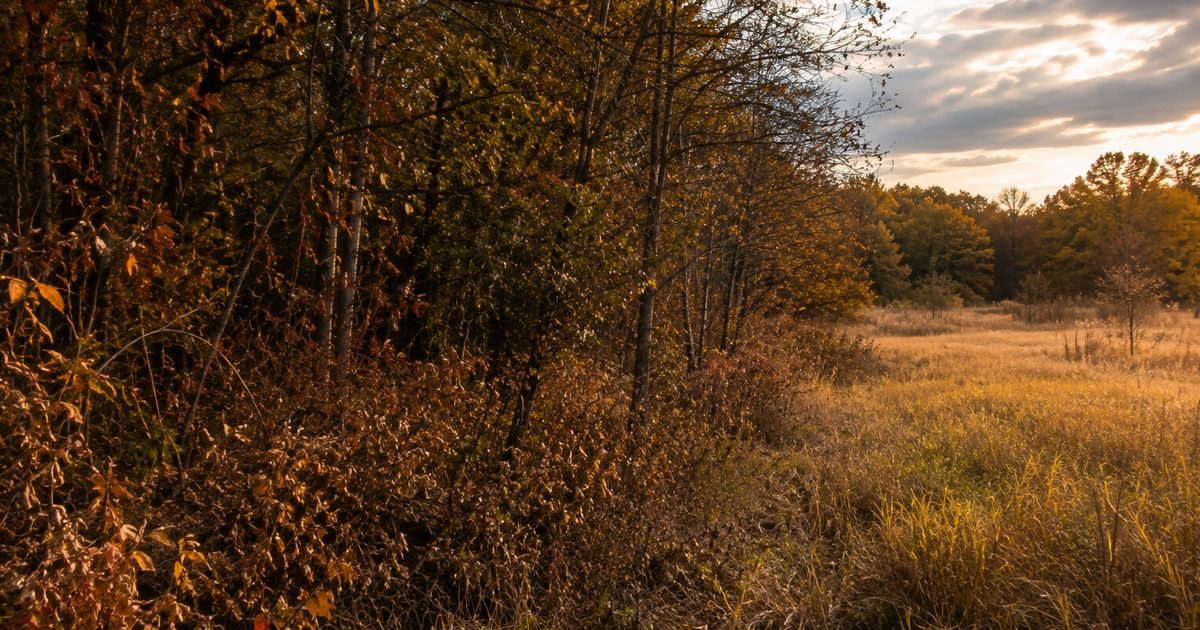
Most hunters spend their habitat improvement budget on food plots. They till, they seed, they fertilize — and then wonder why the deer only show up at 11 PM. The food was never the problem. The security cover was.
If you want to move deer during daylight, the single most effective thing you can do on almost any property is create dense bedding cover within 300 yards of your best food sources. Everything else — water, mast production, edge habitat — matters, but none of it fixes a property where deer don’t feel safe moving until dark. This guide breaks down the highest-impact habitat work we’ve seen, ranked roughly by return on effort.
Start Here: Bedding Cover is the Bottleneck
Whitetails are hardwired to stay in heavy cover during daylight. A mature doe or buck will not regularly use a food source — no matter how good it is — if she has to cross open ground or expose herself to feel watched. The rule of thumb that actually holds up in the field: deer need security cover within 300 yards of food to feed consistently in daylight.
Security cover isn’t just any woods. It’s thick enough that a deer standing 20 yards inside it is essentially invisible at eye level. Mature timber with a clean floor provides almost no security. What you need is stem density at the 2–6 foot level — briars, fallen tops, regenerating shrubs, standing grasses.
On most properties, that cover either doesn’t exist or exists in one corner that isn’t connected to food. Fixing that is where the work starts.
Hinge Cutting: Highest ROI Habitat Work There Is
Hinge cutting is the practice of cutting a tree partially through the trunk so it tips over but doesn’t die — the hinge of live wood keeps it alive and leafing out, while the fallen top creates an immediate wall of cover at ground level.
Done right in a 1–3 acre block, hinge cutting transforms a bare-floored timber stand into a bedding area in a single afternoon. Materials cost: zero. Equipment: a chainsaw.
How to do it:
Cut small-diameter trees — 3 to 6 inches is the sweet spot — about 2 to 3 feet off the ground. Angle your cut slightly upward as you go through, leaving a strip of wood on the back side to act as the hinge. The tree should tip over and land on its side, with the top resting on the ground. A live hinge holds; the tree leafs out for several years, giving you both immediate cover and a long-lived brushy thicket.
Species to cut: Ironwood (hornbeam), serviceberry, tulip poplar, elm, and most understory hardwoods work well as hinge cuts. Aim for non-mast-producing species.
Species to leave: Any oak, hickory, apple, persimmon, or other mast-producing tree should stay standing. You’re thinning competition around them, not eliminating them. Also leave mature timber that provides shade structure to the stand.
Where to place your cuts: Work in clusters, not rows. Create multi-layered piles and overlapping tops. Think about where the wind hits — deer will bed with the wind in their face and an escape route at their back. Position your bedding blocks accordingly.
Pro Tip
Hinge cut during the dormant season (late fall through early spring) to maximize survival of the hinge. Cuts made in summer have lower hinge survival rates and attract bark beetles on some species.
Timber Stand Improvement: Releasing Your Mast Trees
Timber stand improvement, or TSI, is the process of removing low-value trees that compete with your best mast producers — primarily white oaks, red oaks, and hickories. A white oak crown that’s being crowded by faster-growing tulip poplars or red maples is producing a fraction of the acorns it could.
The basic approach: walk your property and identify your best 1–3 mast-producing trees per acre. Then girdle or cut the competing stems within their drip line and canopy zone. Within two to four years, the released trees typically double or triple their acorn output as their crown expands into the cleared space.
TSI is especially impactful on properties with closed canopy hardwoods that haven’t been actively managed. A 10-acre timber block with 6 released white oaks producing at full capacity will hold deer better than 50 acres of crowded timber with marginal mast.
Important
Cost-share programs through your state’s forestry agency, NRCS, and WHIP (Wildlife Habitat Incentive Program) often cover 50–75% of TSI costs. Contact your local Farm Service Agency office before paying out of pocket.
Edge Feathering: Building the Staging Area
Deer don’t like moving from dense timber directly into an open food plot. They want a transition — a brushy, shrubby middle ground where they can stand half-concealed and assess the situation before stepping out. That transition zone is where most of your daylight sightings happen.
Edge feathering creates a gradual, irregular transition from timber to open ground by cutting, brushing back, and manipulating the vegetation along the timber edge. Instead of a hard wall of trees dropping straight to mowed grass, you want a 10–30 yard zone of varying heights: knee-high grass blending into shrubs blending into small trees blending into the timber edge.
On most properties, you can create this with a chainsaw, brush saw, and a few hours of work. Cut the lower limbs of edge trees, fell small saplings, encourage native shrubs to colonize the open edges. Irregular lines — no straight edges — create more perimeter and more staging area.
Warm-Season Grasses: Summer Cover and Fawning Habitat
Switchgrass, big bluestem, Indiangrass, and other native warm-season grasses have become standard tools in whitetail management, and for good reason. A 2–5 acre planting provides:
- Dense, standing cover from late spring through winter — deer use it for bedding year-round
- Critical fawning habitat: does drop fawns in warm-season grass stands because the stem density makes predator detection nearly impossible
- Winter thermal cover that holds heat on cold mornings, meaning deer will bed in it instead of moving to feed
Establishment takes patience — native grasses are slow to fill in the first two years. But a well-established switchgrass planting 15 years out still provides high-quality cover with zero maintenance. Plant in blocks of at least an acre to create enough density to matter, and select varieties suited to your region.
Warning
Avoid planting CRP-style grass mixes in your primary shooting lanes or travel corridors. Warm-season grasses are best positioned as bedding blocks adjacent to food, not between your stand and where deer need to be.
Water Development: Underrated, Especially in Summer
Water is the most overlooked variable in Midwest and Eastern whitetail habitat. Hunters tend to assume deer aren’t water-limited on properties with any moisture. But in July and August — when bucks are building antler mass and does are nursing fawns — water availability directly affects how far deer travel during the day, and when.
A small pond (even a half-acre pit pond) or several hand-dug water holes positioned near bedding areas dramatically increase the probability of daylight deer movement. In drier years, deer that would otherwise wait until evening to move will make short, mid-day trips to water if it’s close. Trail cameras over water sources in August often produce the most daylight mature buck photos of any time of year.
Water hole placement: within 100 yards of your established bedding cover, on the downwind side. Keep the approach clean and low-pressure.
Native Shrub Plantings: The Long Game
Silky dogwood, elderberry, native persimmon, crabapple, and highbush cranberry provide year-round value. They produce fruit and browse, they create stem density at the 3–8 foot range that most properties lack, and they establish fast relative to most tree species.
Prioritize planting these species along field edges, in brushy corners, and along creek bottoms. Even a few hundred native shrubs planted over two or three years can meaningfully improve the year-round food and cover value of a property. Most state wildlife agencies sell native shrubs at cost for habitat plantings.
Sanctuary Design: The Non-Negotiable
Every property should have at least 10–15% of its acreage designated as unhunted sanctuary. A sanctuary is an area where you do not enter — not to hang cameras, not to scout, not to check anything — from the time summer velvet is forming through the end of the season. Thoughtful stand placement keeps you on the edges of these zones without burning them.
Deer learn pressure patterns extremely quickly. A property with consistent, predictable no-pressure zones will hold mature deer at much higher rates than an equally managed property that gets bumped throughout. The sanctuary doesn’t need to be your best habitat. It needs to be a place where deer never experience a human presence.
Pro Tip
The best sanctuaries are positioned with natural barriers — creek channels, thick swamps, steep cuts — that make human access uncomfortable enough that you actually stay out. If it’s easy to walk in, you’ll eventually walk in.
Access Planning: Your Work Means Nothing If You Blow Deer Out
The most common reason good habitat fails to produce daylight deer is compromised access. You spend a year improving cover and food, and then walk through the middle of your bedding area on the way to your stand. Deer smell you, relocate, and the work is wasted.
Every entry and exit route should be planned to keep your scent stream away from bedding areas and travel corridors. Use terrain — creek bottoms, ridgelines, field edges — to get in and out with minimal impact. Our scent control guide covers the full access protocol. Make cuts in fence lines, hang climbing aids, install low-impact steps that get you in position without making noise. Early morning thermals pull down; evening thermals lift. Plan your access around both.
Prioritizing on a Budget
If you have limited time and money, here is the honest priority order:
- Hinge cutting — costs nothing but time; creates bedding cover immediately; do this first
- Sanctuary designation — costs nothing; designate it and stay out
- Access route improvement — costs minimal; one afternoon of work with clippers and a saw
- TSI around your best oaks — chainsaw work, no equipment rental needed in most cases
- Edge feathering — chainsaw and brush saw, one or two days of work
- Water development — first significant cost; prioritize if you’re in a drier county or lack running water
- Native shrub and warm-season grass plantings — ongoing investment with long payoff windows
The first three items cost almost nothing and will show results in the first season. Water and plantings are worth doing but shouldn’t jump ahead of the free work.
Frequently Asked Questions
How long does it take to see results from hinge cutting?
Almost immediate. Deer will use freshly hinge-cut areas within weeks if there’s not too much hunting pressure. The cover is thick from day one. The browse produced by the fallen tops also attracts deer directly. Full maturation of the thicket takes 2–4 years, but use starts right away.
How many acres do you need for deer habitat work to matter?
Meaningful improvements are possible on as few as 20 acres. The key is that improvements on small parcels need to be high-intensity — concentrated bedding cover, a sanctuary zone, clean access routes. You can’t spread 20 acres thin and hope it works. Focus your best habitat work in 2–3 core areas.
What’s the difference between hinge cutting and a timber harvest?
A timber harvest removes trees for commercial value. Hinge cutting targets small-diameter, low-value species specifically to create cover — you’re not selling anything. TSI also removes trees, but by girdling or stump treatment, not for commercial value. These are purely wildlife management tools.
Should you use herbicides for TSI?
Yes, if you’re girdling. After you cut through the cambium layer of a competing tree, spraying the girdle ring and exposed wood with a 20% glyphosate solution kills the root system and prevents resprouting. Without herbicide, many hardwoods will resprout aggressively from the stump and root collar, undoing your work.
How do you keep deer from over-browsing native shrub plantings before they establish?
Tube protectors on individual plantings and temporary fencing around block plantings are the two main options. Most small plantings without protection get nipped back repeatedly the first year. Budget for protection materials when you budget for plants.
Do warm-season grass plantings require a controlled burn to maintain?
Burning is the ideal management tool for native grass stands — it removes thatch, controls woody encroachment, and stimulates new growth. But mowing in late winter as a burn substitute works on most properties. Burn if you can; mow if you can’t burn. The stands decline without some form of periodic rejuvenation.
How often should you be entering your property during the offseason?
As little as possible, especially in your core deer areas. One or two structured work days per month during spring and summer is plenty for most habitat projects. Consolidate your work sessions rather than making frequent short trips. Every entry leaves scent and trains deer to associate your specific areas with human presence.
Next Step
Check Draw Odds for Your State
Tag-level draw odds across 9 western states — filter by species, unit, weapon, and points. Free to use.
Get the Insider Edge
Join hunters getting exclusive draw odds data, gear deals, and weekly hunt planning tips.
Related Articles
Arizona OTC Archery Deer 2026: Unit Limits and Closures
Arizona's OTC archery deer season opens August 21, 2026 — and units close the moment harvest limits fill. Here's every unit's limit, plus the best bets by real archery success rates.
Colorado OTC Elk in 2026: What Changed for Nonresidents
Colorado eliminated unlimited nonresident OTC archery elk west of I-25 for 2026 — and Gunnison rifle tags went draw-only. Here's exactly what's still on the shelf and how to hunt this fall anyway.
Colorado Reissue Licenses: How to Grab Returned Elk Tags
Every Wednesday through fall, CPW sells back surrendered limited licenses — including elk tags nonresidents can't get any other way in 2026. Here's the Tuesday-Wednesday ritual that actually lands one.
No comments yet. Be the first to share your experience!