Deer Food Plots: How to Plant, Maintain, and Hunt Over Them
Deer food plot guide — plot size and location, soil prep and testing, best food plot species (clover, brassicas, chicory), when deer use plots by season, and how to set stands effectively.
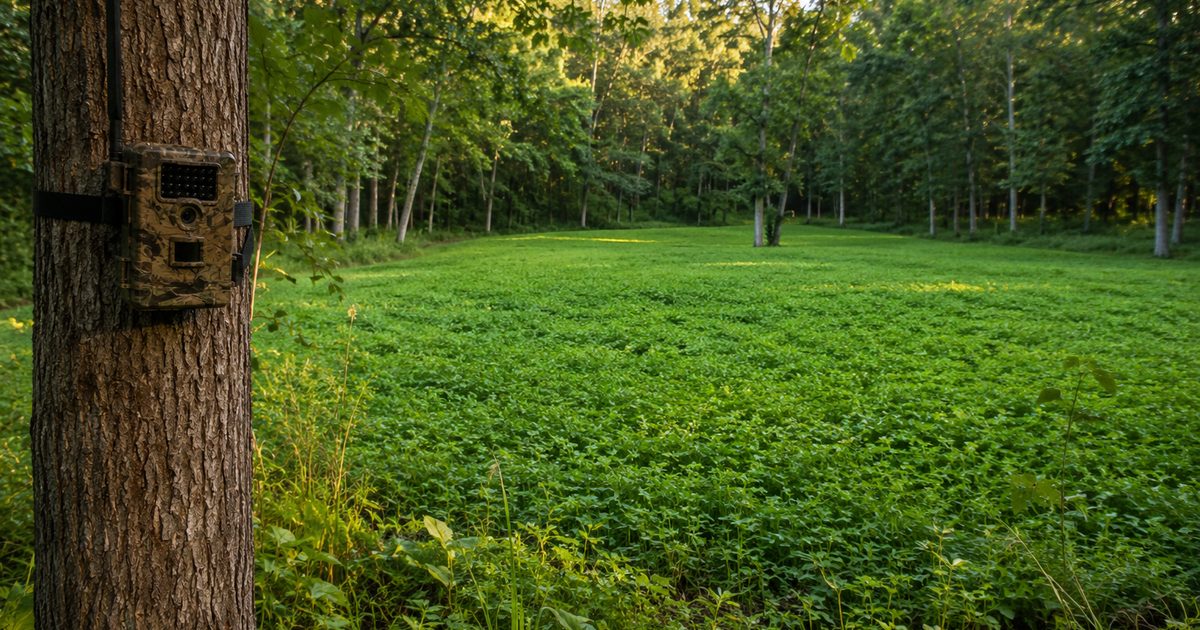
Food plots are one of the most reliable ways to concentrate deer on your property. When done right, a well-placed plot gives you consistent shooting opportunities throughout the season — and keeps deer coming back year after year. Here’s how we build and hunt over productive food plots from the ground up.
Choosing Your Plot Location
Location determines whether your plot gets used or ignored. Deer won’t cross wide-open ground to reach a plot if they feel exposed, so we focus on spots that connect naturally to their travel routes.
What to look for:
- Edge of timber: Deer stage in cover before committing to open ground. Plots tucked into timber openings or along field edges get more consistent daylight use than isolated clearings.
- South-facing slopes: More sunlight means faster germination and a longer growing window, especially for early-season plantings.
- Near water: Plots adjacent to ponds, creek drainages, or seeps hold deer longer. Bucks will water and feed in the same stop.
- Away from roads and pressure: Every vehicle that drives past your plot trains deer to avoid it during daylight. Keep plots at least 300-400 yards from any road if you can.
Oddly-shaped plots that follow terrain are often more productive than perfectly rectangular clearings — deer feel safer with irregular edges that offer quick escape routes.
Plot Size: How Big Do You Actually Need?
You don’t need acres of ground to run a productive food plot. We’ve killed mature bucks over quarter-acre strips that deer hammered every evening in October. That said, size does influence how deer use the plot.
- 1/4-acre plots: Enough for a reliable ambush point. Deer clean these out fast, which actually works in your favor — they return often to check for new growth.
- 1/2 to 1 acre: Gives you more flexibility with stand placement and handles heavier deer pressure without getting wiped out mid-season.
- 1+ acres: Supports nighttime feeding congregations. Bigger bucks that won’t commit to small openings in daylight will feed freely on large plots after dark — but transitional strips along the edges are where you catch them during shooting hours.
Pro Tip
If you only have room for one plot, make it long and narrow rather than square. A 25x200-foot strip along a timber edge gives deer more entry/exit points and more linear footage of edge cover — which means more shootable deer than a compact 50x50 block.
Soil Prep and Testing
Skipping soil prep is the single biggest mistake we see hunters make with food plots. You can plant the best seed blend on the market and get nothing if your pH is off.
Get a Soil Test First
A basic soil test ($15-20 from your county extension office or a mail-in service) tells you your pH and nutrient levels. Most food plot forages want a pH between 6.0 and 7.0. Below 6.0, nutrients lock up in the soil and plants struggle even with fertilizer applied.
Warning
Test your soil in late summer or early fall — not at planting time. Lime takes 3-6 months to fully raise pH. If you test in August and find you need lime, you can apply it before your September brassica planting and still get partial benefit, but you’ll want full correction in place before the following season.
Lime and Fertilizer
- Lime: Apply according to soil test results. Pelletized lime works faster than ag lime and is easier to spread by hand or with an ATV spreader. Plan on 1-2 tons per acre for severely acidic soils.
- Fertilizer: Follow soil test recommendations. Most plots benefit from a 19-19-19 or similar balanced starter fertilizer at planting. Established clover plots usually need a top-dress of potassium and phosphorus each fall.
Seedbed Prep
For small plots, a walk-behind tiller or ATV disc does the job. You want a firm, fine seedbed — not fluffy loose soil. Many food plot seeds (clover, chicory) are tiny and need good seed-to-soil contact to germinate. Cultipacking or dragging the plot after seeding makes a real difference in stand establishment.
Best Food Plot Plants by Season
Matching your species selection to when you want deer in front of your stand is the key to a productive plot system.
Clover — The Year-Round Workhorse
White clover (Ladino, Alice, Durana) and red clover are the backbone of most food plot programs. They’re palatable to deer from spring through fall, fix nitrogen in your soil, and tolerate heavy grazing.
- Type: Perennial — plant once, manage for 3-5 years
- Best planting time: Early spring (March-April) or late summer (August-September)
- Why deer love it: High protein content (20-30%) during antler growth and fawn-rearing phases
- Early season edge: Clover plots are magnets in September before brassicas hit their stride
Crimson clover is an annual that establishes quickly and works well as a nurse crop with perennial blends.
Brassicas — The Fall Closer
Turnips, rape, kale, and radishes are our go-to fall attractants. Deer largely ignore brassicas during warm weather, but after the first hard frost converts starches to sugars, they become irresistible.
- Type: Annual — replant each season
- Best planting time: Late July through mid-September (varies by latitude — give plants 60-90 frost-free days to establish)
- Why they work: Post-frost palatability creates a reliable kill window in late October through December
- Bonus: Radishes and turnips provide underground bulbs that deer dig for after tops die back — extending your plot’s attraction well into winter
Pro Tip
Plant brassicas in a separate plot from your perennial clover. Brassica establishment requires tillage that will destroy your existing clover stand. Rotating your annual brassica plot also improves soil health and reduces disease pressure.
Chicory — The Drought-Tolerant Producer
Chicory is underrated and we put it in nearly every plot blend. It’s a perennial with a deep taproot that stays green during summer droughts when clover burns out, and deer eat it hard through the summer when other forage is limited.
- Type: Perennial — establishes well with clover in mixed blends
- Protein content: 15-25%, comparable to clover
- Drought tolerance: Continues producing when shallow-rooted forages shut down
- Palatability peak: Summer through early fall
How to Hunt Over Food Plots Effectively
A productive plot does you no good if your stand pressure educates every deer in the area. Plot hunting demands disciplined stand management.
Stand Placement
Set up downwind of the plot entrance deer use most — not in the center or upwind side. Deer almost always enter plots from the downwind corner, circling to scent-check before committing. Your stand should be 20-30 yards off the plot edge in cover, not hanging over the opening.
Use trail cameras to pattern entry points before you commit to a hang location. Check cameras on a down-wind approach and pull cards quickly to minimize scent intrusion.
Evening vs. Morning Hunts
Evening hunts over plots work better early in the season when deer are feeding actively before dark. As hunting pressure increases and bucks go nocturnal, morning exit routes back toward bedding areas often produce better than evening plot sits.
For morning hunts, set up in the timber 80-100 yards off the plot on a trail connecting the plot to known bedding cover. You catch deer returning to bed rather than competing with other hunters who are sitting the plot directly.
Managing Plot Pressure
This is where most hunters blow it. The temptation to sit a hot plot every evening burns it out fast. We limit direct plot sits to once every 5-7 days on pressured properties, relying on trail cameras to tell us when a mature buck is moving during daylight before we commit a sit.
Leave entry and exit routes that keep you out of the deer’s nose. If your access trail runs past the plot, deer will smell you on every approach. A 200-yard detour around the downwind side of your plot is worth it. Our scent control guide covers entry/exit protocols in detail.
FAQ
How long does it take for a new food plot to attract deer?
Most plots see deer activity within the first week if you’re in good habitat with an existing deer population. Clover plots establish in 3-4 weeks and start drawing deer quickly. Brassicas take 45-60 days to reach full palatability, but deer will graze young plants once they reach 4-6 inches tall.
Do I need a tractor to plant a food plot?
No. Most small plots (under an acre) are manageable with an ATV and a pull-behind disc or tiller, plus a hand-crank or ATV spreader for seeding. Several companies make purpose-built ATV implements for food plot work. For plots under 1/4 acre, a walk-behind tiller handles the whole job.
What’s the best single food plot plant for a beginner?
White clover is the most forgiving choice. It tolerates imperfect soil prep, establishes reliably across most of the country, stays productive for multiple years, and deer eat it from spring through late fall. Start with a simple clover blend, get your soil pH right, and add brassicas or chicory once you have the basics down.
Next Step
Check Draw Odds for Your State
Tag-level draw odds across 9 western states — filter by species, unit, weapon, and points. Free to use.
Get the Insider Edge
Join hunters getting exclusive draw odds data, gear deals, and weekly hunt planning tips.
Related Articles

Arizona Elk Calling: September Archery
September archery elk in Arizona means calling. Here's the practical guide to bugles, cow calls, and the timing that produces bulls.

Arizona Hound Hunting Regulations Guide
Arizona hound hunting for bear and lion requires specific permits and tags. Here's the complete regulatory guide for 2026.

Arizona Shed Hunting: Rules & Season Guide
Arizona has specific rules on shed antler collecting. Here's the complete guide to the season, the ethics, and the most productive areas.
No comments yet. Be the first to share your experience!