Coyote Hunting: Calling, Stand Setups, and Year-Round Tactics
Complete coyote hunting guide — electronic vs mouth calls, stand selection, wind and approach, night hunting setups, the best seasons for coyotes, shooting lanes, and how to consistently call in pressured coyotes.
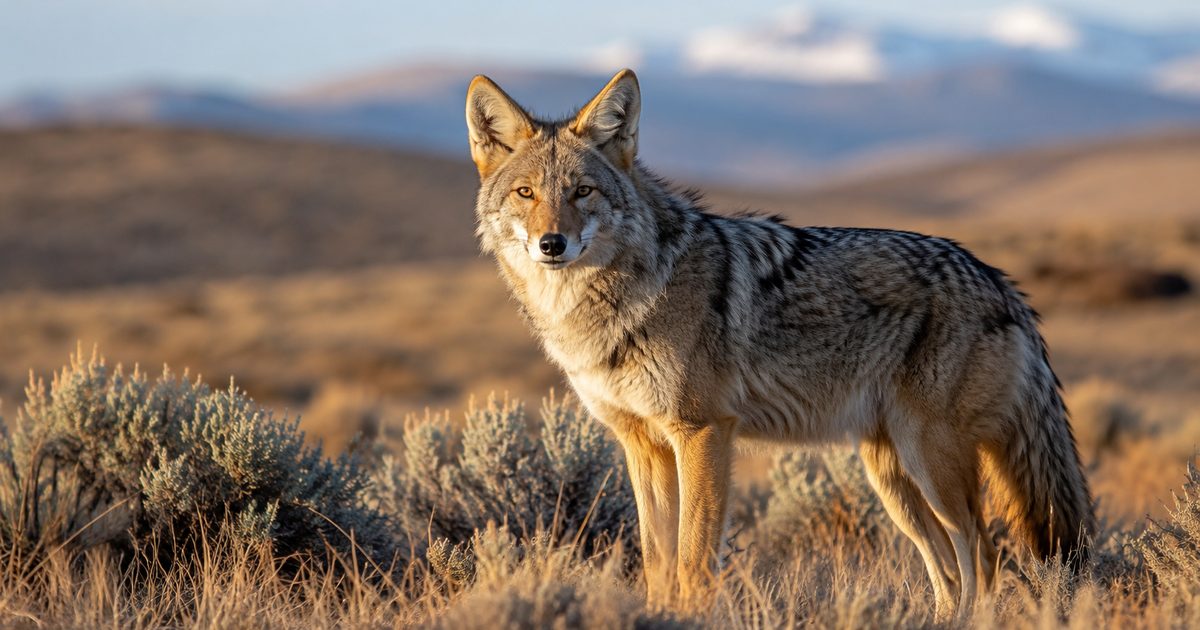
Coyotes are one of the few big-game-adjacent species you can chase twelve months a year in most states, no tag required. But “huntable year-round” doesn’t mean easy. A mature coyote that’s been called at — even once — learns fast. It will circle downwind before committing, hang up in brush at 300 yards, or simply vanish the moment it smells you. Consistent success comes down to understanding how coyotes think, setting up correctly, and presenting sounds in a sequence that overcomes their suspicion instead of triggering it.
This guide covers everything from electronics versus mouth calls to night hunting lights and how to handle the most pressured dogs on public land. Before you head out, use the Tag-to-Trail Planner to map stand locations and approach routes in your unit.
Electronic Calls vs. Mouth Calls
The first decision every predator hunter faces is what to put in their vest. Both approaches work; both have real tradeoffs.
Electronic Calls
Modern e-callers like the FOXPRO Shockwave or ICOtec GEN2 hold hundreds of sounds, play at precise volume levels, and — critically — put the sound source away from your position. That last point matters more than anything. Coyotes almost always try to circle the sound. If you’re sitting behind an e-caller placed 50–75 yards downwind of your position, the dog circles into your shooting lane instead of behind you.
E-callers shine for solo hunters and in big, open country where you need maximum volume to reach distant draws and ridgelines. The downsides: they’re expensive, batteries die, and in cold weather you need to keep the remote in an inside pocket or it gets sluggish. Some hunters also feel that coyotes in heavily pressured areas have become conditioned to the specific sound signature of common e-caller sounds — the same wounded rabbit track playing from thousands of units across millions of hunts.
Mouth Calls
A closed-reed distress call like the Primos Hunting Cry Baby or an open-reed like the FoxPro FoxJack costs under $20 and never runs out of batteries. More importantly, mouth calls produce subtle variations in pitch and rhythm that electronics struggle to replicate. No two sequences sound exactly alike, which can be an advantage on educated dogs.
The weakness is you. Your body is the sound source, so any coyote trying to pinpoint the noise is looking right at you. Setup and concealment become even more critical when calling by mouth. Many experienced hunters combine both — open with an e-caller to pull coyotes in, then switch to a mouth call for the close-range work when a dog hangs up.
Pro Tip
Place your e-caller 50–75 yards downwind of your seat. Approaching coyotes will circle into the wind toward the sound — right into your shooting lane — rather than circling behind you.
Stand Selection and Setup
The stand is set up before you ever make a sound. Get this wrong and no amount of calling skill recovers it.
Entry Routes and Downwind Approaches
Coyotes bed downwind of travel corridors where they can smell danger before they see it. Your entry to a stand must account for this. Approach from upwind — even if it adds a quarter-mile to your walk — so your scent blows away from the area you’re about to call. A single whiff of human on the approach kills stands before they start.
Identify where you expect coyotes to come from: fence lines, creek drainages, saddles, brushy field edges. Set up so that those approach routes funnel animals into the wind and across open ground in front of you. You want shooting lanes, not brush tangles at 20 yards.
Covering Escape Routes
In open terrain, one hunter with a rifle covering the primary approach handles most situations. In timber or broken country, a two-person setup is far more effective. The caller faces the expected approach; the shooter watches the back door — because pressured coyotes often circle wide and come in from behind. If you’re hunting alone in thick cover, position your back against a solid object (rock face, dense cedar) so nothing can slip in behind you undetected.
How Long to Sit a Stand
The standard rule is 15–20 minutes per stand. Most coyotes that are going to respond will do so within that window. In extremely open country where you can see for miles, extend to 25–30 minutes. In dense cover, a coyote can be 60 yards away and you’d never know it — err toward shorter sits and more stands.
Move at least 400–500 yards between stands. Less than that and you’re likely working the same coyote, which now has your number.
Sound Selection and Calling Sequences
Knowing what sounds to play, and in what order, separates hunters who call in two coyotes per season from those who call in twenty.
Distress Sounds vs. Howls
Distress sounds — wounded rabbit, bird in distress, fawn bleat — work on coyotes’ predatory drive. They’re effective year-round but best from late summer through early winter when coyotes are actively hunting to build fat reserves. Start distress sounds at low volume (60–70% of max) and let the sequence breathe. Frantic, continuous screaming is less effective than realistic bursts with pauses.
Coyote vocalizations — locator howls, pup distress, challenge barks, and especially breeding vocalizations during the rut — work on social instincts rather than predatory ones. A lone howl at the start of a stand can locate nearby coyotes and bring in curious or territorial animals. During breeding season, a female in-heat whimper followed by a male challenge bark is one of the most reliable sequences in the toolkit.
Calling Sequences That Work
A productive sequence for most of the year:
- Open with a lone coyote howl — pause two full minutes, scan hard
- Start low-volume distress (wounded rabbit or bird) — run 30–45 second bursts with 30-second pauses for four to five minutes
- Increase volume slightly — add urgency to the distress
- At the 12-minute mark, try a pup distress or a coyote invitation howl
- Final two minutes: silence or very soft distress
If nothing shows in 20 minutes, leave. Resist the urge to “try one more sound.”
Warning
Never howl aggressively (challenge bark or fighting sounds) near a known den site during pup season. You risk pushing adults off their territory rather than pulling them in. Save aggressive vocalizations for post-season and early fall.
Wind Management
Wind is the single variable that kills more coyote stands than any other. Coyotes will almost always attempt a downwind circle before committing to within shooting range. If that circle route puts them through your scent stream, the stand is over — usually with a sharp bark and a retreating flag tail.
Check wind before every stand. Apps like Windy or a simple milkweed pouch tell you the surface-level story, but thermal currents matter too: morning air drains down slopes and draws; afternoon air rises. On calm mornings, your scent will drift in unpredictable swirls, which makes controlling your scent cone nearly impossible. Hunt when there’s at least a steady 5–10 mph breeze you can rely on.
Scent control matters more in predator hunting than many hunters acknowledge. Coyotes spend their lives navigating by nose. Rubber boots, scent-eliminating spray, and keeping your hunting clothes sealed in a bag with natural vegetation help. None of it makes you scent-free; all of it buys you margin.
Best Seasons for Coyotes
Coyotes are legal to hunt year-round in most states, but not all seasons are equal.
January and February are the gold standard. This is the peak breeding season — the rut. Males are covering miles searching for receptive females, territorial instincts are elevated, and coyotes are far more responsive to howls and breeding sounds than at any other time of year. Cold, clear mornings after a light snow are about as good as predator hunting gets.
November is a strong secondary peak. Pups from the previous spring have dispersed and are looking for territory. Food pressure is building. Distress sounds work extremely well, and population density is at its seasonal high before winter thins it out.
Summer offers long days and the chance to pattern family groups, but calling is harder. Adults are tied to pups and more cautious. Pup distress sounds can be effective but require careful setup near suspected den areas.
Night Hunting Setups
Where legal — and it’s legal in most western and southern states — night hunting is arguably the most effective way to kill coyotes. They’re naturally crepuscular, moving most actively in the hours after sunset and before sunrise. Hunter pressure is also close to zero after dark.
Lights for Night Hunting
The debate between red and green lights has been settled by most experienced hunters: green light is brighter and easier to shoot by, but some hunters report coyotes showing more wariness toward green. Red light is dimmer but less likely to trigger alarm responses in coyotes that have been pressured under lights before.
The practical answer is to start with red for locating and scanning. Switch to green once a coyote is identified and moving. A quality weapon-mounted light like the Wicked Lights W403IC or a head-mounted scanning light with a handheld shooting light is a common two-light system for solo hunters.
Thermal optics have changed night hunting dramatically. A handheld thermal monocular lets you locate coyotes at extreme range without any light signature at all — then you transition to a shooting light only when a shot is imminent.
Shooting Accuracy: Stands and Tripods
A coyote at 150 yards is not a large target. Heart-lung zone on a mature coyote is roughly six inches. Shooting off-hand in low light or at the end of a tense calling sequence is a recipe for misses. Understanding shot placement fundamentals for small-bodied predators helps reduce wounding loss on longer shots.
Use shooting sticks or a tripod on every stand. A quality carbon-fiber tripod (Bog-Pod, Primos Trigger Stick) sets up in seconds and provides a stable rest from a seated position, which is the most common shooting position for called coyotes. Bipods work but limit your swing angle — a problem when a coyote appears from an unexpected direction.
Practice shooting from a seated position with sticks at ranges from 50 to 250 yards before the season. Most hunters practice standing at a bench and then discover their field position is a completely different skill set.
Camouflage and Scent Control
Coyotes rely more on nose and ears than eyes, but movement detection is sharp. Wear camo that matches the vegetation you’re hunting in. In open country, a ghillie wrap or a face mask and gloved hands matter more than brand. In snow, a white Tyvek suit over your regular camo costs $8 and works.
Keep your profile broken up. Don’t skyline yourself. Avoid setting up with sun directly in your face (which can cause you to squint and move) or in your shooting direction (which makes ranging and shot placement harder at longer distances).
Handling Pressured Coyotes
Public land coyotes and dogs near population centers have heard every call ever made. They know what a jackrabbit sounds like when it’s “dying” but not actually being caught. Here’s how to adjust:
Use quieter, more subtle sounds. Cooing bird sounds, woodpecker distress, and cottontail (not jackrabbit) distress at low volumes can pull in coyotes that are conditioned to ignore loud prey distress.
Howl more, distress less. Social vocalizations are less likely to have been linked to human danger. A simple lone howl — one long howl, then silence — is often more effective than any distress sequence on dogs that have been called at repeatedly.
Hunt different times. If your area gets heavy weekend pressure, hunt mid-week. If other hunters always set up at dawn, try the last 45 minutes of light.
Move more. Three to four stands in the morning, covering at least two miles of different terrain, beats camping on one “great spot” all morning. Pressured coyotes have defined safe zones. Keep moving until you find dogs that haven’t been burned.
Use decoys. A small rabbit decoy on a stake paired with distress sounds gives an approaching coyote something to focus on — and masks your movement as you prepare for the shot.
Bottom Line
Coyote hunting rewards preparation and punishes shortcuts. Wind decides more stands than calling skill does. Setup geometry — where you sit relative to where coyotes will circle — determines whether your calling brings them into range or gives them a free education. The peak window is January and February during the breeding rut, but any month of the year offers opportunity if you’re willing to scout, adjust your sounds to what local dogs haven’t heard, and cover enough country to find animals that haven’t already been burned.
Start with a solid stand setup, keep your scent out of the equation, place your e-caller downwind of your position, open softly, and let coyotes come to you. The dogs that hang back are telling you something — usually that your wind angle is wrong or they’ve smelled humans before. Fix the variables you can control and the shooting takes care of itself. Check the Draw Odds Engine if you’re hunting a managed predator unit that requires a tag in your state.
Next Step
Check Draw Odds for Your State
Tag-level draw odds across 9 western states — filter by species, unit, weapon, and points. Free to use.
Get the Insider Edge
Join hunters getting exclusive draw odds data, gear deals, and weekly hunt planning tips.
Related Articles

Arizona Elk Calling: September Archery
September archery elk in Arizona means calling. Here's the practical guide to bugles, cow calls, and the timing that produces bulls.
Arizona Hound Hunting Regulations Guide
Arizona hound hunting for bear and lion requires specific permits and tags. Here's the complete regulatory guide for 2026.

Arizona Shed Hunting: Rules & Season Guide
Arizona has specific rules on shed antler collecting. Here's the complete guide to the season, the ethics, and the most productive areas.
No comments yet. Be the first to share your experience!