Flat Tops Wilderness Elk Hunting: Colorado's Overlooked Elk Country
The Flat Tops Wilderness in northwest Colorado holds one of the densest elk populations in the state, with an OTC archery option and a moderate draw timeline for limited entry rifle tags. Here's what you need to know.
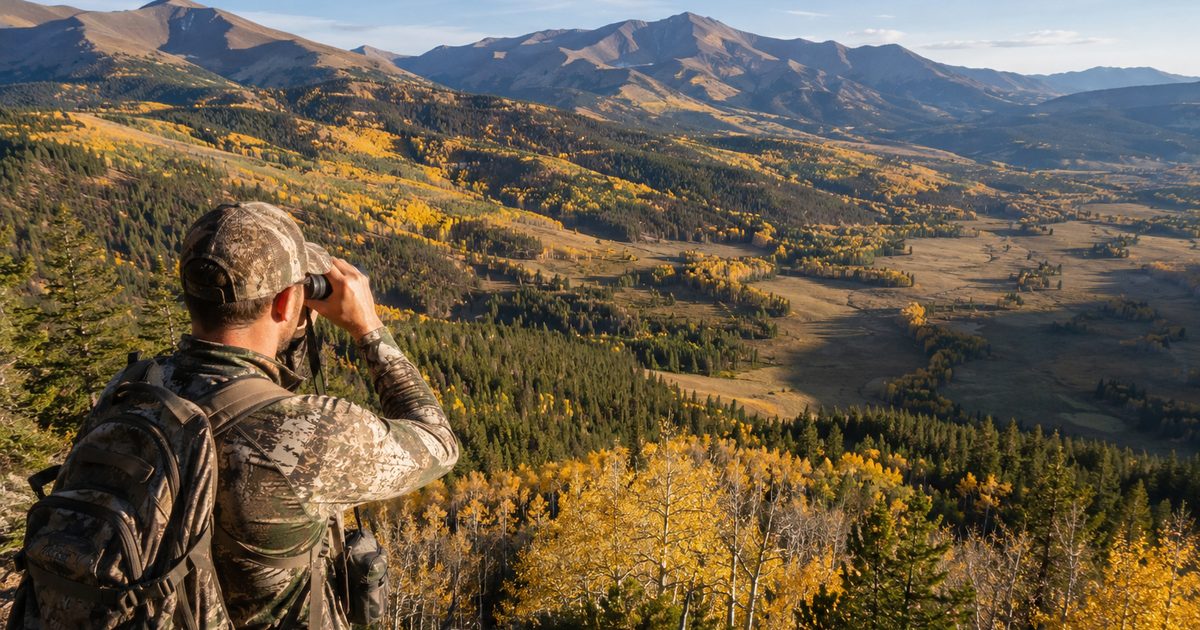
Colorado hunters talk about the Uncompahgre. They talk about the San Juans. Ask about the Flat Tops Wilderness and you’ll often get a polite nod — and then the conversation moves on. That indifference is a significant miscalculation for hunters building a serious western elk strategy.
The Flat Tops Wilderness in northwest Colorado spans 235,000 acres of high plateau habitat, sitting at 10,000-11,000 feet elevation across the largest flat-top mountain in North America. Historically, this country has held the highest elk density per square mile of any unit in Colorado — not occasionally, but consistently over decades. It’s accessible, it has an over-the-counter archery option, and limited entry rifle tags draw faster than comparable quality units in the more celebrated corners of the state.
Why the Flat Tops Get Overlooked
It’s partly about topography. The Flat Tops don’t photograph the way the dramatic peaks of the Uncompahgre or San Juan wilderness do. The country is high, flat, and heavily forested — dense spruce and fir with open parks and meadows interspersed throughout. It doesn’t look like classic trophy elk country in the way that jagged 14,000-foot skylines do.
The other factor is proximity to Meeker and Steamboat Springs rather than Durango and Telluride. The Flat Tops sit in a part of Colorado that doesn’t attract the same glamour, and that has kept the area off most nonresident hunters’ radar.
What the country lacks in dramatic scenery it makes up in grass, water, and year-round elk habitat. The plateau’s flat structure means water sits on the landscape instead of draining away quickly, creating a network of lakes, beaver ponds, and wet meadows that hold elk through the entire season. Browse quality is exceptional. Animals don’t have to move far to meet all their needs, which keeps them in defined home ranges and makes them patternable for patient hunters.
The GMU Breakdown: Units 12 and 22
The Flat Tops Wilderness and the White River National Forest surrounding it fall primarily within Game Management Units 12 and 22.
Unit 22 is the core limited entry unit covering the central and western Flat Tops. For nonresident hunters targeting mature bulls, this is the primary draw unit. Limited entry rifle tags here require roughly 5-10 NR bonus points for most seasons, depending on the season type and whether you’re targeting antlered bulls or a cow tag. The draw isn’t fast by Colorado standards, but it’s meaningfully faster than premium units in the Uncompahgre complex, which now require 12-18+ NR points for comparable quality.
Unit 12 covers the eastern portion of the Flat Tops and includes areas that operate under general season licenses for some season types. This structure gives hunters more flexibility — the general season OTC archery tag covers portions of Unit 12, and hunters without limited entry preference points can access legitimate bull elk country without a draw.
It’s worth checking Colorado draw odds data for current Unit 22 draw percentages before committing your points. The Flat Tops have seen moderate point creep as more hunters have recognized the area’s value, but as of recent seasons, Unit 22 remains attainable in the 5-10 NR point range for most applicants.
The OTC Archery Option Is Real
Colorado’s over-the-counter archery license covers portions of the Flat Tops — specifically certain areas within Unit 12 and the surrounding White River National Forest. If you haven’t built Colorado preference points yet, a Flat Tops OTC archery hunt is one of the most legitimate free-entry elk hunting options in the West for a nonresident. You can hunt every year without a draw.
Trophy Quality: What to Expect
The Flat Tops produces consistent 300-330” bulls, with better animals showing up regularly in the 340-360” range. These aren’t outliers from a single exceptional drainage — they represent the broad middle of what hunters encounter in a normal season when targeting mature bulls.
For context, that number sits below the Ruby Mountains in Nevada (where the ceiling runs to 380-400”+ class) and below the top-end Uncompahgre units. But the draw timeline is dramatically shorter. A hunter who spends 15 years accumulating Nevada elk points to draw a Ruby Mountains tag will have already drawn and hunted two or three Flat Tops limited entry tags during that same window.
Trophy quality in the Flat Tops rewards hunter effort in a specific way. The plateau is big and the elk are distributed broadly across it. Hunters who invest in glass time and pre-season e-scouting to identify where mature bulls are consistently using — specific parks, particular drainages — see markedly better results than hunters who simply walk in from Trappers Lake and hope. The bulls are there. Finding and committing to specific animals is the variable.
Access: Trappers Lake and Beyond
Trappers Lake is the most famous access point in the Flat Tops, and it earns the reputation. The lake sits at around 9,600 feet on the south end of the Flat Tops plateau, accessible via a paved road from Meeker. Outfitter horse camps operate in the Trappers Lake area — if you’re planning a pack-in hunt, this is the most established base of operations in the Flat Tops, with several licensed outfitters who know the country well.
Beyond Trappers Lake, the White River National Forest provides multiple additional trailheads into the wilderness from the south and east sides. The north rim of the Flat Tops, accessed from Yampa and Phippsburg, is a genuinely different experience from the south side — fewer people, longer approaches, and wilderness character that rewards hunters willing to walk farther.
Horse access is common throughout the Flat Tops and is arguably the most effective way to hunt the plateau’s interior. The country is big enough that foot hunters face real mileage challenges getting meat out on a solo or two-person hunt. Pack string access changes the math significantly, and it’s a factor worth building into your planning if you’re targeting a rifle tag and a mature bull.
Hunt the North Rim for Lower Pressure
The north approaches to the Flat Tops — accessible from Yampa and Phippsburg off Colorado Highway 131 — see a fraction of the traffic that the Trappers Lake corridor handles. The trailheads are less developed, the trails longer, and the elk less pressured. For archery hunters willing to earn their access, the north rim is worth the extra miles.
The OTC Archery Reality
The over-the-counter archery access that makes the Flat Tops attractive also creates its primary pressure challenge. September bow season brings meaningful hunter numbers into the area, particularly around established trailheads and in the first few miles of accessible drainage.
This is the honest trade-off the Flat Tops presents compared to a purely limited entry unit. In a unit like the Uncompahgre’s premium draw areas, September archery pressure is low because access requires a hard-to-draw tag. The Flat Tops’ OTC access means you’ll share the country with more hunters in September — and elk learn quickly once the season opens.
The practical answer is distance. Hunter pressure in the Flat Tops drops dramatically beyond 4-5 miles from a trailhead. Elk that feel pressure near the entry points push deeper into the plateau’s interior. Hunters who plan to go 6-10 miles into the wilderness — on foot with a capable partner or with horse access — consistently find more elk and far less competition. The plateau is large enough that interior wilderness basins feel genuinely remote even during the OTC archery opener.
Elk calling works well in the Flat Tops during September, particularly in the second half of the archery season as the rut builds. The dense spruce and fir timber creates good calling conditions — bulls can hear well but can’t see far, and they’ll close distance more aggressively than in open country. Cow calls and location bugles are both productive in this type of cover.
Season Structure
Colorado’s Flat Tops seasons follow the standard state structure, with unit-specific dates for limited entry hunts.
- OTC archery (Unit 12 and surrounding NF lands): Opens late August, runs through late September. Any hunter with an OTC license and a Colorado license can participate.
- Limited entry archery (Unit 22): A separate draw from the OTC pool, with a moderate number of NR tags.
- Muzzleloader: Early October in most years, a short window.
- Limited entry rifle (Unit 22): Late October through early November. Prime rut timing overlaps with the later rifle seasons.
- General rifle (Unit 12 general season): More accessible than limited entry, with higher hunter numbers.
The archery window is the highest-upside option for hunters willing to invest in calling and patience. October rifle hunts produce consistent opportunities — bulls in the Flat Tops are vocal and respond well to calling in open meadow edges and the park country throughout the plateau.
Know the Wilderness Regulations Before You Go
The Flat Tops Wilderness has specific rules on top of standard Colorado hunting regulations. Motorized vehicles aren’t permitted within the wilderness boundary, party size limits apply, and campfire restrictions vary by season and drought conditions. Download the White River National Forest motor vehicle use map and read the wilderness-specific regulations before your hunt. Rangers do patrol the interior.
The Flat Tops vs. Uncompahgre: An Honest Comparison
Colorado elk hunters eventually face this choice. Here’s how it actually breaks down.
Trophy ceiling: The Uncompahgre’s top units produce bigger bulls on average. The 380”+ animals that generate magazine coverage come more frequently from that country. If your only goal is the largest bull possible in Colorado, that points south and west.
Draw timeline: The Flat Tops wins here, and it’s not close. Unit 22 limited entry tags draw in the 5-10 NR point range for most seasons. Premium Uncompahgre units — units like 61, 62, and 66 — require 12-18+ NR points for comparable limited entry rifle tags. A hunter who applies for both can realistically draw two or three Flat Tops hunts while still waiting for an Uncompahgre tag to come through.
Access logistics: The Flat Tops are easier overall. Meeker and Steamboat Springs are more straightforward base towns than Montrose or Gunnison for most out-of-state hunters flying in, and the Trappers Lake corridor is well-supported with outfitters and public infrastructure.
OTC option: The Flat Tops offer a realistic OTC archery entry point every year. The Uncompahgre’s premium country doesn’t have an equivalent.
The honest synthesis: the Flat Tops are the smarter strategic play for most nonresident hunters building a Colorado elk program. Huntable every year via OTC archery, drawing limited entry tags in a reasonable timeline, producing bulls that are genuinely impressive. If you’re also pursuing Nevada elk draw odds or building a multi-state strategy, the Flat Tops’ faster draw timeline makes them a natural complement to higher-ceiling, slower-draw programs elsewhere.
Planning Logistics
Base towns: Meeker (south approach, Trappers Lake corridor) and Steamboat Springs (north and east access) are the primary bases. Meeker is a small town with gas, lodging, and hunting services. Steamboat Springs has full resort infrastructure if you’re bringing non-hunting partners.
Outfitters: The Trappers Lake area has several licensed outfitters offering horse-supported hunts in the Flat Tops wilderness. If you’re targeting a mature limited entry bull in the plateau’s interior, working with an outfitter who has horses and knows the specific basins is money well spent.
Meat care: October temperatures in the Flat Tops can swing dramatically — warm afternoons with cold nights. Game bags, proper caping, and getting meat to a processor quickly are standard practice. Both Meeker and Steamboat Springs have processing options familiar with elk.
The ProHunt draw odds engine has current Colorado Unit 22 draw data if you want to run the numbers on your specific point total before deciding how to allocate your Colorado preference points this season.
The Bottom Line
The Flat Tops Wilderness won’t earn the same reputation as Colorado’s most celebrated elk country. That’s exactly the point.
It holds a genuinely high elk density, produces quality bulls consistently in the 300-330” range, offers an OTC archery entry point that doesn’t exist in comparable units, and draws limited entry rifle tags on a timeline that makes hunting it within a 5-10 year planning window realistic rather than aspirational. Hunters who anchor their Colorado elk strategy on the Flat Tops — using the OTC archery option every year while building points toward Unit 22 limited entry — are playing a smarter long game than chasing the most famous unit names in the state.
The elk don’t care about the unit’s reputation. They need grass, water, and the plateau. The Flat Tops has all three in abundance.
Sources & verification
Seasons, license fees, application windows, and draw structure for Colorado change every year. Always verify the current details against the official Colorado agency before applying or hunting.
- Colorado Parks & Wildlife — cpw.state.co.us
Next Step
Check Draw Odds for Your State
Tag-level draw odds across 9 western states — filter by species, unit, weapon, and points. Free to use.
Get the Insider Edge
Join hunters getting exclusive draw odds data, gear deals, and weekly hunt planning tips.
Related Articles

Arizona Unit 36 Border Country Guide
Units 36A, 36B, and 36C sit along the Mexican border west of Nogales — overlooked Coues and javelina country with low draw requirements and solid hunting.

Montana General Elk Tag: Everything You Need to Know
The Montana general elk tag explained — who can buy one, what it covers, best districts, season dates, nonresident options, costs, and tactics for public land.

Arizona Unit 22 Guide: Tonto Basin
Unit 22 runs across the Tonto Basin and the Salt River country — productive elk in the highlands, accessible javelina in the desert, and some of Arizona's most underrated deer country.
No comments yet. Be the first to share your experience!