Colorado Deer Draw Odds: Mule Deer and Whitetail Tag Strategy
Colorado deer draw odds guide — preference points, OTC vs limited units, top mule deer GMUs (54, 61, 2, 10, 12), whitetail along the Front Range, NR allocation, and how to build a multi-year CO deer strategy.
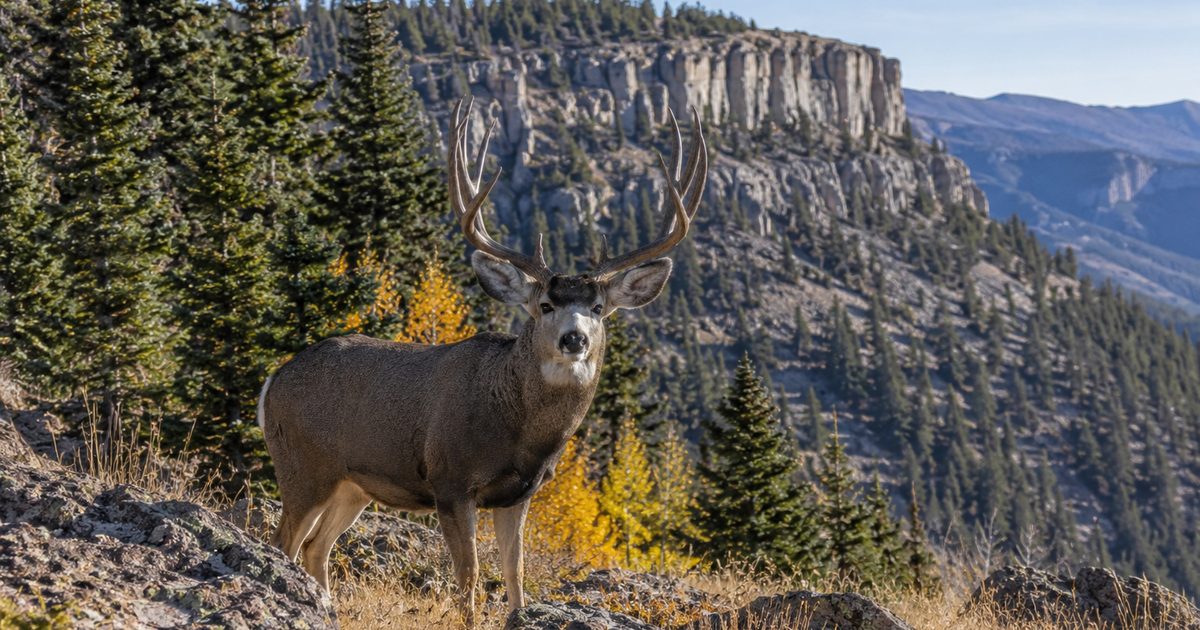
Colorado’s deer program is one of the most layered in the West — and that’s both its appeal and its trap. Most of the state is open to hunters through over-the-counter licenses, which sounds generous until you realize that OTC country and trophy country rarely overlap. The units where mature mule deer bucks consistently show up are almost all limited, and many of the best have slipped beyond reach without 5 to 8 or more preference points.
Understanding where OTC ends and where the limited unit game begins is the starting point for building any serious Colorado deer strategy. We’ll walk through the preference point system, OTC vs. limited dynamics, the top mule deer GMUs, whitetail opportunities along the Front Range, NR allocation, and a practical multi-year approach for out-of-state hunters.
Colorado’s Preference Point System
Colorado runs a weighted preference point system. Points aren’t a strict queue the way Wyoming’s 75/25 split is — instead, your application is entered into the draw once for each preference point you hold, plus once for the current year. So a hunter with 5 points gets 6 entries. A hunter with 0 points gets 1 entry.
This means that in units with real draw pressure, high-point holders dominate the draw but aren’t guaranteed a tag. There’s always some probability that a lower-point applicant draws. In practice, most premium units have “minimum point” thresholds that represent the lowest point total that drew in a given year, and those thresholds climb over time as more hunters accumulate points — a phenomenon known as point creep.
Points are accrued by applying and not drawing. If you draw a tag, your points reset to zero for that species. Points carry over indefinitely until you use them or let your hunting license lapse for more than five consecutive years.
2028 Rule Change Coming
Colorado Parks and Wildlife has approved a shift to a pure preference point system starting in 2028, moving away from the current weighted draw toward a strict first-in-line model. This will make high-point units more predictable but will squeeze out random draws almost entirely. If you’re sitting on points, the calculus on when to burn them changes significantly — read our dedicated article on the 2028 preference point rule change for the full breakdown.
The application deadline for deer (and most big game) falls in early April each year. Colorado Parks and Wildlife publishes the exact date annually, but hunters should plan to submit by the first week of April. Results typically post in late May or June.
OTC vs. Limited Deer Tags
Colorado sells over-the-counter deer licenses for archery, first rifle, second rifle, and third rifle seasons across a large portion of the state. For hunters willing to do the work, OTC deer hunting can produce real bucks — but expectations need to be calibrated.
OTC units receive heavy hunting pressure, particularly during the rifle seasons. Deer in heavily pressured OTC country tend to move early, go nocturnal faster, and get pushed off accessible terrain within the first few days of season. The hunter who grinds remote country during OTC archery or early rifle can find legitimate deer — especially in units bordering limited zones where some animals spill over — but the average OTC deer experience in Colorado is a long way from the trophy potential in the best limited units.
Limited units require a license acquired through the draw. Some low-pressure limited units clear in the draw with 1 to 3 points and offer a noticeable step up in quality over adjacent OTC country. The premium units — the ones that show up in the harvest reports with consistent 170-plus class bucks — typically require 5 to 10 or more points for nonresidents.
Use Limited Units as Entry Points
Not every limited unit requires a 7-point wait. Several mid-tier limited units in western Colorado draw with 2 to 4 NR points and offer meaningfully better deer hunting than OTC alternatives. These are worth targeting early in your point accumulation timeline — a 170-class buck in a 3-point unit beats waiting 8 years for a 180-class buck in a top-tier unit if you’re on a realistic timeline.
Fourth rifle season, which runs in November, is OTC but coincides with the tail end of the rut and some of the coldest weather. Deer move more during daylight and congregate at lower elevations. Fourth rifle is worth a serious look if you’re not chasing the absolute ceiling in trophy potential.
Top Limited Mule Deer Units
These are the Colorado GMUs that consistently drive the most nonresident applications and produce the heaviest deer.
GMU 2 — North Park
North Park sits in Jackson County at roughly 8,000 to 9,000 feet elevation, hemmed in by the Medicine Bow Mountains to the north and the Never Summer Range to the south. It’s one of the most storied mule deer units in the state, producing consistent 180 to 200-plus class bucks with real frequency.
The downside is point requirements. NR hunters should expect to need 7 to 10 points for the most coveted seasons in GMU 2, and that threshold has been creeping upward. Archery seasons sometimes draw at slightly lower point levels, but any serious strategy around GMU 2 requires a long accumulation runway.
GMU 10 and 11 — Meeker and White River National Forest
GMUs 10 and 11 cover the White River National Forest country near Meeker in northwest Colorado. This is classic high-country mule deer terrain — aspen parks, sage-covered benches, and big timber — with deer populations that have historically supported strong trophy output.
These units draw at a range depending on season type. Archery and early seasons can clear in the 4 to 6 NR point range in recent years, while peak rifle seasons push higher. GMU 10 in particular has a devoted following among hunters who target the migration as deer come out of the high country in late October and November.
GMU 54 — Gunnison Basin
GMU 54 in the Gunnison Basin is arguably Colorado’s most famous deer unit. It’s a large landscape at high elevation with significant public land access and a deer herd that produces big-bodied, heavy-antlered bucks. The Gunnison Basin has a well-established reputation in hunting media, which means demand in the draw is extremely competitive.
NR hunters targeting GMU 54 for peak rifle seasons should realistically plan for 8 to 12 points or more. Archery tags in GMU 54 are also heavily competed. This is a bucket-list unit, and the point timeline reflects that.
GMU 61 — San Juan Mountains
GMU 61 covers a portion of the San Juan Mountains in southwest Colorado — steep, rugged, high-elevation terrain. San Juan deer are known for their mass and character. Unit 61 sits in the middle of the San Juans’ trophy deer corridor and draws serious attention from NR hunters.
Point requirements here run in the 5 to 8 NR point range for competitive seasons, with some variation by season type. The terrain demands fitness — this is backcountry country — but hunters willing to work the elevation find deer that don’t see many people.
GMU 12 — Rangely
GMU 12 in the Rangely area of northwest Colorado is a different kind of unit. It’s lower-elevation sagebrush and canyon country rather than mountain terrain, but it holds mule deer in good numbers and produces quality bucks on a more accessible point timeline — often in the 3 to 6 NR point range depending on season.
For hunters building their first Colorado mule deer strategy, GMU 12 deserves consideration as a mid-tier target that doesn’t require a decade of accumulation.
Whitetail Along the Front Range
Colorado isn’t widely known as a whitetail state, but there’s a legitimate and growing population of whitetail deer along the Front Range and in the river drainages of eastern Colorado. GMUs 95, 96, 100, 101, and adjacent units in the plains and foothills regions hold deer that draw almost no attention from out-of-state hunters who come to Colorado thinking mule deer.
Whitetail Access is the Challenge
Most eastern Colorado whitetail habitat is private land — irrigated ag fields, river cottonwoods, and creek bottoms that belong to landowners. Public land whitetail hunting in eastern Colorado is limited. If you don’t have a landowner contact or are willing to knock doors for permission, the whitetail opportunity is harder to access than the license availability suggests.
The draw structure for eastern Colorado deer units is generally much easier than the trophy mule deer units — many eastern units clear in the draw with 0 to 2 points. Resident hunters fill most of the quota, but NR demand is low enough that tags are accessible. If you’re a whitetail hunter who’s never hunted the Front Range, it can be an interesting add-on to a western Colorado mule deer trip or a standalone option in a low-pressure environment.
NR Tag Allocation
Colorado allocates roughly 20% of limited deer tags to nonresidents. The exact percentage varies by unit and can be as low as 15% in some, but the 20% figure is a reasonable working assumption for planning purposes.
That 20% allocation means NR hunters are competing in a smaller pool but against a highly motivated field. Nonresidents who apply for Colorado deer are generally more strategic and point-rich than the average applicant, which pushes NR draw thresholds higher relative to resident thresholds in many premium units.
Colorado doesn’t allow nonresidents to apply as a party with residents, which means you can’t piggyback on a resident’s lower point requirements. Your NR application competes solely within the NR quota. This is a meaningful distinction from states like Wyoming where resident and NR party applications are allowed.
Multi-Year Strategy
The most common mistake hunters make with Colorado deer is treating it as a lottery rather than a strategy. Here’s how we’d approach a multi-year plan:
Start accumulating points immediately, even if you’re not ready to hunt Colorado yet. Points are cheap — the application fee is roughly $10 to $15 per species — and every year you don’t hold a point is a year you fall further behind the field.
In years 1 through 3, consider targeting a limited unit that draws in the 1 to 3 point range for a legitimate step up over OTC. GMU 12, some northeastern plains units, or lower-tier western units can produce this experience early and put a buck on the wall while your serious point stack builds.
In years 4 through 7, the mid-tier units like GMU 10, parts of GMU 11, and some San Juan options become realistic. These are the units that represent the sweet spot — genuine trophy potential without requiring an 8 to 10 year runway.
Beyond year 7, GMU 2, GMU 54, and peak seasons in other top-tier units come into range. These are the hunts worth waiting for if a once-in-a-career Colorado mule deer is your goal.
Don’t forget OTC as a complement. Many hunters apply for limited units while also buying an OTC license as a backup option, hunting OTC in years when their limited draw doesn’t come through. OTC and limited tags for the same species in the same season aren’t combinable, but you can hunt OTC in a different season type than the one you applied for in the limited draw.
How to Apply
Colorado deer applications are submitted through the CPW online licensing portal at cpw.state.co.us. The process:
- Create or log in to your CPW account and purchase a valid hunting license for the current year.
- Navigate to the draw application section and select Deer as your species.
- Choose your first, second, and third choice GMUs and season types. You can list a low-pressure unit as your second or third choice to maximize your chances of drawing something even in a high-point year for your first choice.
- Pay the application fee. This is separate from the license cost and is non-refundable whether you draw or not.
- Submit before the early April deadline.
If you draw, your tag and regulations are available through the CPW portal. If you don’t draw, your preference point total increments automatically for the next year.
Bottom Line
Colorado deer hunting is a game of patience and strategy. The OTC opportunity is real but limited in trophy ceiling. The true trophy mule deer experience lives in a handful of limited units — GMU 54, GMU 2, GMUs 10 and 11, GMU 61, and GMU 12 — that require anywhere from 3 to 12-plus NR points depending on season and year.
Start accumulating points now if Colorado is on your radar. Target mid-tier limited units in the early years to stay active and calibrated. Build toward the bucket-list units with a realistic timeline rather than rolling the dice on a first-year application for GMU 54 and waiting indefinitely.
The 2028 rule change to a pure preference point system makes the strategic picture clearer but also more deterministic — high-point holders will dominate draws even more completely than they do today. The cost of not being in the system early is only going up.
Use our Draw Odds Engine to model point thresholds, draw probability, and multi-state strategy across Colorado and the other western states.
Frequently Asked Questions
How many preference points do you need for a top Colorado mule deer unit?
It depends on the specific unit and season type, but the most competitive units like GMU 54 (Gunnison) and GMU 2 (North Park) require 8 to 12 or more NR preference points for peak rifle seasons. Mid-tier units like GMU 12 (Rangely) or GMU 10 (White River) draw more frequently in the 4 to 7 point range. Point thresholds shift from year to year as the applicant pool changes, so checking the CPW draw statistics report after each draw season is the best way to track current trends.
Can nonresidents hunt deer in Colorado without going through the draw?
Yes. Colorado offers over-the-counter deer licenses for archery season and first, second, and third rifle seasons across much of the state. OTC licenses are available through CPW’s online portal without a draw application. The tradeoff is that OTC units receive heavy hunting pressure and generally have lower trophy potential than limited units. Fourth rifle season (late November) is also OTC and coincides with post-rut movement, making it a popular option for hunters willing to deal with cold weather.
Do Colorado preference points expire?
Your points remain valid as long as you maintain a valid Colorado hunting license. If you go five consecutive years without purchasing a Colorado hunting license, you forfeit your accumulated preference points. The license that maintains your point eligibility does not require applying for a draw — just purchasing a valid license for the year is sufficient to keep your points active.
What is the application deadline for Colorado deer?
Colorado’s big game draw application deadline is typically in early April — the exact date is published annually by Colorado Parks and Wildlife. Missing the deadline means missing the entire draw cycle for that year, which delays your point accumulation by a full year. Set a calendar reminder for late March to review the current year’s deadline and submit before it closes.
Next Step
Check Draw Odds for Your State
Tag-level draw odds across 9 western states — filter by species, unit, weapon, and points. Free to use.
Get the Insider Edge
Join hunters getting exclusive draw odds data, gear deals, and weekly hunt planning tips.
Related Articles

Western State Draw Systems Explained
How all 9 western state hunting draw systems actually work — preference points, bonus points, and pure lotteries compared side by side with real odds data.

Arizona Bighorn Sheep Draw Odds Guide
Arizona bighorn is the definition of a lifetime tag. Here's the point math, unit breakdown, and why you apply every year regardless of your bonus point total.

Arizona Fall Turkey Draw Odds Guide
Arizona fall turkey is a low-point draw in the ponderosa country. Here's the unit breakdown, typical point requirements, and how to stack it with other Fall Draw applications.
No comments yet. Be the first to share your experience!