BLM Land Hunting: How to Find and Hunt Bureau of Land Management Land
BLM land is the most accessible public land for western hunters — 245 million acres open to hunting. Here's how to find it, navigate it, and actually tag animals on it.
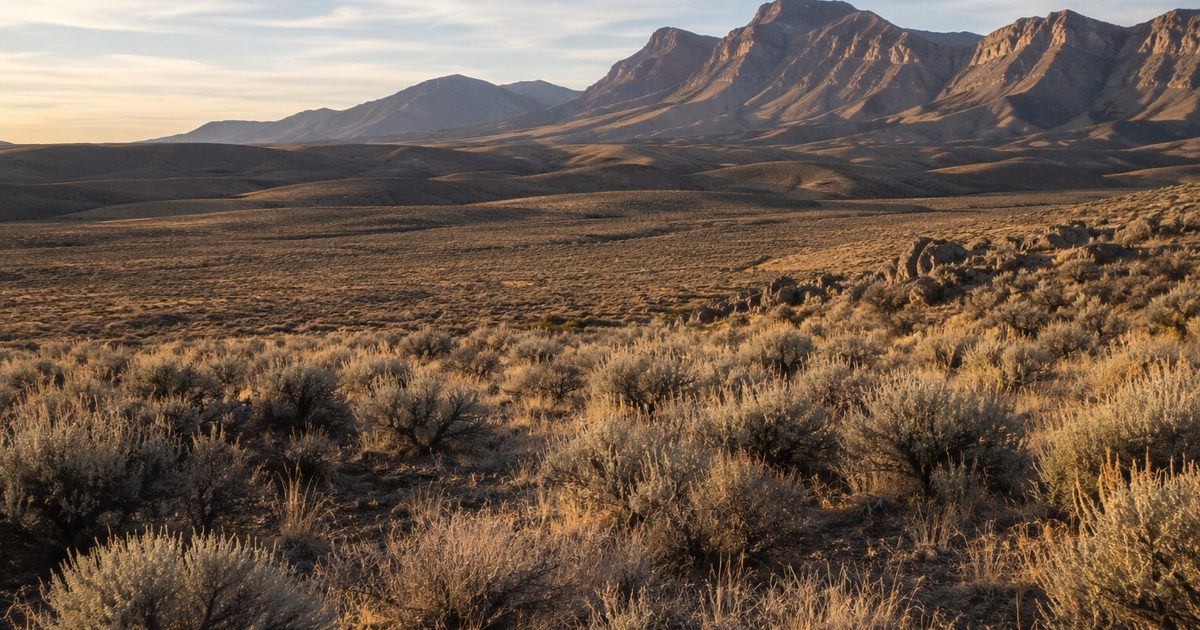
Most western hunters drive past BLM land every single day without knowing it. They book a guided hunt on private ground or stress over drawing a premium wilderness tag, all while 245 million acres of legally open terrain sits right outside their windshield. That’s not a failure of access — it’s a failure of information.
Bureau of Land Management land is the largest category of federally managed land in the United States. It covers more ground than the entire National Forest system. In the West it blankets entire counties, river drainages, desert basins, and mountain ranges. And unlike many national parks or wilderness areas, it was designed from the start for multi-use — including hunting.
This guide is for hunters who are done being intimidated by the scale of western public land and ready to actually hunt it. We’ll cover what BLM land is, how it differs from other public land, how to find and navigate it with free tools, which terrain types produce which species, and the checkerboard trap that costs hunters tags every fall.
What Is BLM Land?
The Bureau of Land Management is a federal agency within the Department of the Interior. It manages roughly 245 million surface acres across 12 western states — Idaho, Montana, Wyoming, Colorado, Nevada, Utah, Arizona, New Mexico, Oregon, Washington, California, and Alaska — plus smaller parcels in several eastern states.
BLM land is sometimes called “the land nobody wanted.” That’s a backhanded compliment. The parcels that weren’t claimed under homestead acts, railroad grants, or state allotments defaulted to federal management. The result is a massive patchwork of terrain: high desert, canyon country, sagebrush steppe, river bottoms, badlands, and mountain foothills — exactly the kind of mixed habitat that holds wild game.
BLM manages this land under a multiple-use mandate. That means ranching, mining, energy development, recreation, and wildlife all share the same ground. For hunters, the important part of that mandate is this: hunting is a recognized, authorized use on virtually all BLM land unless specifically posted or restricted.
BLM vs. National Forest: What’s the Difference?
Both are federal public land open to hunting, but they’re not the same.
National Forest is managed by the USDA Forest Service, focused primarily on timber production and watershed protection. Forests tend to sit at higher elevations with more tree cover, denser road networks in some areas, and more established trail systems.
BLM land is managed by the Department of the Interior under broader multiple-use rules. It tends to sit at lower elevations — the foothills, desert flats, and river corridors. It’s often less scenic in the postcard sense, which means less foot traffic. Less foot traffic means less pressure on game.
The practical difference for a hunter: National Forest is where most people go. BLM is where you go when you want to put some distance between yourself and the crowd.
Pro Tip
BLM land at lower elevations holds animals during early archery seasons when elk and mule deer are still in summer/transition patterns — before snow pushes them up into the mountains. Many hunters ignore this ground entirely and get beat to the higher trailhead spots every year.
Your Rights as a Hunter on BLM Land
This is the part that trips up first-timers. Here’s what you can and cannot do on BLM land as a hunter:
You can:
- Access and hunt without a BLM-specific permit
- Camp dispersed (no campsite required, typically up to 14 days in one location)
- Drive on any road shown as open on the Motor Vehicle Use Map (MVUM)
- Glass, glass some more, and set up camp anywhere off designated routes that isn’t specifically closed
- Take game consistent with state hunting regulations
You still need:
- A valid state hunting license for the state where the BLM land sits
- Any required tags, archery permits, or draw licenses for that species and unit
- To follow all state game unit regulations — season dates, legal weapons, bag limits
- To comply with any fire restrictions posted by the local BLM field office
- To obey any temporary closures (grazing allotment closures, raptor nesting closures, etc.)
This is a critical distinction. BLM access does not equal a hunting free-for-all. The federal agency manages the land; the state wildlife agency manages the animals. You need both their sign-off.
Warning
Fire restrictions on BLM land can change overnight during dry conditions. What was open when you scouted in August may be under Stage 2 restrictions when you arrive in October. Check the BLM’s InciWeb page and your local field office website before every trip — violations carry significant fines.
How to Find BLM Land: The Three Tools That Actually Work
Forget paper maps from the 1990s. Here’s how hunters locate and navigate BLM land in 2026.
1. BLM.gov Interactive Map
The BLM’s own website hosts a General Land Office (GLO) map viewer and state-by-state land status maps. These are authoritative — they show exactly which parcels are managed by BLM vs. Forest Service vs. state land vs. private. They’re not the most user-friendly interface, but they’re free and legally accurate.
Go to blm.gov, find your state office, and look for “Maps and Geospatial Data.” Download the state land status layer. This is the baseline — everything else builds on top of it.
2. onX Hunt
onX Hunt is the standard for serious public land hunters. Its boundary layers clearly delineate BLM (yellow shading), National Forest (green), state land (purple), and private (white). You can drop pins, plan routes, and download offline maps for use in the field without cell service.
The BLM boundary layer in onX is pulled from official federal data and updated regularly. When you’re standing at the edge of a pasture wondering if the next ridge is open or not, onX gives you a definitive answer in seconds. For a full breakdown of how to use mapping apps for western public land hunting, check out our best hunting GPS mapping apps guide.
3. Motor Vehicle Use Maps (MVUM)
This one is underused and critically important. BLM field offices publish Motor Vehicle Use Maps for every management area. These maps show which roads and trails are open to motorized vehicles, which are open to non-motorized use only, and which are closed entirely.
Driving on a closed route on BLM land is a federal violation, not just a citation. Before you load your ATV or side-by-side, download the MVUM for the specific BLM field office area you’re hunting. These are free PDFs on blm.gov.
Pro Tip
Cross-reference the MVUM with onX before your hunt. onX shows boundaries; the MVUM shows where you can legally drive. Planning your glassing ridges and spike camp locations around legal motorized access will save you from both legal trouble and a long walk back to the truck.
The Checkerboard Problem: The Single Biggest Access Trap in Western Hunting
If you’re hunting BLM land in states like Nevada, Oregon, Idaho, or Wyoming, you will encounter checkerboard ownership. Understanding it before you go into the field may be the single most important thing in this guide.
Here’s the history: when the transcontinental railroads were built in the 1860s, the federal government granted the railroad companies alternating sections of land on both sides of the tracks to fund construction. One section BLM, the next section railroad (later sold to private landowners), the next section BLM, and so on — for hundreds of miles. The result is a literal checkerboard of ownership that still exists today.
What this means on the ground: you can be standing on BLM land, glassing a buck bedded 400 yards away on the next section, and that section is private. You legally cannot cross the private section to access the adjacent BLM section without landowner permission — even if there’s more BLM beyond it.
Warning
Checkerboard land is the most common reason western hunters unknowingly trespass. Just because the land “looks” open, undeveloped, and unfenced doesn’t mean it’s public. Always verify ownership section by section before moving through any checkerboard area. Courts have consistently held that hunters cannot cross private sections to reach non-adjacent public sections without expressed landowner permission.
The fix: use onX, zoom in to the section level, and verify every parcel between your truck and your intended hunting area. Plan routes that stay entirely on connected BLM parcels. In heavy checkerboard country, this sometimes means a longer approach or finding a different drainage entirely.
Some checkerboard land is legally accessible via RS 2477 roads — historical routes across private that carry public right-of-way — but these are disputed and vary by state. Don’t assume; verify.
Best BLM Terrain Types for Different Species
BLM land is not one thing. It spans radically different habitat types, and each produces different hunting opportunities. Here’s how to match terrain to target species.
Sagebrush Flats — Pronghorn and Mule Deer
The great sagebrush basins of Wyoming, Nevada, Idaho, and Montana are almost entirely BLM. These open flats look featureless from the highway, but they hold enormous numbers of pronghorn and a resident mule deer population that shifts elevation seasonally.
For pronghorn, this is your primary habitat. Pronghorn are creatures of open ground — they don’t hide in timber. Glass the flats from elevated points, identify herds, and use terrain folds and dry washes to cut the distance for a stalk. BLM sagebrush draws hunt best from late August through late September before post-rut dispersal.
For mule deer on sagebrush BLM, focus on transition zones: where the flat breaks into rimrock, where a seasonal creek cuts through, or where sage transitions to juniper. These edges are where bucks bed. Early season finds them in the flats; late season pushes them to lower elevations if snow falls in the mountains.
Rimrock and Canyon Country — Elk
The rimrock breaks of eastern Oregon, southern Idaho, and central Montana hold resident elk herds that spend their entire lives on BLM ground. These animals never see the high-country wilderness pressure of a September archery opener in the mountains — they’re on BLM benches and canyon rims year-round.
Elk in canyon country are harder to locate than classic mountain elk, but they use the same logic: water, thermal cover, and food. In arid BLM canyon systems, find the springs and seeps on the topo, set up above them during morning thermals, and glass the north-facing slopes where elk bed in the midday heat.
The physical challenge of canyon elk hunting — the elevation changes, the loose rock, the legal need to know your section lines in the breaks — pays off in light pressure and quality bulls. Most hunters won’t make the approach.
River Breaks and Cottonwood Bottoms — Whitetail
This is the most overlooked BLM hunting in the West. The Missouri River Breaks in Montana, the Snake River plain in Idaho, and the Powder River Basin in Wyoming all have substantial BLM ground along major river corridors. These cottonwood-and-willow bottom habitats hold whitetail that receive almost no hunting pressure from the typical public land hunter focused on elk and mule deer.
BLM river bottom whitetail hunting plays like Midwest hunting — stand setups along travel corridors, scrape lines on bench edges, rattling and calling during the November rut. The difference is you can access prime ground without a landowner relationship. Bring topo maps, identify the BLM parcels within your river drainage on onX, and scout hard in early October.
Building a BLM Hunt Unit from Scratch: A Walk-Through
Let’s make this concrete. Here’s how to build a huntable BLM unit using free and low-cost tools, start to finish.
Step 1 — Pick a state and species. Start with an over-the-counter tag to remove draw luck from the equation. Most western states sell OTC archery mule deer and antlerless elk licenses. Pick a state you can drive to.
Step 2 — Download the state’s BLM land status map from blm.gov. Identify counties with large contiguous blocks of BLM — look for solid yellow on the land status layer, not scattered checkerboard.
Step 3 — Cross-reference game unit boundaries. Your state wildlife agency publishes game unit maps. Overlay the BLM blocks with unit boundaries. Find a unit where BLM makes up a large portion of the huntable area. This tells you hunting pressure will be spread across public land rather than concentrated in a few spots.
Step 4 — Download the MVUM for the BLM field office managing your target area. Identify the road access points. Note which roads are seasonal or permit-only.
Step 5 — Load onX and build a waypoint map. Mark trailheads, water sources, likely glassing ridges, and potential camp spots. Pay particular attention to the section boundaries in any checkerboard zones.
Step 6 — E-scout with satellite imagery. Look for habitat transitions — where the sage breaks into timber, where drainages concentrate game movement, where isolated springs sit in otherwise dry country. These are your starting points.
Step 7 — Run a boots-on-ground scout at least once before the season opener if possible. Confirm what the map tells you and look for sign.
For a deeper dive into the full public land research workflow — including how to read topo maps for western big game and structure a multi-day backcountry hunt — see our complete guide to hunting public land.
What BLM Hunters Get Wrong
A few common mistakes worth naming directly:
Assuming all BLM is the same. Land managed by one BLM field office can look completely different from a neighboring office’s ground — different vegetation management history, different grazing pressure, different road networks. Look up the specific field office for your area and read their Resource Management Plan summary.
Treating BLM like a backup plan. Hunters who go in with low expectations often get low results. The best BLM hunters scout it like premium private — they know specific water holes, specific benches where bucks bed, specific fence corners where pronghorn stage. That level of investment is available to anyone willing to put in the research.
Ignoring grazing allotment effects. Cattle grazing on BLM is legal and common. Heavy grazing pressure on a specific allotment can change forage availability and game distribution dramatically year to year. If you’re hunting the same BLM unit you hunted three years ago, check recent grazing conditions in that allotment before committing.
Not calling the local field office. BLM field office staff often know things that aren’t on any map — recent fire history that created early-season forb growth, temporary route closures, water developments that attract game. A five-minute phone call before your hunt is free intelligence.
FAQ
Do I need a permit to hunt on BLM land?
No BLM-specific permit is required to access or hunt BLM land. You need a valid state hunting license and any state-required tags or draw licenses for your species and unit. Some BLM areas have special recreation permits for high-use zones like certain wilderness study areas, but these are rare and will be clearly posted.
Is all BLM land open to hunting?
Virtually all BLM land is open to legal hunting under state regulations, but exceptions exist. Specific parcels may be temporarily closed for active mining operations, raptor nesting, or fire-related safety reasons. Always check with the local BLM field office or their website for current closures before your hunt.
How do I tell BLM land from private land in the field?
The honest answer: you often can’t tell by looking. BLM boundaries are rarely fenced or posted. The only reliable method is a GPS app with current land status layers — onX Hunt is the industry standard. Running the app in offline mode with downloaded maps allows you to verify your location against parcel boundaries even in areas with no cell service.
Can I drive an ATV or side-by-side on BLM land?
Only on routes designated as open to motorized vehicles on the Motor Vehicle Use Map for that specific field office. Off-route motorized travel is prohibited on virtually all BLM land. Download the MVUM before your hunt and stick to designated routes.
How is BLM hunting pressure compared to National Forest?
It varies, but BLM generally sees lower hunting pressure than comparable National Forest ground — for two reasons. First, the terrain is often less dramatic, so fewer hunters seek it out. Second, many hunters default to forest service areas out of habit. The BLM hunter who knows how to read sagebrush and canyon country is often hunting effectively alone while everyone else stacks up at the same National Forest trailhead.
Next Step
Check Draw Odds for Your State
Tag-level draw odds across 9 western states — filter by species, unit, weapon, and points. Free to use.
Get the Insider Edge
Join hunters getting exclusive draw odds data, gear deals, and weekly hunt planning tips.
Related Articles

Arizona Forest Road Closures & MVUM Guide
Arizona National Forest roads operate under Motor Vehicle Use Maps. Here's how to read the MVUM and avoid citations during your 2026 hunts.

Arizona Public Land Hunting: Complete Map
Arizona public land covers 43% of the state but the rules differ by agency. Here's the complete guide to hunting National Forest, BLM, and State Trust lands.

Arizona Ranch Hunting Access Guide
Some Arizona ranches allow public hunting; most don't. Here's how to identify legitimate access and respect landowner rights.
No comments yet. Be the first to share your experience!