Best Rangefinders for Hunting in 2026: 8 Models Reviewed
Detailed reviews of 8 hunting rangefinders from $150 to $700 with real-world range tests, ballistic solver comparisons, and honest recommendations by price tier.
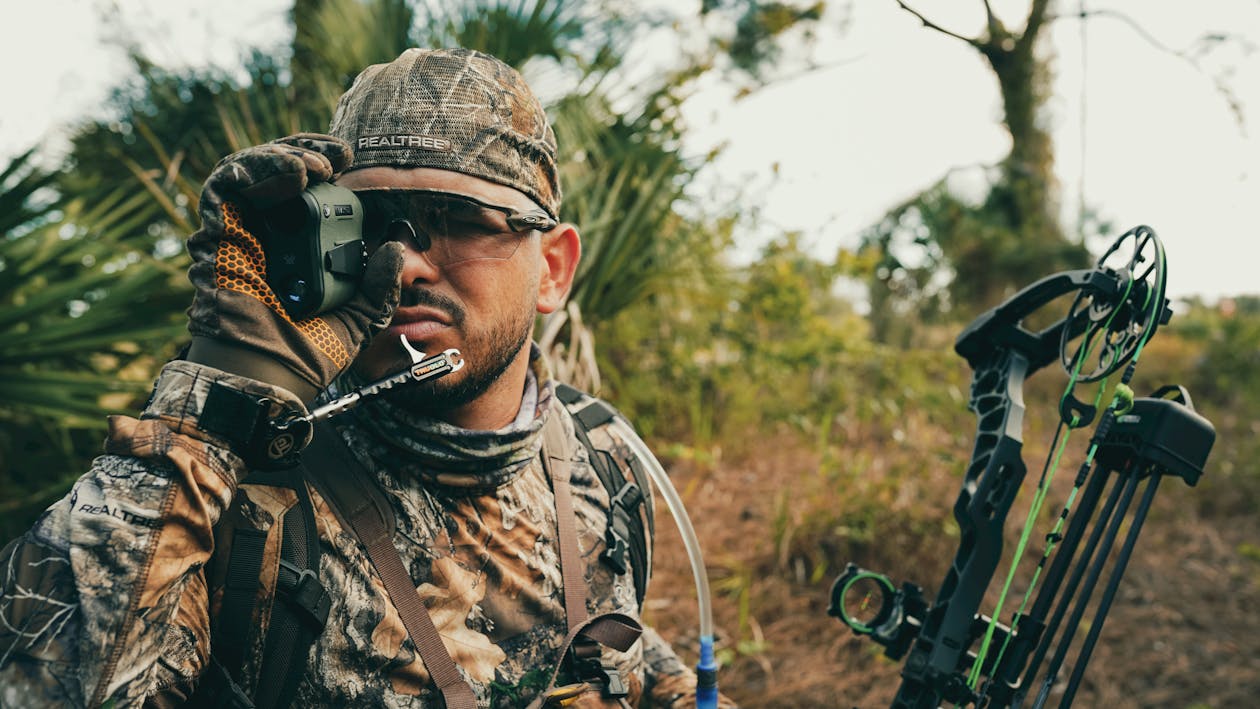
This article contains affiliate links. We may earn a small commission if you purchase through these links, at no extra cost to you.
A rangefinder is the bridge between a good shot and a clean kill. At 200 yards, a 50-yard distance error puts your bullet 6-8 inches off target. At 400 yards, a 25-yard error sends it a foot high or low. The math is unforgiving, and no amount of practice compensates for not knowing the actual range to your target.
We’ve already covered what makes a good hunting rangefinder and the features that matter most. This article is different — it’s a hands-on review of eight specific models across four price tiers, with honest assessments of real-world performance, not spec-sheet fantasies. We tested ranging capability on game-sized targets in low light, rain, and bright sun. We ran the ballistic solvers against verified drop data. We carried them for weeks in the field to evaluate ergonomics, glass clarity, and durability.
If you’re ready to buy, this is where to start.
Quick Comparison Table
| Rangefinder | Price | Max Range (Reflective) | Real-World Animal Range | Ballistic Solver | Angle Comp. | Weight | Our Rating |
|---|---|---|---|---|---|---|---|
| Sig Sauer KILO10K-ABS HD | $700 | 10,000 yds | 1,200+ yds | Applied Ballistics | Yes | 7.5 oz | 9.5/10 |
| Leupold RX-2800 TBR/W | $500 | 2,800 yds | 800 yds | True Ballistic Range | Yes | 7.8 oz | 9.0/10 |
| Vortex Razor HD 4000 GB | $500 | 4,000 yds | 900 yds | GeoBallistics | Yes | 7.4 oz | 9.0/10 |
| Sig Sauer KILO3000BDX | $450 | 3,000 yds | 750 yds | BDX System | Yes | 6.5 oz | 8.5/10 |
| Leupold RX-1400i TBR/W | $250 | 1,400 yds | 500 yds | True Ballistic Range | Yes | 6.4 oz | 8.0/10 |
| Vortex Impact 4000 | $250 | 4,000 yds | 600 yds | HCD | Yes | 6.4 oz | 8.0/10 |
| Bushnell Bone Collector 850 | $150 | 850 yds | 350 yds | None | Yes | 6.1 oz | 7.0/10 |
| Halo XL600 | $100 | 600 yds | 250 yds | None | No | 5.8 oz | 5.5/10 |
Run your exact cartridge data through our Ballistics Calculator to verify holdover solutions against any rangefinder’s built-in solver.
Premium Tier ($500-$700)
Sig Sauer KILO10K-ABS HD — Best Overall
Here’s what separates the KILO10K from everything else on this list: Applied Ballistics. That’s the same solver used by competitive long-range shooters and military snipers. You load your exact bullet profile, muzzle velocity, and zero distance, and the unit spits out a precise holdover in MOA, MILs, or inches at the push of a button. Every other rangefinder in this review uses a simplified ballistic model that introduces 1-3 inches of error at extended range. The KILO10K eliminates that.
Ranging performance backs up the software. We consistently hit deer-sized targets at 900-1,100 yards in average conditions, and at 1,200+ on clear mornings. Sub-second reads on most targets, with angle-compensated distance accounting for both incline/decline and atmospheric conditions. Pair that with 5x HD glass clear enough for quick animal identification, and you’ve got a unit that doubles as a mini-monocular when you need it.
Program Your Ballistic Profile Before You Leave Home
The Sig KILO10K’s Applied Ballistics setup requires your bullet BC, muzzle velocity, and zero distance. Use the Sig BDX app on your phone to program your profile before the hunt — fumbling with menu navigation in camp with cold fingers on opening morning costs you confidence you can’t afford to lose.
At $700, it’s a serious investment — and the menu system for programming ballistic profiles will cost you 30 minutes with the manual on first setup (the Sig BDX app helps, but requires Bluetooth and your phone). Battery life under heavy use drains a CR2 in 3-4 days, so carry a spare.
For hunters shooting past 400 yards who want the most accurate holdover data available in a compact package, nothing else comes close. Applied Ballistics alone justifies the premium.
Leupold RX-2800 TBR/W — Best Glass Quality
Pick up the RX-2800 and the first thing you notice is the glass. Leupold’s 6x optics produce the brightest, sharpest image of any rangefinder we tested — sharp enough that we regularly used it for judging animals before pulling out a spotting scope. At 5-800 yards, the clarity is genuinely useful for field identification, not just ranging.
Leupold’s True Ballistic Range with Wind (TBR/W) system compensates for angle and gives you an equivalent horizontal distance that accounts for bullet trajectory on inclines and declines. You select one of several ballistic groups that approximate your cartridge, and the unit gives you a compensated distance. It’s not load-specific, but the groups land within 1-2 inches of true holdover at typical hunting ranges. Ranging performance is reliable to 800 yards on animal-sized targets, with fast reads and confident returns on both first and last-target priority modes. An auto-adjusting OLED display stays readable even in direct sunlight.
Where it falls short is at extended range. Past 500 yards, the generalized ballistic groups introduce noticeable error — we measured 2-4 inches of discrepancy versus our verified DOPE chart at 600+. Real-world animal ranging also tops out around 800 yards, trailing the Sig and Vortex Razor by 100-200 yards. But ergonomics partly make up for it: grippy rubber armor, natural button placement, and a build quality that survives rocks, rain, and getting jammed into packs without complaint.
Hunters who value optical quality and keep their shots inside 500 yards won’t find a better rangefinder. That glass is unmatched.
Vortex Razor HD 4000 GB — Best Value in Premium
If we could only recommend one rangefinder in this entire review, the Razor HD 4000 GB would be it. Vortex entered the premium space and immediately challenged Sig and Leupold’s dominance — mostly because of GeoBallistics.
Build a precise ballistic profile in the companion app (specific bullet BC, muzzle velocity, zero distance, atmospheric data) and the solver provides holdover in MOA or MILs at the ranging distance. In our testing, it tracked within 1 inch of verified drop charts out to 600 yards — meaningfully better than Leupold’s group-based system and approaching Sig’s Applied Ballistics accuracy. On the ranging side, we consistently pulled readings at 800-900 yards on animal-sized targets, occasionally past 1,000 on calm, clear mornings. That competes with units costing $200 more.
HD glass quality sits just slightly behind the Leupold in brightness and edge sharpness — close enough that most hunters won’t notice. At 7x, the magnification is the highest on this list, and Vortex’s VIP warranty (unconditional, no receipt required) is the best in the industry.
Two minor gripes: acquisition speed trails the Sig by 0.3-0.5 seconds on first press, and the display lacks the Leupold’s OLED contrast in bright midday sun. Neither is a dealbreaker.
Premium-level holdover accuracy, competitive ranging power, and an unconditional warranty at $500 — that’s the formula that makes this our top overall recommendation.
Mid-Range Tier ($250-$450)
Sig Sauer KILO3000BDX — Best Ecosystem
Picture this: you range a bull at 430 yards, and within a second the correct holdover dot lights up in your riflescope. No mental math, no turret dialing. That’s what Sig’s BDX ecosystem delivers when you pair the KILO3000BDX with a compatible scope (Sierra3BDX, Sierra6BDX) — the closest thing to a point-and-shoot hunting setup currently available.
As a standalone unit, it’s solid but not exceptional. Reliable ranging to 750 yards on game-sized targets, clear angle-compensated distance readings, and a compact 6.5-ounce body that’s the lightest mid-range option we tested. The ballistic solver handles most scenarios inside 500 yards with acceptable accuracy, though it lacks the precision of Applied Ballistics.
BDX Ecosystem Value Depends Entirely on Running Sig Optics
The KILO3000BDX’s headline feature — automatic holdover illumination in your scope — requires a compatible Sig scope on your rifle. If you’re running any other brand, you lose the primary selling point of this rangefinder. Evaluate it purely as a standalone unit compared to the Leupold RX-1400i at $50 less before committing.
The BDX ecosystem ties you to Sig optics. Running a Nightforce, Leupold, or Swarovski scope? That flagship Bluetooth integration is useless to you, and as a standalone rangefinder, the KILO3000 doesn’t outperform the cheaper Leupold RX-1400i or Vortex Impact by enough to justify the $200 premium. Cold-weather Bluetooth pairing is also finicky — we experienced disconnects below 20°F that required re-pairing through the app.
Already invested in the Sig BDX ecosystem? This is a compelling addition. Shopping for a standalone rangefinder? Your money goes further elsewhere on this list.
Leupold RX-1400i TBR/W — Best Budget Option With Ballistics
Most hunters shoot inside 400 yards. If that describes you, stop scrolling — this is your rangefinder. At $250, you get the same TBR/W angle-compensation system found in Leupold’s $500 flagship, just without HD glass and extended ranging capability.
Three months of field testing confirmed what the specs suggest: this unit is reliable above all else. Consistent readings, no misreads or dropouts, and a ranging engine that handles 500 yards on deer-sized targets without issue in average conditions. At 6.4 ounces, it disappears into a chest pocket or harness pouch, and the rubberized body has survived drops onto rocks, rain exposure, and being jammed into packs without degradation.
Where you feel the $250 price: glass quality is usable but not enjoyable (chromatic fringing on high-contrast edges, forget about using it for animal ID), and low-light ranging drops to 350 yards in the 30 minutes around legal shooting time. No Bluetooth or app integration either — ballistic groups are selected through the on-unit menu.
Save yourself $250 over the premium tier and put that money toward better binoculars or ammunition. For the whitetail, mule deer, or elk hunter whose typical shot stays inside 400 yards, this is the best value on the list by a wide margin.
Vortex Impact 4000 — Best Ranging Power Under $300
Western hunters glassing across canyons and open basins need every yard of ranging distance they can get. That’s where the Impact 4000 earns its spot: on game-sized targets, we consistently pulled readings at 550-600 yards, occasionally pushing to 700 on calm mornings. In direct comparison, that’s 100 yards better than the Leupold RX-1400i at the same price.
HCD (Horizontally Corrected Distance) mode provides angle compensation functionally identical to Leupold’s TBR at typical hunting angles and distances, with a clean display that shows corrected distance prominently. Vortex’s unconditional VIP warranty — lifetime, no receipt required — applies here too.
The tradeoff versus the Leupold is convenience. HCD corrects for angle but doesn’t offer ballistic group selection, so you still need your own drop chart or DOPE card for holdover data. Optics are adequate for ranging but won’t serve double duty for animal ID — clarity and contrast lag behind Leupold at this price. In hand, the button requires more pressure and the ergonomic shape doesn’t fall as naturally into a one-hand grip.
Choose this over the Leupold if ranging distance is your top priority and you’re comfortable referencing a drop chart. Choose the RX-1400i if you want a simpler one-number holdover solution.
Budget Tier ($100-$150)
Bushnell Bone Collector 850 — Best True Budget Pick
Treestand whitetail hunters on a tight budget — this is your unit. It does one thing (range targets with angle compensation) and does it adequately inside its effective envelope: fast, accurate reads at 200 yards every time, reliable at 300, and about 80% success at 350 on game-sized targets.
ARC (Angle Range Compensation) technology provides angle-corrected distance at a price point where most competitors skip the feature entirely. Compact enough for a jacket pocket, with build quality better than $150 suggests.
Know the limitations before buying. Real-world ranging maxes out at 300-350 yards on deer (250 in low light), there’s no ballistic solver of any kind, and 4x magnification with average clarity means this is purely a ranging tool — never double-duty optics. Holdover calculation is entirely on you.
For the whitetail hunter whose longest shot is 250 yards from an elevated stand, this does the job without the financial sting. Anything beyond that scenario, and the extra $100 for the Leupold RX-1400i is money well spent.
Halo XL600 — If You Absolutely Must Spend Under $100
We include this reluctantly. Some hunters have hard budget constraints, and the Halo XL600 is better than guessing distances by eye. That’s the nicest thing we can say about it.
Max effective range on game-sized targets is 200-250 yards on a good day, dropping to 150 in low light. No angle compensation, so treestand hunters get incorrect holdover data on every shot. Optics show noticeable distortion at 5x. But the real dealbreaker is consistency: we got different readings on the same target 10-15% of the time. A rangefinder that might be right gives you false confidence, which is arguably worse than estimating by eye.
An Inconsistent Rangefinder Creates False Confidence
The Halo XL600 returns different readings on the same target 10-15% of the time. A rangefinder that might be right is more dangerous than estimating by eye — it encourages you to take shots at distances your skill and cartridge can’t support, because you believe you have accurate range data when you may not.
Our strong recommendation: save another $50-100 and buy the Bushnell Bone Collector or, better yet, the Leupold RX-1400i. Nowhere else on this list does an extra $150 buy you this much performance improvement. This is the one tier where spending more isn’t optional — it’s essential.
How to Choose Your Rangefinder
Match the Rangefinder to Your Hunting
Treestand whitetail hunting (shots under 250 yards): Either the Bushnell Bone Collector 850 or Leupold RX-1400i works well. Angle compensation is the key feature here, and Leupold’s TBR/W system adds ballistic holdover data that makes it the better investment.
Western big game (shots 200-500 yards): Go with the Vortex Razor HD 4000 GB. GeoBallistics gives you holdover data accurate enough for field use, the ranging engine handles Western distances, and the price is reasonable for a tool you’ll use on every hunt.
Long-range hunting (shots 400+ yards): Only one real answer — the Sig Sauer KILO10K-ABS HD. At extended range, simplified ballistic solvers compound their error. Applied Ballistics eliminates that variable. If you’re spending thousands on a long-range rifle and premium optics, skimping on the rangefinder makes no sense.
Budget-conscious all-around: Leupold’s RX-1400i at $250 delivers 90% of premium-tier performance at half the price. Best value on this list by a significant margin.
Features That Matter vs Marketing Noise
Matters: Reliable ranging on non-reflective targets at your actual hunting distances. Angle compensation. A ballistic solver matched to your cartridge (if you shoot past 300 yards). Speed of read. Durability.
Marketing noise: Maximum reflective range (you’ll never range a deer at 3,000 yards). Scan mode (rarely useful in hunting). Bluetooth connectivity (nice to have, not essential). AMOLED displays (cool but battery-hungry).
Universal truth: A $250 rangefinder used on every hunt is infinitely more valuable than a $700 rangefinder left in the truck because it’s too bulky or too precious to risk damaging.
Keep Your Rangefinder in Your Bino Harness, Not Your Pack
A rangefinder buried in a daypack pocket doesn’t get used — it takes too long to retrieve when an animal appears. Carry it clipped to your bino harness or in a chest pocket so it’s accessible in the same motion as reaching for your binoculars. If the unit is too large for a harness pouch, that’s a reason to choose a more compact model.
Pair With Your Optics Setup
A rangefinder works best as part of a complete optics system. If you’re building a setup from scratch, allocate your budget across binoculars, rangefinder, and riflescope — not all into one category.
For a $1,500 total optics budget, we’d split it roughly:
- Binoculars: $500-600 (this is where glass quality matters most)
- Rangefinder: $250-500
- Riflescope: $400-700
Read our best binoculars for elk hunting guide for the binocular half of that equation.
Our Verdict
Top pick overall: Sig Sauer KILO10K-ABS HD — unmatched ballistic accuracy and ranging performance, at a premium price.
Best value: Vortex Razor HD 4000 GB — premium-level GeoBallistics solver with excellent ranging and Vortex’s unconditional warranty.
Budget winner: Leupold RX-1400i TBR/W — proven TBR/W system, reliable ranging, and Leupold quality for $250.
Skip: Halo XL600 and anything under $100. That performance gap between budget and mid-range rangefinders is too large to justify saving $150.
A rangefinder is the cheapest piece of equipment that will directly improve your hit rate in the field. If you’re still estimating distance, fix that before you buy another gun, another bow, or another piece of camo.
Related Tools and Guides
- Ballistics Calculator — Verify holdover data against your rangefinder’s built-in solver
- Best Rangefinder for Hunting — Feature guide and buying criteria
- Best Binoculars for Elk Hunting — Build your complete optics kit
- Gear Loadout Builder — Add a rangefinder to your hunt-specific gear list
Plan Your Hunt
Ready to Apply? Check the Draw Odds
Once you have the gear sorted, use the Draw Odds Engine to find the right tag — free, no account needed.
Get the Insider Edge
Join hunters getting exclusive draw odds data, gear deals, and weekly hunt planning tips.
Related Articles

Rifle Zero and Field Ballistics: What Hunters Actually Need to Know
Hunting rifle ballistics guide — how to zero a hunting rifle for practical field distances, the 200-yard zero vs 100-yard zero debate, point-blank range concept, holdover at distance, and why most hunters are closer to game than they think.

Hunting Camouflage: What Actually Matters and What's Marketing
Hunting camouflage guide — how deer, elk, and turkey vision works, what camouflage actually needs to do, pattern selection by terrain and season, UV brightener issues, and why movement matters more than any pattern.

How to Use Hunting Binoculars: Glassing Technique and Field Habits
Hunting binocular technique guide — how to glass systematically rather than randomly, focus discipline, tripod adapter use for extended glassing, harness systems, and the field habits that separate hunters who find game from hunters who don't.
No comments yet. Be the first to share your experience!