Arizona Strip Mule Deer: Hunting the Kaibab Plateau and Vermilion Cliffs
The Arizona Strip produces more 180–200"+ mule deer than anywhere in North America. Here's what makes this country so special, how the draw works, and what a strip hunt actually looks like on the ground.
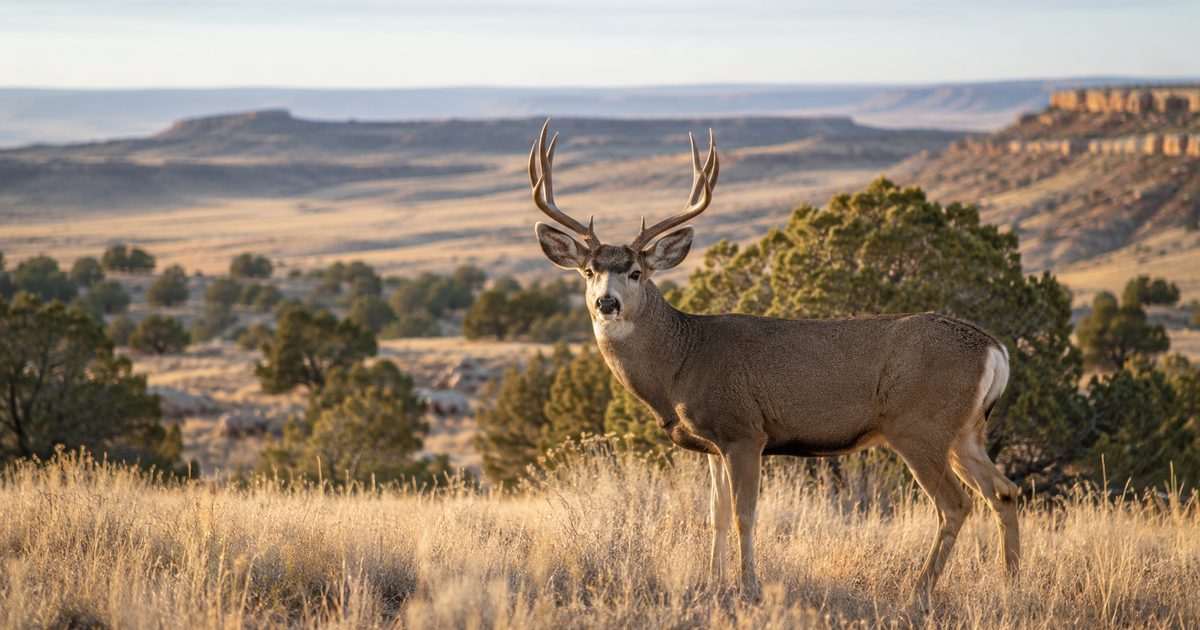
If there’s one address in North America where a mule deer buck can still grow old enough to become something truly extraordinary, it’s the Arizona Strip. The Kaibab Plateau and Vermilion Cliffs country in the northwest corner of Arizona isn’t just good mule deer habitat — it’s a pressure cooker for genetics, isolation, and age that produces bucks other states can’t match. Hunters willing to build points for a decade or more get one shot at it, and many describe that hunt as the single best thing they’ve ever done in the field.
What Makes the Strip Different
The Arizona Strip sits between the Utah border to the north and the Grand Canyon’s north rim to the south. It’s essentially a geographic island. The Grand Canyon cuts off natural deer migration in one direction, the Utah plateau system boxes it in from another, and the surrounding desert keeps casual hunting pressure low. Deer on the Kaibab don’t go anywhere. They live and die in the same drainages, generation after generation.
That isolation has done something remarkable to the genetics. Kaibab mule deer — often called “Kaibab strain” — tend to carry wider, more palmated frames than typical Rocky Mountain mule deer. The antler mass and tine length on a mature Strip buck can look almost cartoonish compared to what hunters see in Colorado or Nevada. This isn’t just luck. Limited harvest pressure plus extreme age structure equals bucks that live to eight or nine years old before they ever see a hunter.
The Vermilion Cliffs portion adds a different flavor. That country is rougher, more broken, with sheer sandstone walls dropping into sagebrush flats. Bucks here use the terrain the way pressured animals always do — staying high in the cliffs during daylight, dropping into the sage at last light. The glassing game is real.
Best Glassing Windows
First light and the last 45 minutes before dark account for the majority of quality buck sightings on the Strip. Set up your glassing position 20 minutes before shooting light — bucks won’t wait for you to get settled.
Unit Breakdown
The Strip is divided into four primary units, each with its own character.
Unit 12A East covers the main body of the Kaibab Plateau, including the bulk of the national forest. This is the most forested of the Strip units — ponderosa pine mixes with gambel oak and mountain mahogany as you get into the higher elevations. Mature bucks use the forest edges and spend summer in the timber before pushing down into the juniper-sage transition zones in the fall. Tag numbers here are extremely limited, typically just a handful per season across all weapon types.
Unit 12A West is a transition zone between the forest plateau and the open desert to the west. More sage and juniper here, more open country. It’s harder glassing terrain in some respects because there’s simply more ground to cover, but big bucks use those open hillsides and you can cover a lot of country from the right ridge.
Unit 13A covers the Vermilion Cliffs country east toward Marble Canyon. The terrain is dramatic — cliff systems, deep drainages, open sagebrush plateaus. Some of the most iconic Strip bucks have come out of 13A. It’s also notoriously difficult to hunt. Road access is limited and the country is vast. Most serious hunters here are putting in miles on foot or using horses to access the backcountry.
Unit 13B sits further east toward the Arizona-Utah border. It’s the most open of the Strip units, with long desert flats broken by sandstone rims. Bucks in 13B can cover huge distances between water and food, which makes them harder to pattern. But when you do find a mature 13B buck, there’s nowhere for him to disappear.
Draw Odds Reality
There’s no soft way to say this: the Arizona Strip is one of the hardest draws in the country. For nonresidents, expect to accumulate 15 to 18 bonus points before having a realistic shot at a Strip tag. Some units and seasons require 20+. Arizona uses a pure bonus point system — each point you accumulate gives you one additional “square” in the draw, so your odds improve each year, but the premium Strip units have long applicant queues.
Residents fare somewhat better, but “better” is relative. Resident hunters with 12–15 points are genuinely competitive in most Strip units during most seasons. The rifle seasons draw more applicants than archery, partly because the hunting conditions on the Strip in October and November are extraordinary for glassing.
Bonus Point Deadline
Arizona’s bonus point-only applications (no tag purchase) must be submitted by the regular draw deadline. Don’t miss it building points — a single missed year sets you back significantly in a field where everyone else kept accumulating.
Check current applicant numbers and point requirements using the Draw Odds Engine or browse the full Arizona draw odds breakdown for historical data by unit and weapon type.
What a 180–200”+ Buck Looks Like in the Field
Most hunters encounter world-class mule deer on paper or in photos before they ever see one at a glassing distance, and the reality is always bigger than expected. A genuine 180” Strip buck will have main beams that push 26–28 inches, four-point frames (western count) with front forks that often spread 10–12 inches between the G2 and G3 on each side, and mass measurements that stay thick all the way to the tips.
At 400 yards through a spotting scope, these bucks look heavy-bodied and slow-moving. The neck is thick during the rut. The antlers look dark, almost black at the base from rubbing juniper bark. What separates a 180 from a 200 in the field is usually the spread — a truly massive Strip buck will carry his rack outside his ear tips by a significant margin, and the frame will look almost too big for the deer’s head.
Don’t shoot the first big buck you see. That’s a Strip-specific piece of advice worth taking seriously. If you’ve waited 15 years to be there, give the scouting its full due.
The Juniper-Sage Glassing Approach
Strip hunting is primarily a glassing and spot-and-stalk game. The terrain lends itself to long observation before any stalk begins, which is the right approach when you’re after an animal that might be worth 15 years of accumulated points.
The classic setup is a tripod with a quality 80–85mm spotting scope positioned on a high ridge overlooking a juniper-sage transition. You’re looking for movement in the first and last light windows, watching for the flicker of antler tine above the sage line. Once a buck is located, the stalk plan depends entirely on wind — Strip terrain can funnel thermals in unexpected directions as the plateau heats and cools through the day.
Mule deer on the Strip aren’t dramatically more spooky than deer elsewhere, but they’ve been watched, not pressured. They’re used to eagles, coyotes, and other predators looking at them from above. What alerts them is downwind body scent — the same thing that alerts mule deer everywhere.
Glassing Setup for Strip Country
A tripod-mounted 15x or 18x binocular paired with an 80mm spotting scope is the standard Strip setup. You’ll spend more time glassing than stalking, and quality optics pay off in finding that one big buck in the sage before he finds you.
Logistics: Getting There and Staging
The two primary staging towns for Arizona Strip hunts are Kanab, Utah and Fredonia, Arizona. Kanab has more lodging options and is closer to the 12A units; Fredonia sits right on the Utah-Arizona border and is the natural base for the Vermilion Cliffs country. Both are small towns — don’t expect city-level services.
Road access on the Strip is genuinely limited. The main paved arteries are AZ-89 along the east side and US-89A cutting through the heart of the Strip, but most hunting access roads are dirt, and many close seasonally. ATV restrictions apply in certain areas, particularly within Grand Canyon-Parashant National Monument boundaries. Check the unit maps carefully before planning vehicle access — you don’t want to discover on opening morning that your planned access road is closed.
Cell service is spotty across most of the Strip. Download offline maps before you go and carry a satellite communicator. This isn’t optional; it’s part of the standard kit for hunting country this remote.
The nearest fuel is in Kanab, Fredonia, or Colorado City. Fill your tank every time you pass a pump.
What to Pack for a Multi-Day Glassing Trip
A Strip hunt is rarely a day hunt. Most hunters are out for four to seven days at minimum, either camping or driving back to Kanab each night. If you’re camping, plan for weather extremes — October and November on the Kaibab can go from 70°F daytime to below freezing at night, and early-season snowstorms hit with almost no warning.
The short list of what separates prepared Strip hunters from unprepared ones: a quality shelter that handles wind (the Kaibab can be brutal in November), a warm sleeping system rated to at least 15°F, and enough water capacity for two to three days without resupply. Water sources are scattered and unreliable. Know where yours are before you camp.
For meat care, bring game bags, cord, and a sharp knife you trust. A strip mule deer buck can dress out to 175–200 pounds of meat. You’ll need a plan for getting it back to the truck.
Physical Preparation
The Strip rewards hunters who’ve prepared physically. You won’t necessarily cover huge daily miles, but the terrain is uneven, the pack will be heavy on the way out, and the glassing sessions are long. Get your legs and your back ready before the hunt.
The Experience
What hunters describe afterward isn’t just the buck — it’s the country. The Strip at sunrise, with the Vermilion Cliffs catching the first light and the sage going silver-gold in the morning air, is one of the more stunning landscapes on the continent. It’s remote in a way that feels earned. The roads aren’t maintained, the maps aren’t always accurate, and the wind makes its own decisions. But that’s exactly what keeps the Strip what it is.
Hunters who’ve drawn this tag and taken a mature buck almost universally say the same thing: they’d do it again even if it took another 15 years. That’s the kind of hunt the Arizona Strip delivers. Save your points, do your homework, and when your name comes out of the draw, don’t waste a day.
Sources & verification
Seasons, license fees, application windows, and draw structure for Arizona change every year. Always verify the current details against the official Arizona agency before applying or hunting.
- Arizona Game & Fish Department — azgfd.com
Next Step
Check Draw Odds for Your State
Tag-level draw odds across 9 western states — filter by species, unit, weapon, and points. Free to use.
Get the Insider Edge
Join hunters getting exclusive draw odds data, gear deals, and weekly hunt planning tips.
Related Articles

Arizona Unit 36 Border Country Guide
Units 36A, 36B, and 36C sit along the Mexican border west of Nogales — overlooked Coues and javelina country with low draw requirements and solid hunting.

Montana General Elk Tag: Everything You Need to Know
The Montana general elk tag explained — who can buy one, what it covers, best districts, season dates, nonresident options, costs, and tactics for public land.

Arizona Unit 22 Guide: Tonto Basin
Unit 22 runs across the Tonto Basin and the Salt River country — productive elk in the highlands, accessible javelina in the desert, and some of Arizona's most underrated deer country.
No comments yet. Be the first to share your experience!